

Dialogue, Action, and Exposition are the key elements to any screenplay. Cinematic storytelling lives in the interplay between what characters say, what they do, and what the audience learns along the way as the story and plot unfold.
When you’re first starting out as a screenwriter, it’s natural to lean towards one of those elements early on. Some writers naturally gravitate towards writing snappy and stylistic dialogue, usually to showcase a unique voice.
Others think visually, prioritizing the action the characters perform as far as what they do, where they go, how they go there, and their non-verbal physical and emotional reactions to conflict they face.
And the most common overreliance is exposition, where screenwriters find themselves leaning too heavily on verbal explanation of the plot, inner feelings of the characters, and information dumps.
The screenplays that engage readers and audiences the most are those that have an excellent balance between these three essential script elements. But that balance isn’t about hitting a perfect ratio. Some types of stories may rely more heavily on dialogue over action. It’s really about understanding the purpose and strengths of each element, and how you can create a more dynamic cinematic experience in your screenplays.
With that in mind, let’s break down dialogue, action, and exposition so you can find the best ways to balance all three of them throughout your scripts, making for better script reads, and better odds of your scripts standing out.
Dialogue
Dialogue is the most notable screenplay element because it offers us the voice of the characters, and gives the screenplay the easiest chance to convey information essential to the plot (exposition).
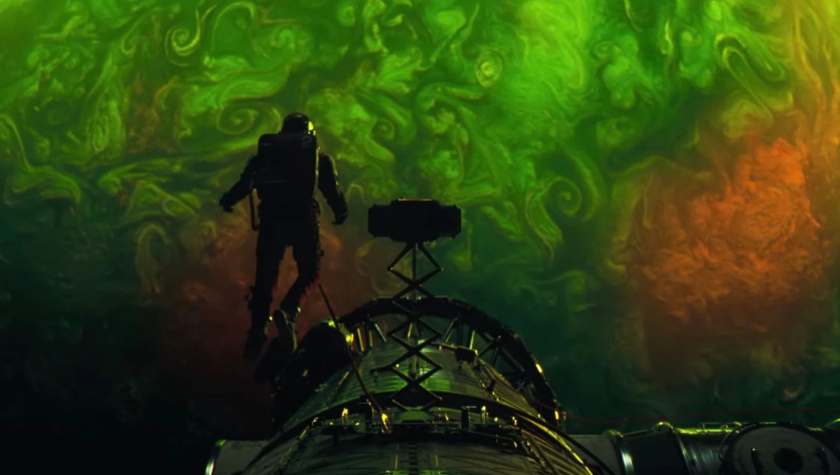
If you look at a film like Project Hail Mary, you’ll see how important a role dialogue plays between Grace and Rocky as they establish communication and learn how to interact. Their relationship builds because of their eventual open communications, revealing impactful emotions like fear, curiosity, humor, and trust.
Dialogue works best when it’s rooted in character discovery and conflict, as opposed to being used to tell the story, which is a common mistake for beginners - using the dialogue to lay out the plot, the discoveries, the twists, the turns, etc. Dialogue can be used for those story elements, but you need to balance dialogue with accompanying action and exposition.
Action
When we’re talking about action, we’re not solely referencing car chases, fight scenes, and explosions. Action is the true language of movies, prevalent long before sound technology gave us audible dialogue the audience could hear. Action is everything the audience sees:
- Physical behavior in the form of actions and reactions to conflict and character interactions.
- Movement throughout and between locations.
- Emotions in the form of happiness, joy, sadness, fear, rage, and any other emotions that can be conveyed without dialogue.
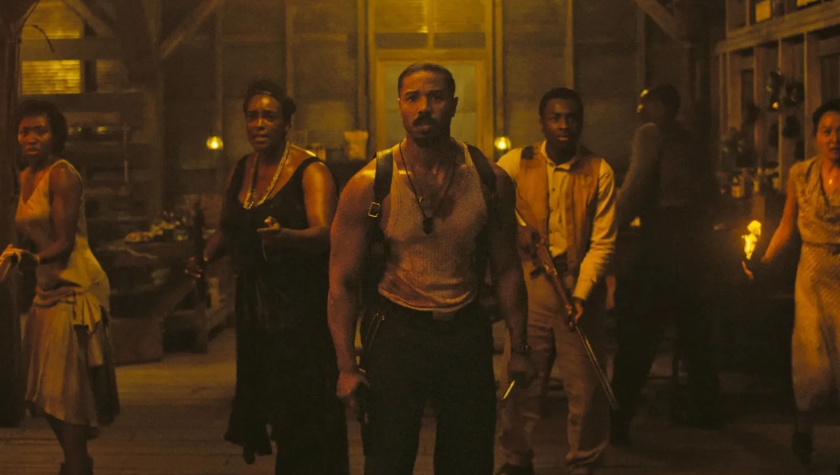
If you look at a film like Sinners, when the conflict comes at the characters in the form of sadistic and terrifying vampires, as well as local racist townies, much of the tension comes from how they react to those conflicts in the moment, often without accompanying dialogue at first.
Action is what drives urgency. Some of the most compelling cinematic storytelling is when there is no time for characters to talk or discuss their options and decisions. They must act.
When a character sees or learns something, what do they do?
- Do they go into a rage and flip a table?
- Do they begin to laugh out of madness or the humoristic presence of irony in the situation?
- Do they fall to their knees and cry?
- Do they showcase no fear or emotion, and act swiftly, showcasing their focus and experience in similar situations?
All of these types of action show us so much about the character without the need for any accompanying dialogue - or at least little to none.
Action allows the audience to interpret emotion without being told what to feel.
Exposition
The basic definition of exposition in screenwriting is the delivery of information. Delivering:
- Plot points
- Character background
- Inner thoughts
- Or any other form of information regarding characters and story
It’s perhaps the most intimidating element of screenwriting for beginners because it’s labeled as a problem child most scripts have while also being an essential element as well.
Script readers and audience members need context. They need to understand the world, the stakes, and the rules - and those elements need to be communicated through dialogue and action.
One Battle After Another has a huge narrative scale to its world, full of backstory, past wrongs, troubled relationships, and lingering conflicts. The exposition needs to be there.
The challenge isn’t avoiding exposition. It’s about integrating it in a way that feels active rather than instructional. Active exposition feels like part of the narrative, as opposed to instructional exposition becoming a stopping point where things are explained.
When Dialogue, Action, and Exposition Aren’t Balanced
It’s fairly simple. An overreliance on dialogue can make a scene feel static and lifeless. Sure, we’ve had plenty of great “talking heads” movies with characters sitting, talking, and explaining (My Dinner with Andre, Before Sunrise, The Man From Earth, etc.). However, most readers and audiences need or want more than that. Those types of screenplays are generally written and directed by auteurs or indie filmmaking groups (My Dinner with Andre was written by its two onscreen stars) who make their films and put them through the indie market. If you’re looking to sell a script, you need more balance to create something a production company, studio, network, or streamer would be drawn to - something that is more cinematic and readily entertaining for the masses.
That said, too much action can feel empty. Movement without meaning and deeper stakes can fall flat. There have been some amazing films with little-to-no dialogue, or, at the very least, effective ones with long stretches of scenes and sequences without much (The Revenant, Wall-E, All Is Lost, The Road, etc.). But overreliance on action spectacle tends to eventually wear thin for most readers and audiences.
Lastly, heavy exposition scenes stop most story momentum. Information dumps through dialogue - or even visuals - can halt any forward momentum and pacing you have going.
As you can hopefully see, when you don’t have balance between dialogue, action, and exposition, your script can suffer. But when you do have balance between the three, you’re offering a cinematic read that feels like a perfectly balanced movie playing in the mind’s eye of the reader as they read your script.
How to Balance Dialogue, Action, and Exposition
You can first start with asking three questions while reviewing scenes you’ve written:
- If the dialogue were cut down to its essential core (one sentence or fragment instead of three or more), would the scene still make sense visually?
- If the action was minimized, would the dialogue still feel purposeful and engaging?
- If you cut down on the exposition, would the reader or audience still understand what matters in the story?
Reviewing your pages with these questions in mind will help you begin to understand where balance between dialogue, action, and exposition is present, where it is lacking, and where it is most needed for potential rewrites.
Rewriting As You Go and Balancing As You Rewrite
Before we get into the dynamics of how to balance each of these elements, it’s helpful to understand when you can be doing this in your writing process.
When you’re a professional screenwriter writing under tight deadlines, you can showcase your writing savvy the most by being able to not only write fast, but write amazingly well as you do.
Rewriting as you go can be an excellent way to learn how to master that art. Let’s say you start a script and write ten pages during your first writing session. When you return for your next writing session, the first thing you do is read those first ten pages from beginning to end. As you do this, you rewrite and tweak those pages as you read. Then you write another ten pages (or however many you can). When you return for your next writing session, you read all of the pages you’ve written in prior sessions and rewrite and tweak them as you do.
This helps you to be able to stay on the same page with yourself every single writing session. You’ll be able to see the momentum (or lack thereof) of the story, plot, and character arcs. You’ll be able to ask those above three questions with each scene you’ve written.
If you’re already to the first or second draft of the script, then you can just go back and read the most current draft and rewrite the pages as needed with balance of dialogue, action, and exposition in mind.
Balancing the Dialogue
Less is more. That’s the most simple guideline. Every single line of dialogue should be essential, necessary, and purposeful when it comes to moving the story and plot forward.
Beyond paring dialogue lines down, it’s helpful when you understand that dialogue shines most when it’s driven by conflict and stakes. When two or more characters want opposing things, the dialogue is immediately charged with an electric jolt that creates more conflict and stakes. Without tension and conflict in a scene, the dialogue can feel like expositional dumps or filler, which halts any story momentum.
The best and most effective dialogue happens when characters aren’t just talking and relaying information - it’s when they’re trying to get something, avoid something, protect something, or survive something.
If your dialogue can accomplish that a majority of the time in each scene, it can be properly and masterfully balanced with accompanying action, especially when you’re also applying the “less is more” mantra.
Balancing the Action
A common mistake in screenplays is the use of dialogue to explain what could more easily be shown through action.
Having a character say, “He’s got a gun!” is less effective cinematically than having scene description describe the action of a character revealing that they have a gun.
A character saying, “I’m nervous,” is less effective cinematically than showing that nervousness through physical behavior.
- Hesitation
- Pacing
- Avoiding eye contact
- Shaking
A character telling us how angry they are is less effective cinematically than them flipping a table, screaming in a rage, clenching their fists, or storming out of the room and slamming the door behind them, all without a single word said.
Here’s where balance between dialogue and action really starts to present itself - when action starts carrying emotional and narrative weight, making the dialogue more sharp and concise because it doesn’t have to do all of the heavy lifting on that front.
Balancing the Exposition
A tell-tale sign of bad exposition is when you have to stop the story so someone can explain what’s happened, what needs to happen, and especially what is happening. Everything needs to flow.
But exposition really isn’t the problem in most of those cases. It’s the delivery of the exposition that causes problems.
If we go back to One Battle After Another, which has immense need for exposition due to the unseen history between so many of the characters, you’ll see how the Oscar-winning script balances that exposition with the dialogue and action by communicating exposition through disagreements, mission briefings that go wrong (when Bob doesn’t remember the necessary password), or skewed and differing perspectives of the past where characters challenge each other’s stances and beliefs.
The information is delivered to the audience, but through tension, conflict, and story progression.
You can also let exposition emerge through discovery. Instead of telling the reader or audience how something works, let the characters figure it out in real time within the scene. When the characters are discovering the information within a scene, it doesn’t feel like forced exposition. It feels natural. The audience is learning something new at the same time the characters are, which also leads to the feel of the story being a shared experience between the characters and the audience.
Some Final Balance Tricks of the Trade
Once you learn and begin to understand the dynamics of balancing dialogue, action, and exposition, you can start to experiment with some tricks of the trade that will help you balance the three effectively, without losing the impact of each.
- Intercut dialogue and action scenes to break up any dense dialogue moments.
- Keep your characters moving through a location or between locations as they talk.
- Inject discovery dialogue during moments of tension, conflict, and high stakes.
Lastly, make sure each scene has a rhythm of dialogue, action, and exposition. A scene may start with an action beat, but leads to a dialogue beat that builds more tension and conflict. Within that dialogue beat, you can slip in a line of exposition that raises the stakes even higher, acting as a discovery for one or more of the characters within the scene.
Trust the Script Reader and Audience
Most dialogue and expositional overwriting can be caused by writers that aren’t trusting the audience. If you can learn to trust the audience to connect most of the dots, you won’t have to worry about using too much dialogue and injecting too much exposition into the dialogue.
Script readers and audiences are skilled at picking up story and character context. You don’t need to overexplain. Trust that the person reading your script or watching your produced movie have themselves read or watched hundreds upon hundreds of scripts or movies. If you give them a little trust, you’ll naturally sway away from overloading your dialogue, exposition, and action to the point where the script is unbalanced.
- Don’t be afraid to showcase some great dialogue in an action-heavy script.
- Don’t shy away from some visual (action, movement, and silence) storytelling in your more dramatic scripts.
- Don’t think the audience won’t pick up on what’s in the subtext, between the lines, and within the expositional discovery you provide in your dialogue.
Trust the reader and audience. And if you balance your dialogue, action, and exposition well, they’ll trust in your script and your cinematic story enough to stick with it.