
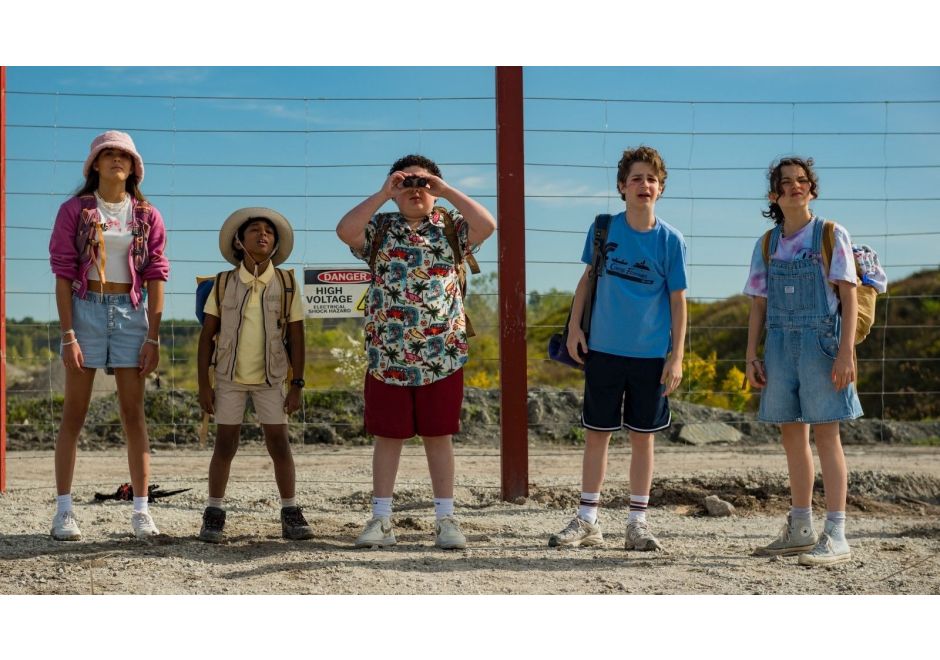
There's something super exciting about summer camp when you're 12 years old. No parents, few rules, endless friends, and the naive possibility that maybe real life, and dealing with your parents getting divorced, never has to begin.
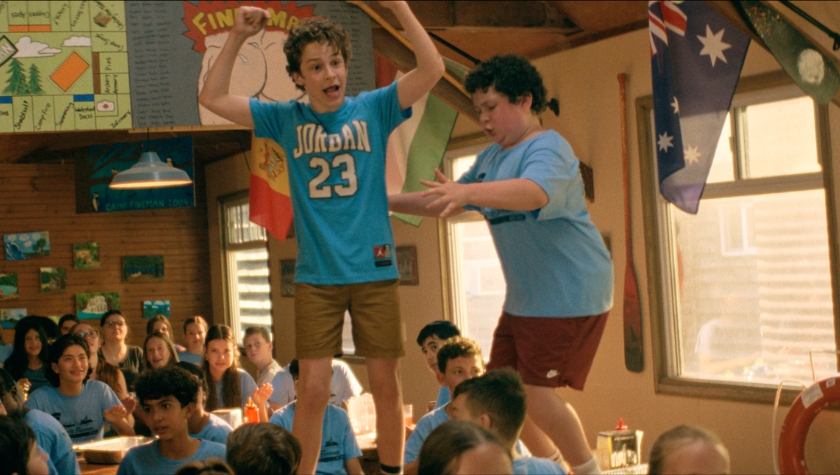
That fantasy gets taken to its very funny extreme in Tiny Fugitives, a new comedy about a fiercely determined group of 12-year-olds who hatch a plan to escape reality and spend the rest of their lives at sleepaway camp. Unfortunately, Bob (Johnny Knoxville), a relentless 50-year-old counselor, stands between them and permanent freedom and has no intention of letting them get away.
Written by Michael Lewen and Jacob Kaplan and directed by Lewen, Tiny Fugitives comes from Point Grey Pictures, with Seth Rogen and Evan Goldberg among the producers. But despite the movie's big, outrageous comedy, Lewen and Kaplan say their guiding principle was surprisingly simple: Make it feel true.
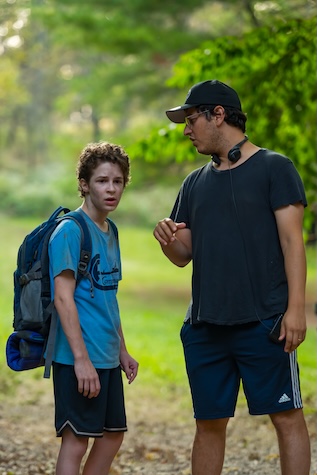
Lewen picked up that philosophy during more than a decade working with Judd Apatow. Lewen attended film school at USC and landed an internship at Apatow Productions while still in college. What started as an internship turned into a 12-year education in comedy filmmaking as he moved from writer's assistant to executive and producer, working on films including Trainwreck, The Big Sick and The King of Staten Island. "That was really where I learned about writing and filmmaking," Lewen says.
He also had a front-row seat as writers and performers including Lena Dunham, Amy Schumer, Kumail Nanjiani and Emily V. Gordon developed projects with Apatow. "One of Judd's great skills is helping creatives synthesize their voice or their comedic attitude, or the thing they want to share, and make it into a movie or a show," Lewen says.
Eventually, Lewen decided it was time to get into the driver's seat himself. He knew he wanted to make a movie about summer camp, but he had never written a feature, so he began looking for a collaborator. Then he discovered Kaplan.
Kaplan came to comedy through performance, improv, and theater before interning at Saturday Night Live while attending college in New York. He eventually became a writer's assistant on the show while pursuing stand-up and his own writing on the side.
Lewen was introduced to Kaplan through a spec animated pilot Kaplan had written called Bugged Juice, about an alien sent to Earth to study humanity who lands at a Jewish summer camp and assumes the camp's strange rituals represent life on Earth. Lewen loved it. "I thought it was so hilarious and voicey and was like, this is my guy," he says.
Kaplan also brought his own summer camp experiences and personal history, including his parents' divorce, to the screenplay. "It became a synthesis of our sensibilities," Lewen says.
Kaplan's SNL training also came with a practical advantage: He knew how to write very, very quickly. "The best part of Jacob's SNL background is, at SNL, everything is done in one night," Lewen says. He remembers asking Kaplan how long he thought it would take to write the next 50 pages. Kaplan told him that if he started at 10 p.m., he could probably have them finished by six the next morning.
For Kaplan, that willingness to push through a draft came partly from how excited he was by the premise. He was so eager to work on Tiny Fugitives that during SNL's famously late Tuesday writing nights, he would squeeze in pages of the screenplay while the show's writers were working on sketches. But getting pages written was only the beginning.
The bigger challenge was finding a tone that could accommodate both the film's outrageous comedy and its quieter emotional moments. Lewen says he wanted the movie to feel, "Big and theatrical and comedic," particularly given the filmmakers' partnership with Rogen and Point Grey, while still leaving room for more personal, independent-feeling moments. "The challenge was constantly trying to figure out how to stretch the tone of the movie to hold both of those things," adds Lewen.
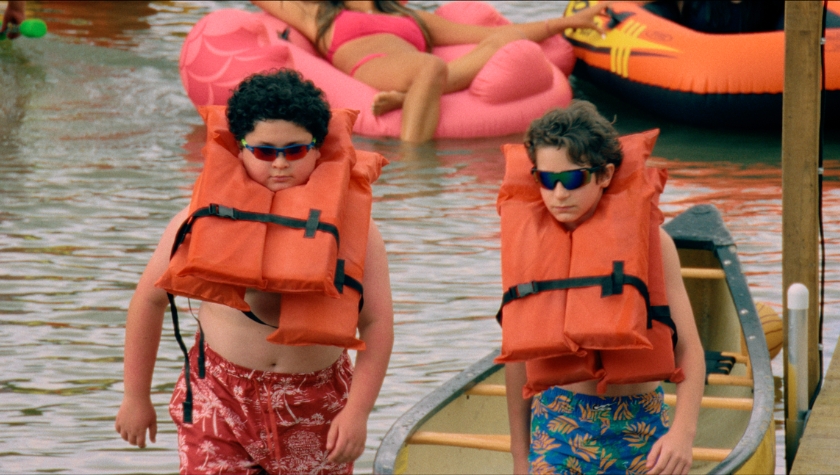
That balancing act became especially important because the filmmakers wanted their young characters to behave like actual 12-year-olds, not sarcastic Hollywood versions of them. Lewen and Kaplan went to considerable effort to cast real 12-year-olds, with the actors playing their actual ages. Then, rather than forcing the kids to conform completely to what was on the page, they allowed the screenplay to evolve around them. "The script is our blueprint, and then we put it on its feet with the kids, and we try to meet them where they're at," Lewen says.
During rehearsals, Lewen and Kaplan rewrote dialogue to better reflect each performer's voice. Different characters were also allowed different levels of innocence and edginess depending on what felt natural for the actor.
Kaplan says they continued that process on set, frequently writing alternate versions of jokes. They might shoot a tamer version, then a raunchier one, then give the actor an opportunity to improvise. "You say, 'Put it in your own voice,' and then usually that's where you find it," Lewen says. Surprisingly, Kaplan says, the 12-year-olds came up with material way more edgy than anything they would have.
That willingness to empower the kids was also one reason Johnny Knoxville proved to be such a good fit for Bob. Knoxville may be known for the boyish, gross-out chaos of Jackass, but Lewen discovered another side of him on set.
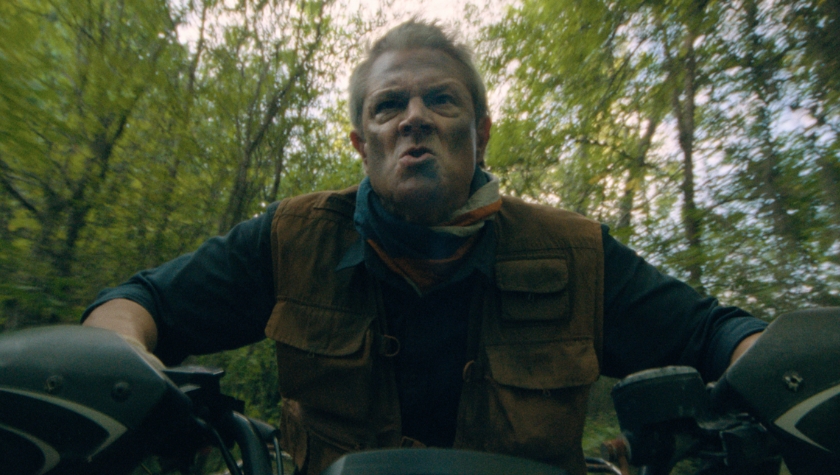
"He's hilarious, and he's very tender," Lewen says, adding that Knoxville is also a father whose children are around the same age as the young actors. Lewen says Knoxville took on a paternal role and served as something of a comedy mentor, creating an environment where the young performers felt safe enough to take risks. "They felt scared of him in the movie, which is what we wanted," Lewen says. "But on the set, he was much more encouraging."
That doesn't mean Knoxville completely abandoned his prankster persona. While filming a late-night scene in which Bob communicates with one of the kids over a walkie-talkie, Knoxville began leaning backward in his chair. He kept going until he crashed hard onto the floor and lay there silently as the exhausted crew stared in horror. Then he got up.
"Come on, guys, it was a joke!" Kaplan remembers him saying. Knoxville subsequently did it several more times. For Lewen and Kaplan, however, even the film's most outrageous comedy needed to come from character.
"Just write something that feels truthful," Lewen advises writers. "All of the scenes that people respond to the most in our writing, or in the final movie, are things that come from an honest place. And even the jokes and crazy humor just come from character."
His advice when a scene isn't working is equally straightforward: "Anytime you're stuck, go back to character."
Kaplan offers another piece of advice that may be even more useful to screenwriters staring at an unfinished screenplay: Stop worrying about perfecting it and finish the draft.
"Start with what feels true, and then most importantly, get it on the page," Kaplan says. "Actually complete your first draft, and then you can worry about shaping it and all of the Movie 101 stuff after that."
Tiny Fugitives opens in theaters Sept. 18.