
There's something funny at the beginning of Teenage Sex and Death at Camp Miasma. The movie starts out on a film set and a scene in which Little Death (Jack Haven), the villain in a movie-within-the-movie, who has an enlarged air conditioning vent for a head, starts slicing through two victims whose blood shoots out like a geyser.
Then the opening credits roll, showing how this movie franchise went downhill over the last few decades with cheesy sequels, toys, costumes, video games and much more.
"That was a very early founding principle of the movie long before I had plot and character and things like that. This movie needs to start in the first minute with a giant oil well-style geyser of blood, and part of it is signaling excess and campiness. It puts you in cartoon-land a little bit," writer/director Jane Schoenbrun said in an IndieWire interview. "A huge part of the joy of this film for me was breaking free of my own expectations of what my movies need to be [and embracing] this idea of play."
Audiences generally have a pretty good idea what they're getting when they sit down to watch a movie or TV series. Whether it's the latest Marvel movie, Insidious sequel, or Will Ferrell comedy, audiences have certain expectations based on genre:
- Superhero movies have big action set pieces and special effects
- Horror movies promise scares
- Slashers mean blood and a body count
- Teen movies are often coming-of-age tales around sex, relationships, and identity
When a filmmaker chooses to combine genres, those expectations can either clash or complement each other. On the surface, Teenage Sex and Death at Camp Miasma feels like a slasher movie at first, but it's far deeper as it explores what these films meant when it comes to sexualization, identity, misogyny, and a commentary on how movies shape those who watch them. How can screenwriters use genre to tell their stories, subvert expectations and combine genres to tell a unique story that resonates with audiences?
Leaning into the Slasher Trope
Genres make promises to the audience. As mentioned above, each one comes with a set of established rules and expectations, but also a series of tropes used to define that genre.
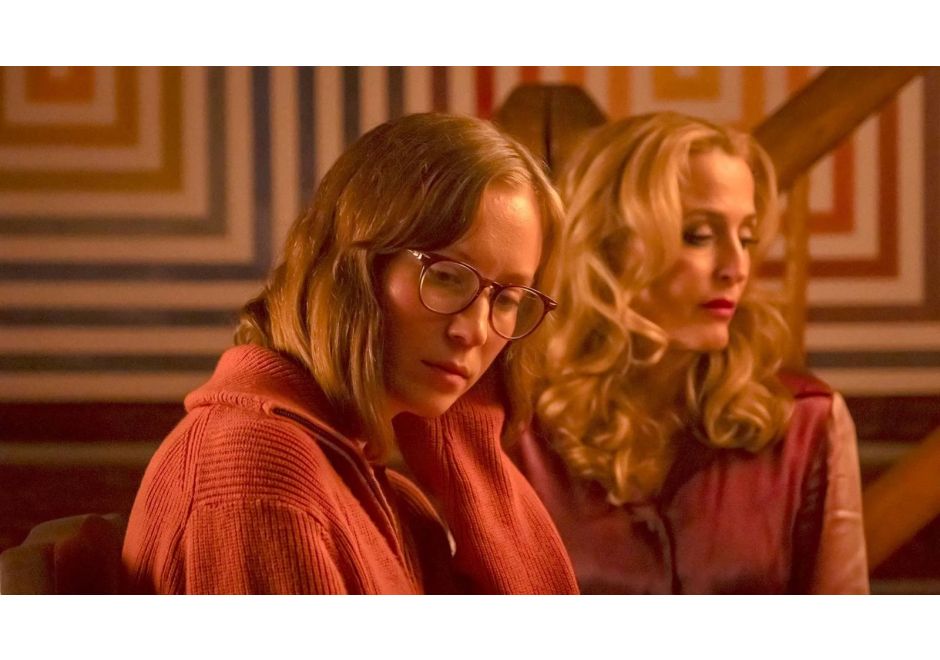
Teenage Sex and Death at Camp Miasma understands those tropes and leans on them to tell the story. Camp Miasma is the film-franchise-within-a-film that Schoenbrun uses to help explain the lives of the real movie's two main characters: Kris (Hannah Einbinder) and Billy (Gillian Anderson). Each brings their own perspective: Kris, the indie filmmaker tasked with rebooting the franchise, watched the movies as a child, and they shaped her sexual views and worldview, whereas Billy played the final girl (a slasher trope) in the first film of the franchise. Both are two generations of people shaped by the same movie, but in radically different ways.
The Camp Miasma franchise is a true 1980s slasher complete with mythology, the cultural baggage of an older horror property, and the corporate machinery that surrounds it. Schoenbrun finds a way to simultaneously make fun of the genre, critique it, and show their love for it.
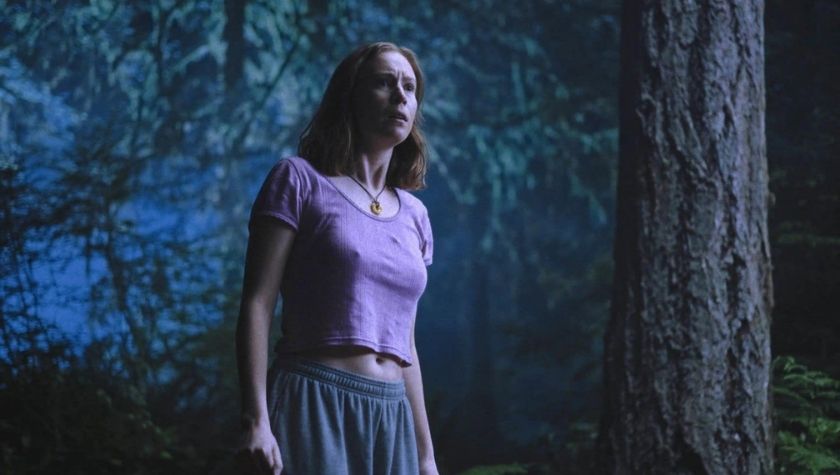
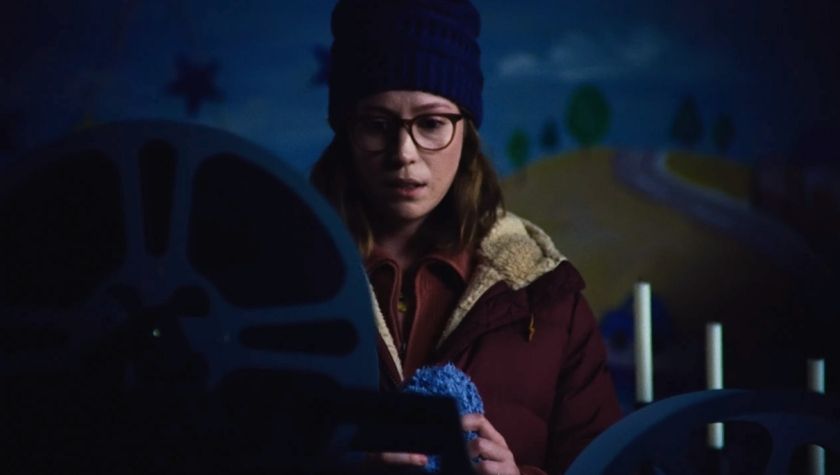
This includes a moment early on when Kris discovers that Billy lives on the abandoned campgrounds where the Camp Miasma movie took place. It's quiet and eerie. Kris stumbles into a cinema, finding a projector. Amid the silence, she says, "I feel like this is where a jump scare would be." The movie-within-a-movie becomes the slasher, while the movie the audience is actually watching explores what the slasher genre means.
"When they made Scream, which blew something out of the water in terms of self-referentiality or meta-ness or self-awareness of the genre-within-the-genre, this was before we had gotten to the point where there were twelve sequels to all of those '80s franchises," Schoenbrun said in a Letterboxd interview. "That was before the reboot that erases all of the canon, but then reinvents new canon and then they reboot it, and something in that is political, or there's something that this movie is trying to talk about in terms of why we keep doing that."
How One Genre Complements Another Genre
How does the slasher genre complement the dramedy genre that takes up the other half of the movie? The slasher elements are largely contained within the fictional Camp Miasma movie, while the actual movie is quieter and more personal.
Schoenbrun subverts expectations in that scene when Kris mentions the jump scare. The movie acknowledges the expectation and, instead of giving it to the audience, makes them chuckle at the mention and the lack of follow-through. This is also the first reveal of Billy and uses both horror and comedy, then drama.
This moment not only reveals that Kris's world isn't a slasher or horror movie, but rather indicates her world has been defined by them.
Schoenbrun Explores Sex and Culture Through the Slasher Genre
"I knew that if I was to develop a more positive relationship to sex and to my own body, I had to return to those Buffalo Bills or Norman Bateses, who I loved as a young person but who also probably f***ed me up," Schoenbrun said in an interview with The Independent. It's through their experience of watching horror movies that cast genderqueer or trans characters as 'sickos' and 'deviants,' like Psycho and The Silence of the Lambs, that they could create a film that spans multiple genres, especially using the slasher genre mashed with a dramedy to reveal how impressionable the media can be on views of sex and identity.
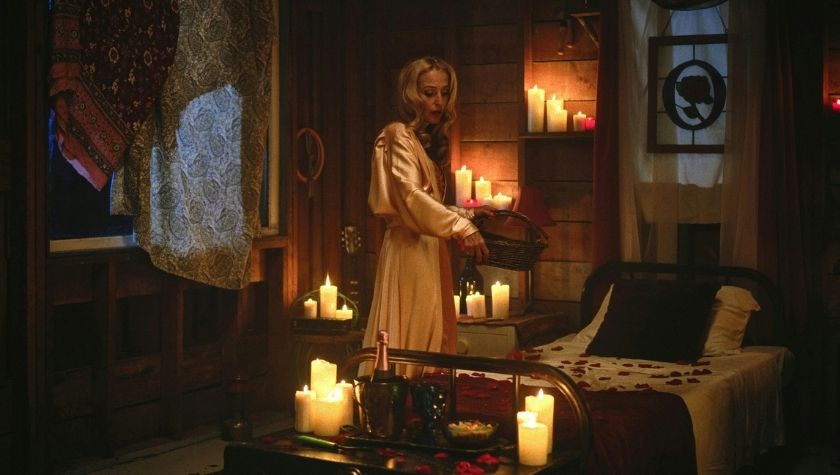
"Our relationship to sex as a culture is so unhealthy. So, of course we try to compartmentalize it or keep it on our browser window and never share it with another human being. I don't think that is serving us as a people. I think that repression is the enemy, and especially the enemy of the artist, and this is a movie against repression," Schoenbrun said in their Letterboxd interview. It's Schoenbrun's experience that helps make a multi-genre story about a filmmaker whose movies they watched shaped her understanding of sex feel personal.
Teenage Sex and Death at Camp Miasma shows that genre mashing can be about more than tossing familiar tropes together and mixing them up. Schoenbrun uses the slasher movie to explore sex, identity, misogyny, fandom, and the often-unrealized, complicated relationship people have with movies they love. For screenwriters, Schoenbrun shows how filmmakers can use personal experiences and perspectives, along with genre tropes, to tell a story that resonates with an audience.