
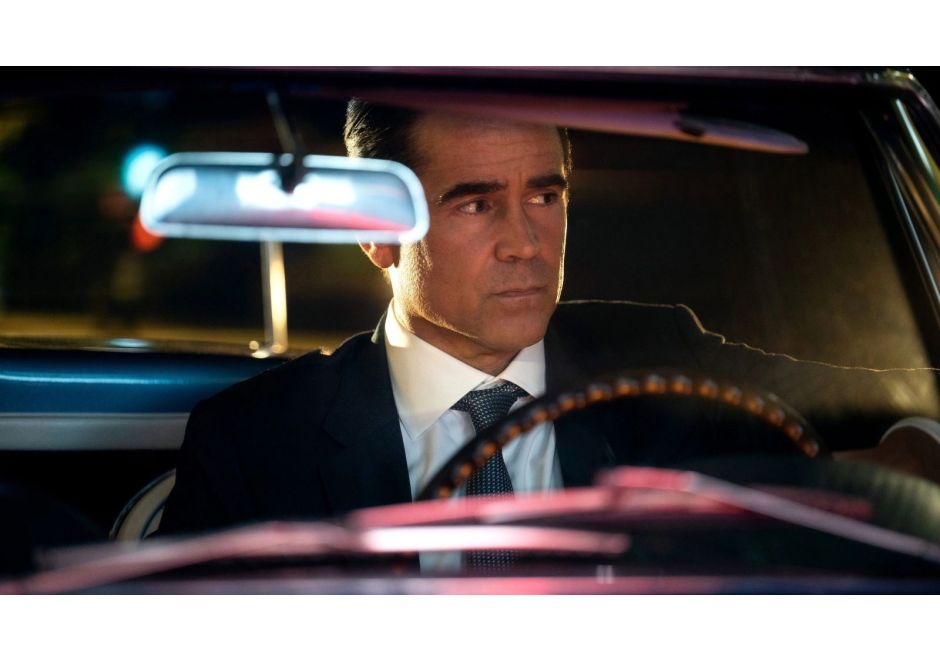
Dressed in a finely tailored suit, the private investigator walks slowly but confidently across the street. Their inner monologue gives the audience a front row seat to their thought process as danger lurks just around the corner. The private eye, hired by someone in desperate need, will follow clues to solve the mystery, pick up a few red herrings along the way and inevitably have a couple of drinks.
It's a formula that has defined noir for nearly a century, from when Humphrey Bogart played the moody, capable P.I. in films like The Big Sleep and The Maltese Falcon. And recently, Apple TV's Sugar has found a new way to reinvent those classic Hollywood noir conventions.
Sugar, starring Colin Farrell, leans heavily into the tropes, relying on them to tell the story through a detective who embraces them. It makes the show feel self-aware without insulting the audience or the genre.
Here are some of the ways Sugar reinvents the classic private eye storytelling method while paying homage to the genre.
Start with Similarities, Then Twist Them
The P.I. is a character archetype we've recognized since the 1940s. Sugar feels similar to that concept when he's hired to find a missing woman. Just like other P.I.s, he operates in Los Angeles (although the first scenes take place in Tokyo); he drinks, and he is good at what he does.
But when you go beneath the surface, a lot of the similarities disappear.
Sugar loves movies, especially the ones from the golden age of Hollywood, and he seems to get his style directly from the Bogart days of film noir: black suit, black tie, white shirt.
P.I.s in movies often have a cynical view of the world, yet Sugar is kind, polite, and empathetic — he can read people and understand who might be good at heart and who might be rotten to the core. He also genuinely wants to help more than he wants to get paid for his work; this is often part of a character arc used in classic noir, not an immediate character trait.
"I think a cynical perspective of the world is essential in any private eye story. They have this code of honor, [like] Colin's character in the show," creator Mark Protosevich said in a Letterboxd Magazine interview.
Sugar subverts our expectations of the detective, making the character more intriguing by changing the audience's relationship with that archetype. P.I.s are supposed to be hardboiled by nature; they're sarcastic, suspicious, and often dragged into being personally involved. Not Sugar; he shows compassion and sees the good in good people.
"John Sugar feels like a classic leading man and has that incredible honor," executive producer Audrey Chon said in a Creative Screenwriting interview. "At the same time, we really loved how he was thoughtful and sensitive and sweet and kind. You don't often get to see that in film noir leads. So, we felt like there was a really interesting, fascinating character to explore here for a series."

Sugar Understands the Genre
Most P.I.s go about their business as characters in the story. Sugar, however, is obsessed with classic movies. This isn't just a fun character quirk, but how he connects himself to the genres he enjoys watching.
Sugar loves noir, westerns and old Hollywood movies, a recurring reference throughout the series via old film clips. This means that Sugar knows the conventions and tropes just as much as the audience.
When he enters a bar and orders a drink, he does so because of the "romance of it" more than his desire to alter his state of mind. And his inner monologue feels more like he's purposely talking to the audience, as opposed to it being simple narration.
Sugar reinvents the private eye subgenre by leaning into it and making its lead character aware of what the genre represents, giving the title character a deliberate relationship with the genre.
Modernizing the Classic Noir
From his suit to his car, Sugar looks like he walked out of an old-school noir film, but he lives in 2020s Los Angeles. Reinventing the private eye subgenre meant modernizing the character without turning the show into another period-piece noir.
From hidden cameras to scanner technology, Sugar operates very much in the modern world. He uses scanner technology to access cars, snag fingerprints, and pull digital information as needed. This is key to differentiating it, especially since recent P.I.-centered films and TV shows like Perry Mason, The Nice Guys, A Haunting in Venice and Marlowe take place in previous decades.
While the character is old-fashioned, his methods for investigation are not.
The P.I. is a Mystery Too
From J.J. Gittes (Jack Nicholson) in Chinatown to Philip Marlowe in The Big Sleep, the private eye is usually the person asking questions — it's their job. The audience follows the detective as they uncover secrets, expose lies and put the pieces together that form the puzzle they must solve.
Sugar flips this dynamic by making the P.I. his own mystery.
At first, John Sugar seems like another cool P.I., roaming Los Angeles as he takes on the case of a missing girl. Just like so many other detectives, he's a skilled investigator who lives by a strict personal code. He loves old movies, hates violence and seems like a nice guy.
A little bit of a unique take but nothing unusual... at first. As the series progresses, small details about Sugar's behavior raise questions:
- Why does he react to certain situations differently than those around him?
- Where does his unusual understanding of human behavior come from?
- Why does his hand tremble sometimes?
- Can he really drink as much alcohol as he wants and never get drunk?
This creates a compelling relationship between Sugar and the viewer. There's a lot of trust between the two — he's capable, compassionate, and determined, but there's still something mysterious about him that's hard to grasp.
This makes the show equally about the mystery of the missing girl and the mystery of the P.I. hired to find her.
The 5 Best Private Eye Movies to Watch after 'Sugar'
John Sugar follows in a long line of intriguing detectives. Consider watching these classics to discover more about the genre, tropes and the P.I.s behind the mystery.
Chinatown (1974)
The quintessential private eye story follows a P.I. who is hired for a seemingly straightforward case but soon finds himself embroiled in family drama, corruption and the politics behind water for the San Fernando Valley.
The Big Sleep (1946)
Another trope in the private eye genre is the P.I. being warned to drop the investigation. The Big Sleep is no exception as Marlowe (Humphrey Bogart) is hired to stop a general's daughter from being blackmailed only to open up a web of murder, deceit, gambling and organized crime.
The Maltese Falcon (1941)
Another Bogart classic, the moody noir star plays Sam Spade, a San Francisco P.I. whose world is upended when a mysterious woman enters his office. Soon after this encounter, his partner is murdered and he finds himself caught up in trying to hunt down a priceless statue.
L.A. Confidential (1997)
Hollywood, crime, tabloids and corruption all come front-and-center in this L.A. story when three detectives investigate a series of murders and uncover the truth behind the seediest parts of the city.
The Nice Guys (2016)
Two private eyes living in 1970s Los Angeles must team up to investigate a missing girl (it's a common trope) and the mysterious death of a porn star. From Shane Black, this Hollywood noir mixes it up by adding plenty of comedy from stars Ryan Gosling and Russell Crowe and placing the story in a later decade.
Once the P.I. genre became established, it had to reinvent itself to continue appealing to audiences. While the default version of the private eye might be outdated, the character itself can still thrive in the 2020s, as well as the stories (so many involve finding missing women). Sugar demonstrates how screenwriters can take a genre audiences are familiar with and use its tropes to change it by updating the personalities of the characters, the technology and how they solve mysteries.