
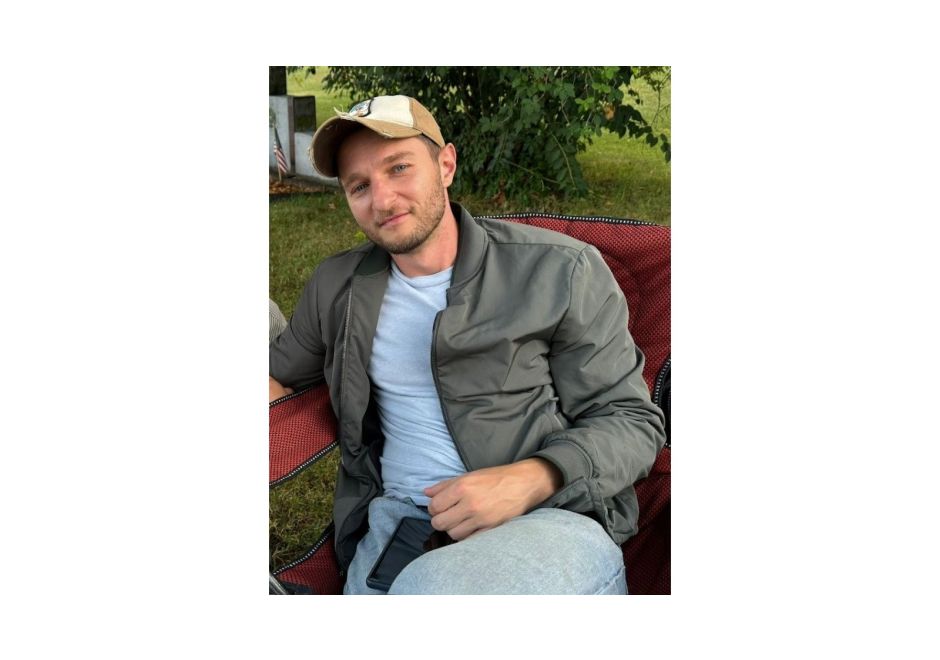
Jason Kaleko’s screenplay ‘Effigy’ won the Final Draft Big Break horror category before ultimately taking the Feature Grand Prize in the 2023 screenwriting competition. For a writer who had already spent years writing and wondering whether the effort was leading anywhere, the win was a clear message that he was on the right path, especially as a genre writer.
“I’m a horror writer. My whole goal in life is just to scare people,” he says, adding, “Winning Big Break has definitely been a huge part of everything that’s happening now.”
‘Effigy’ begins with a hauntingly creative premise. The story follows a woman whose estranged father, a legendary painter in the mold of Jackson Pollock, has died. Though he was never really part of her life, the art world mourns him as a genius. To his daughter’s surprise, he leaves her the studio where he spent the last decade of his life. Hoping to explore her own artistic side, she takes a break from her day job as a paralegal and heads to the isolated studio where she plans to spend some time expressing her own emotions through paint. Instead, she discovers the art studio appears to be haunted by her father’s spirit.
Then things get stranger.
At the center of the script is a mannequin that seems to act as a conduit for the dead man, until the daughter realizes that whatever is speaking to her may not be her father at all. ‘Effigy’ is the kind of contained, escalating nightmare that horror thrives on: isolated woods, mounting dread, and a woman forced to ask what exactly she has invited into her life.
At the time of his win, Kaleko was living in Los Angeles and making a living as a copywriter. His professional work included writing for companies like Fox Entertainment and Peacock, often on the marketing side.
“Sometimes I’d be writing commercials, sometimes billboards, or maybe internal documents, things like that. But my passion really is storytelling, and writing my own ideas,” he says.
That passion is now taking up more space in his work life. Kaleko says he is currently taking meetings off a newer spec script with his manager, Dallaslyn Lamb, and writing horror novels. His debut book, The Joplin Horror, is slated for release in spring 2027.
Kaleko says the timing of the Big Break win was crucial. He was already taking meetings with managers when the competition announcements began rolling in, allowing him to update prospective reps as he advanced from quarterfinalist to semifinalist to finalist. By the time he won, the contest had become a meaningful part of the story he was telling about himself as a writer.
“I definitely think it helped push me over the edge for them,” he says.
He signed with Dallaslyn Lamb and Matt Rosen at Rain Management Group, and though both have since moved on from Rain, Kaleko remains with Lamb.
“She’s the best,” he says. “I’ve had managers before, and she’s by far the best. She’s a true champion for the stories that I want to tell.”
When it came time to decide which sample to send out first, the answer was obvious. “I was like, well, it’s got to be ‘Effigy’,” Kaleko says.
That visibility helped them get the script read, land general meetings, and eventually put ‘Effigy’ in front of producer Justine Conte, who had recently come off Killers of the Flower Moon. The script is now optioned through Nina Pictures.
For an emerging writer, that kind of chain reaction is the dream: one strong script, one well-timed accolade, one open door that leads to another. But when asked what meant the most about winning, Kaleko doesn’t point to the meetings, the option, or even the financial prize package, which included cash, an iPad, and a laptop he still uses. He points to something more internal.
“When you’re a writer, you’re always kind of wondering if this thing that you think has a lot of value actually has value,” he says. “As a screenwriter, there’s very few ways to figure out if you’re crazy or not.”
That’s where a competition like Big Break can matter on a level that goes beyond getting notice.
“The real value, aside from the connections you make, and the people you meet, and the prize, is just the validation, frankly, that you’re not crazy,” he says.
For Kaleko, that validation came after a long road. He says he had written more than 35 scripts before he wrote ‘Effigy’. That detail is what makes his advice especially valuable for writers who are trying to decide whether entering a contest is worth it.
“It’s worth it,” he says. “It’s worth it even if you don’t win, just to get a gauge on what you’re doing, and if you’re going in the right direction.”
He also points out that placement alone can be useful. Quarterfinalist or semifinalist status from a well-respected contest can help legitimize a query letter. But his biggest practical advice is to always be writing.
“Once you do get those meetings, people will usually say, ‘I loved your script. It’s not for me,’” he says. “And they’re going to ask, ‘What else do you have?’”
That inevitable question means the real job is not just to finish a screenplay good enough to get attention, but to become the kind of writer who always has another one ready.
“If you want to be a writer, you have to be writing the next thing.”
For writers looking at contests as a possible next step, Kaleko’s story offers a useful reminder that one script can open the door, but it’s all the drafts and years of studying the craft that will keep you going.
Learn more about Final Draft's Big Break Screenwriting Contest here.