
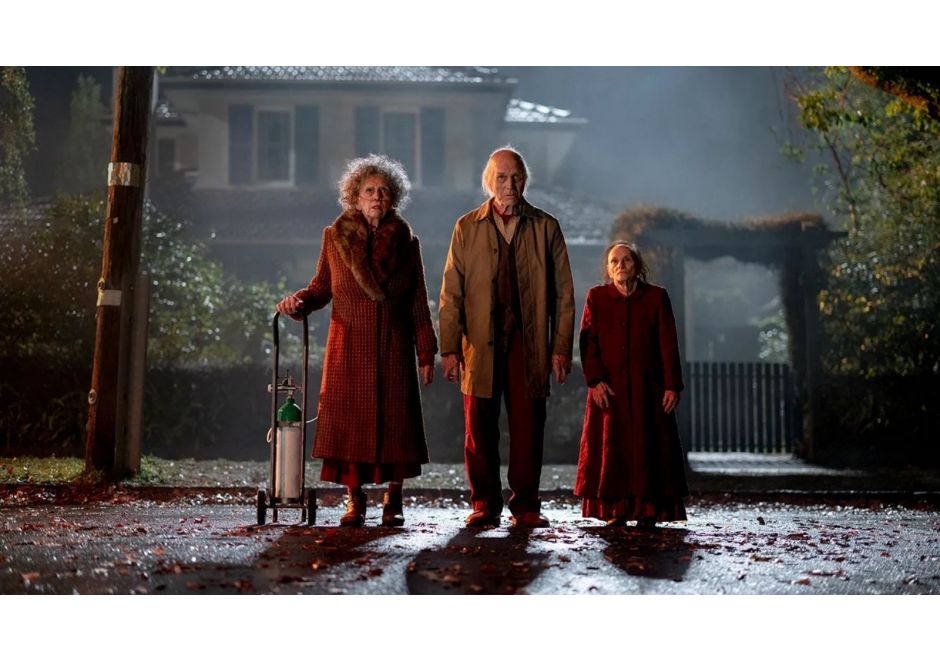
In 2010, Insidious, made for $1.5 million, hit theaters and brought in over $100 million worldwide at the box office. While horror movies have enjoyed a solid reign at the box office for the last 20 years, topping charts when released at unconventional times (Insidious was released on April 1st), it takes a unique one to break through the noise and forge itself into franchise territory.
In the last 16 years, Insidious spawned several prequels and sequels, scaring audiences and continuing a franchise that has found ways to reimagine itself and live beyond most of its original characters. Combined, the films have earned over $740 million worldwide, according to Sony.
Insidious created something Hollywood is always in search of: a horror franchise with a mythology audiences are eager to explore, like The Conjuring, Saw, and Paranormal Activity. A true horror franchise is a difficult trick to pull off because, once the audiences know the rules, the monsters and mythology, it's hard to make the next movie feel fresh. How do filmmakers walk the fine line between creating something familiar without repeating what came before?
Insidious: Out of the Further is the sixth film in the franchise, and it proves it can be done by introducing a new family, a new protagonist, and expanding the mythology while still feeling unmistakably like an Insidious movie. For instance, one key evolution of the franchise is that its protagonist, Gemma (Amelia Eve), is not a traveler like previous characters, but a courier. The key difference isn't that she can enter the Further, but that she has the ability to bring things out of the Further and into the human world.
The lesson: Co-writer/director Jacob Chase didn't need to reinvent the entire world, but had to find a new way to explore what was already there.
When Building a World is More Important Than Creating a Villain
The Insidious movies aren't reliant on one single villain or protagonist, but can have countless entities at their disposal from what's really driving the franchise: The Further.
The Further gives whoever takes over the next film flexibility. Demons, families, rules, stories... it can all be new while keeping the same basic mythology. Who knows how deep the Further goes? Each new film can explore a different aspect of the other world and change what drives the villain.
The Evil Dead franchise is an example of a horror franchise that has pulled this off multiple times, with the latest films unleashing frightening new demons from the Necronomicon. Other than the Book of the Dead, the comparisons to the original Evil Dead film are hardly noticeable. Evil Dead Burn stays true to the source, though, offering the audience familiarity while still standing on its own.
Expand on the Mythology
Almost every horror franchise runs into the same problem: the audience understands the basic rules and knows what's going on. For Scream, the audience expects more than one killer. For Halloween, Michael Myers will kill at will and have a supernatural force that all but prevents him from dying.
In Insidious, the audience is well aware of the Further, that crossing into it comes with some serious consequences, and that whatever is on the other side really wants to cross over into our world. They also know that places aren't haunted; people are. But these established rules can be expanded on.
"Anyone in the audience is going to ask, 'Why are we still making these movies? This is too many Insidious movies, right?'," Chase said in a Variety interview. "So, my big pitch coming into it was, 'This cannot feel like just another Insidious movie. This has to feel like it's a fresh start.' It's an original film that happens to have Insidious in the title was my goal."
Insidious: Out of the Further introduces a new aspect of the person being haunted. While other films have their protagonists entering the Further to retrieve something, this latest one flips it by introducing Gemma as a courier, meaning something from that world can enter ours through her. She's not a traveler like others were in previous films.
"The situation is very different than anything we've seen in any of the other Insidious movies," Lin Shaye, who has played Elise throughout the Insidious franchise, said in a Dread Central interview. "The constants are the Further, which keeps evolving... with each installment of the films, we learn more about what might be there and the demons who populate that world."
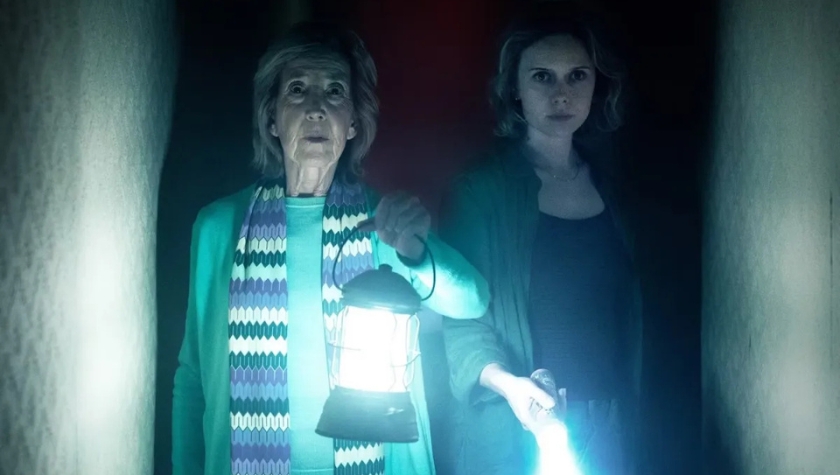
Insidious: Out of the Further shows that mythology shouldn't feel like a hard set of restrictive rules, but a sandbox with established parameters where the occupant can play how they choose.
Silence is Scarier than Dialogue
When watching a horror movie, the audience already knows that something terrifying is likely lurking just outside of the frame. Every creak of the floorboard, rustling of the wind, or breath of air inhaled and exhaled lends itself to suspense and needs no explanation. The fact that the character also doesn't know what's going on makes it tenser.
When Gemma crawls into a pillow fort her daughter created, she soon finds herself in a Backrooms-esque maze she can't escape. Being stuck in a confined area is enough to induce panic, but what happens when a creepy face peers at the end of one of the halls?
There's no dialogue, just panic. Just breathing. And just the patter of hands and knees on carpet as she tries to escape. The audience doesn't need to know what's going on (Gemma doesn't even know), and that lack of information is terrifying. Scary movies aren't afraid of silence and understand that explaining something can take away a scene's suspense.
Let the Scary Moments Tell the Story
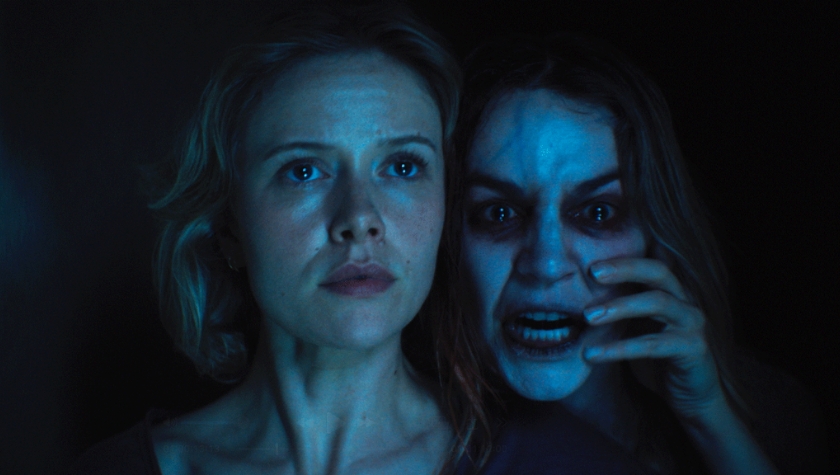
"What I tried to do was to make sure every single time there was a scare moment in the movie, that it had real stakes, that it fundamentally changed the story in some way," Chase said in a Variety interview. "The very first jump scare of the film is the first moment of Gemma discovering she has some sort of new unique ability. That was a perfect example of it fundamentally changing her in some way. I worked in the script so hard to make sure every one of these moments had emotional impact."
Horror screenwriters can't simply write scary scenes, but need to use horror set pieces to deepen character, escalate the story, or reveal new information. The pillow fort scene isn't just scary; it shows Gemma that her familiar world isn't as reliable as she once thought and makes her question what's real.
Finding Inspiration in Your Life
In Chase's quest to make a non-Insidious Insidious movie, he found inspiration in his own life.
"I became a dad while writing this movie for the first time, and I was terrified about becoming a dad, and I definitely tapped into that in working on the script and the film," Chase said in a MovieWeb interview. "I think it taps into this feeling of the worst fear is reliving your past or reliving the sins of your fathers, or mothers in this case, in the film, and I think that's something that honestly all the Insidious movies have tapped into a bit."
What Insidious constantly does is pass something down to a new generation. In the first film, a family is trying to figure out what's happening to their boy, only to find out the father had the same issues and was hypnotized into forgetting about it. Chase used this core theme in his own version of the Insidious franchise. "You can't run from your past, and that's ultimately what this movie is about. The inability to run from your past, run from your trauma. You have to face it, just like you have to face your own fears of the demons or your own past."
Insidious: Out of the Further shows how to keep a franchise fresh without abandoning everything that preceded it. Chase didn't reinvent the world; he found new ways to expand what the Further is and how people can access it. Fortunately, the sandbox he got to play in had established a world capable of generating fresh ideas, instead of repeating the same story.