

The limited series DTF St. Louis, starring Jason Bateman, Linda Cardellini and David Harbour, is one of the messiest yet most addictive crime shows in recent history.
We sat down with writer/director Steven Conrad to find out what inspired him to dig beneath the surface of normal-looking lives in American suburbia and to create these highly unpredictable characters. If you haven’t seen the show, do yourself a favor: brush up on your corn hole skills, grab a Jamba Juice Go Getter, and dig in. Mild spoilers ahead.

After finishing his offbeat spy series Patriot, Steven Conrad found himself on a crazy Hitchcock binge where he became fascinated with the way Hitch’s characters, many of whom seem ordinary from the outside, drive the story through their obsession, guilt, or deception. Conrad discovered that repeatedly, they all make bad decisions that cause the story to spiral out of control.
“In films like Vertigo, it doesn't seem like there's any character going on until it's finished and you realize this is all character, the character drove these impulses that resulted in catastrophe.”
That sparked an idea for a TV show. “I was trying to figure out how to do a thriller, for lack of a better word, a psychological thriller, erotic thriller, whodunit mystery. I had these thoughts I wanted to explore about being middle-aged, and I recognized in my circle of friends a lot of bad decisions being made, I think as a result of being middle-aged. The bad decision in the thriller is great because it starts a series of cascading, worse decisions.”
That cascade of bad decisions became the engine of DTF St. Louis.
The show centers on three deeply unhappy suburbanites who engage in a love triangle, each for different reasons. Searching for relief from his mundane life, Clark Forrest (Bateman), begins having an affair with Carol Smirnitch (Cardellini), who makes no secret of her money woes. Carol’s husband, Floyd Smirnitch (Harbour), a sign-language interpreter at the news station where Clark is a weatherman, is a gentle soul with a crooked penis. A strange, desire-driven mystery unfolds when one of them ends up dead under suspicious circumstances.
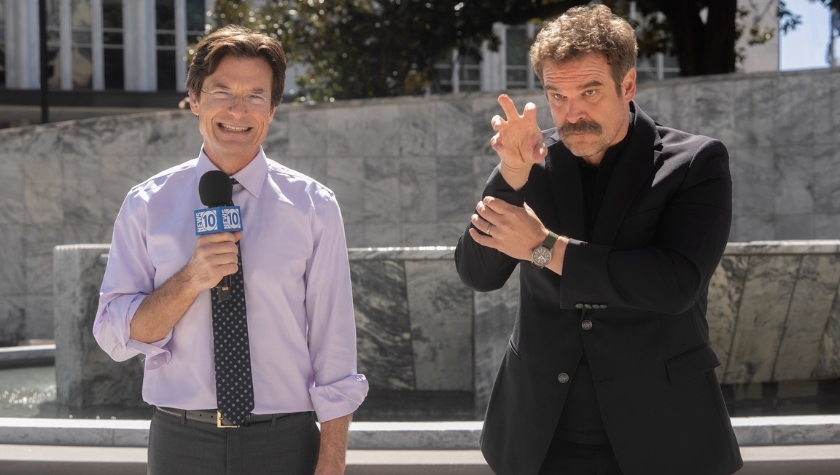
The Premise: Desire Without Consequence
Set in 2018, the era of “cheat-on-your-spouse” apps, DTF St. Louis is the name of a fictional app that promises users, “All the excitement, none of the consequences.” For Conrad, that tagline was an intriguing hook that many people bought into with real apps like Ashley Madison, then later regretted big time.
“If you make that bet, you’re going to lose hard,” he says with a laugh, adding, “Watch the expectation. Then watch the consequence. That is where tension comes from.”
He liked the idea of exploring people who falsely think they’re going to fool around on their spouses, and no one will get hurt.
“It seemed like a thing Hitchcock would mess with a little bit, like the unforeseen, you didn't expect this consequence. So it was really that tagline that allowed for the story to start taking shape,” he says.
From there, the show builds a tower of tension: A seedy hotel, a fake online profile for a guy named Tiger Tiger, Indiana Jones porn, a life insurance policy, a special needs son, and a pair of mismatched detectives attempting to untangle the truth. But unlike traditional murder mysteries, DTF St. Louis isn’t told from one point of view. It revisits events from multiple angles and forces the audience to constantly rethink what they think they know.
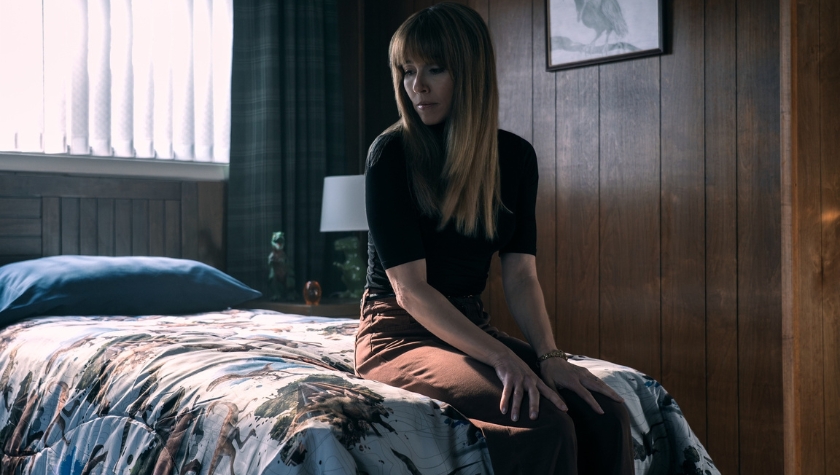
Writing Characters You Can’t Reduce to Motive
One of the show’s most effective elements is its refusal to define characters as simply the usual suspects. Conrad constructs each character with odd, often contradictory drives. Even when someone appears guilty, it’s never that simple.
Take Clark, who initially seems to be manipulating Floyd for selfish reasons. As the series unfolds, that reading becomes less and less satisfying.
“What you’re seeing can’t be true anymore,” Conrad says. “This friendship just feels too stable and necessary.”
Rather than a clean motive, Conrad creates emotional ambiguity through guilt, compassion, and even desperation. Clark gives Floyd access to the DTF app, tries to help him financially, and even attempts to lift him out of despair, but each gesture only complicates things further. The thing meant to fix the problem becomes the thing that destroys everything.

Finding Floyd
Conrad thought a lot about creating characters the audience would want in their house every Sunday night. It was early conversations with actor David Harbour that helped him understand who Floyd could be.
“There's a certain thing that David Harbour allows a filmmaker to access. He has this light in his eyes, and I don't know if science could figure it out. The way I describe him is like a sexual Gene Wilder, like magic, but also animal. I just started to find Floyd as someone bigger than life, sweeter than he ought to be, gentler than the world, and loving so much. If he loves something that was fragile – like a stepson – how easy that bond could be to break. I knew that would be very heavy for someone as beautiful as Floyd, and it might be catastrophic if that could happen. So, I knew that that meant death, that death would be a part of this.”
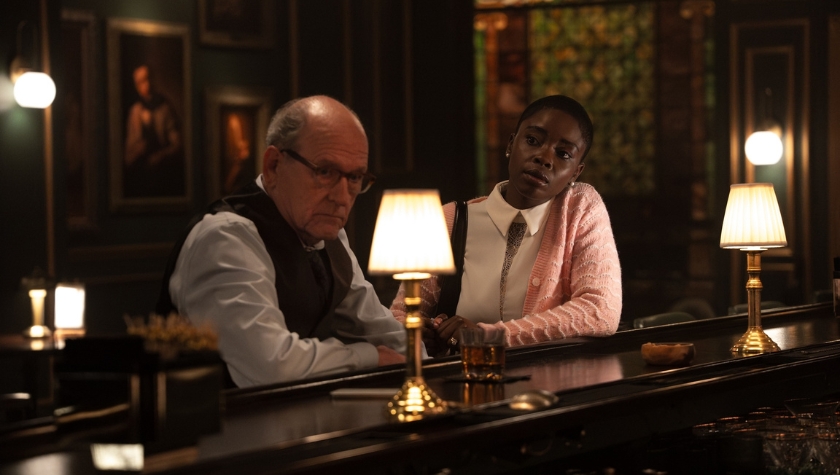
He says that from there, framing the story with two investigators, Homer (Richard Jenkins) and Plumb (Joy Sunday), made sense, especially when he gave them an age gap to fuel conflict between them.
“[Homer and Plumb] needed to fight through something in order to be heard by each other. The older detective who thinks he's seen it all, and the younger person who lives in the suburbs who knows that people are as weird here as they are in the French Quarter, like everybody's weird. It just doesn't look like that from across the street. So that little theme allowed us to start creating episodes. Slowly and surely, it all started to reveal itself.”
The One Question Every Writer Should Ask
When asked for advice, Conrad asks a deceptively simple question: “Is this entertaining?”
For Conrad, “entertaining” doesn’t mean shallow or commercial. It’s about engaging the audience and keeping them fully present, so they’re not checking their phone or doing other things.
“I think about that weird word, and it doesn't mean simple or insipid. Or marginalized. Entertaining means you've got somebody, they're there, they're not looking at their phone, they're being entertained, and you don't really look away when you're truly being entertained. I remind myself all the time to reflect on whether the thing that I'm making is entertaining. So, interpret that word for yourself, find your own definition of that,” he says.
Conrad’s challenge to writers is to define what “entertaining” means for them and then rigorously pursue it.
The Takeaway
Perhaps the biggest thing writers can take from Conrad’s show is this simple recipe: Start with character. Let decisions drive the plot. And never underestimate the power of a single bad choice, especially when it feels like a good idea at the time.
DTF St. Louis is currently streaming on HBO Max.