
The 1970s were filled with disaster films. Movies like Earthquake, The Poseidon Adventure, and The Towering Inferno thrilled audiences as they watched an ensemble cast of characters navigate a disaster and hope to survive by the ending credits. The trend came back in the 1990s with volcanoes (Volcano and Dante’s Peak), meteors/asteroids (Deep Impact and Armageddon), and other natural disasters.
Deep Water, the new film by Renny Harlin, whose 1999 cult classic Deep Blue Sea involved sharks shredding through characters, combines the horrors of being eaten by a shark with the thrills of an impending plane crash and the drama of a diverse cast coming together to survive, or not.
Like many of the disaster films that preceded it, Deep Water focuses on character first, so the audience has someone to root for as they fight to survive. It also doesn’t have a truly defined genre; in fact, it’s a mash-up of genres.
Character First, Destruction Later
Killing lots of characters is tricky. At one end, watching random people die spectacularly in a disaster/action movie can be entertaining. On the other hand, if the audience doesn’t care about them, then they’ll get bored quickly.
“If you don’t care about the people, nothing matters,” Harlin said in a Behind the Lens interview. “The sharks can eat everyone, everything can explode—but if you don’t care, it’s just noise.”
Defining the characters in a large cast, where introductions need to be made quickly and memorably, is often done through small gestures at the beginning of the film. Some examples from Deep Water include:
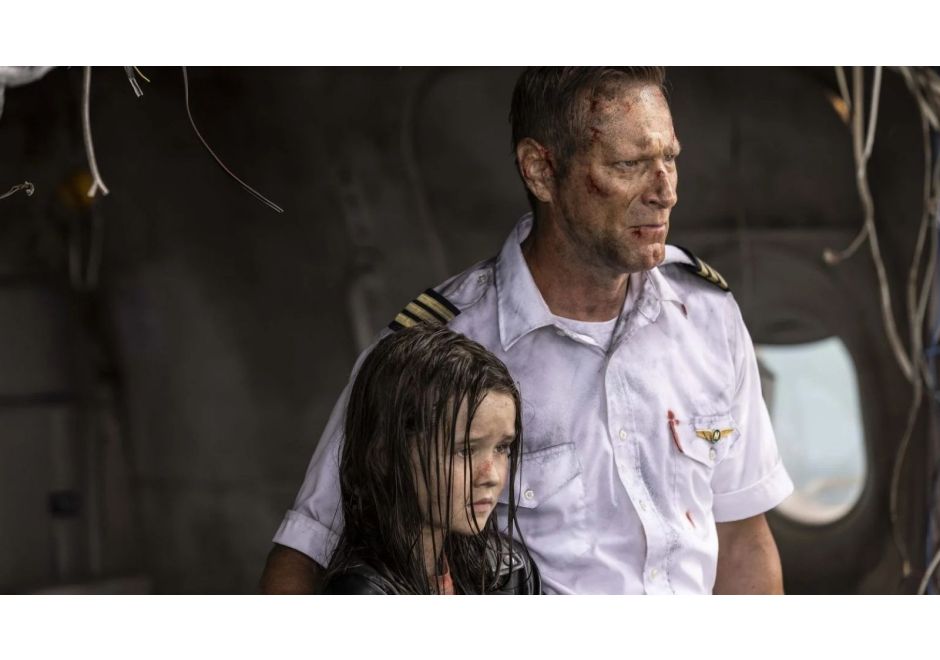
- The pilot talking briefly with a scared girl
- A jerk shoving past everyone to get on the plane
- A woman showing a picture of her grandchild
In an ensemble film like Deep Water, there’s simply no time for long backstories or depth during the introduction, unless they are one of the major characters.
The audience learns the most about pilot Ben (Aaron Eckhart), the hero of the story, whose “by the book” personality and desire to be with his family, despite running away from them, drive his decisions.
Other characters aren’t plagued by as much motivation; at least there isn’t as much time to see it. The audience never really learns where most people’s final destination will be or why they’re heading there, but there is enough dimension to keep the characters from being flat.
Ultimately, it’s not why they are going on their journey – most are just traveling home or to visit someone – but who they are that matters.
Importance of the Characters’ Actions
When a plane is crashing on screen, there isn’t much a passenger can do other than scream, cry, or die. Once they survive, though, they have jobs to do. This is where the characters’ arcs come into play.
Some may initially stir up trouble or be selfish, only to find that their actions are hurting their chances of survival, so they must change tactics, maybe even sacrifice themselves for the greater good. Or they may get their comeuppance. And then there are the emotional anchors who fight and help, showing the other characters that there is hope.
These types of characters have always been part of disaster movies. It’s their actions that drive conflict and can harm others' chances of survival. Here are some character tropes from disaster movies also found in Deep Water:
- Greedy/Selfish Guy: Mayor in Jaws, investor from The Towering Inferno, Cal (Billy Zane) from Titanic
- Emotional Anchor/Elderly Woman: Deep Water has one, as does Dante’s Peak and Twister
- Children: Dante’s Peak and The Impossible
Genre Mash-Up
What kind of movie is Deep Water? While it’s not unusual for a film to fall into several sub-genres, there is usually one main genre: Star Wars is science fiction, The 40 Year-Old Virgin is a comedy, and Top Gun: Maverick is action.
Deep Water is a mash-up of about 4 main genres: Thriller, Drama, Disaster, and Horror.
There isn’t a main genre, but rather a mash-up in which at any moment one may become dominant. Let’s take a look at how Deep Water does this.
Thriller
At the beginning of Touch of Evil, a ticking time bomb is set for 4 minutes and placed in the trunk of a car. For the next few minutes, the audience is on the edge of their seats, wondering at what point the bomb will explode, where it will be, and who may be killed.
Before the plane-crash set piece in Deep Water, the catalyst is set in motion. A character places a sparking battery charger into their suitcase. Anyone who knows anything about the movie will know what’s going to happen. However, everyone is in suspense about when it will happen, which of the characters we meet will die, and where they will be on the plane. Finally, how will the pilots navigate the crisis on board?
Drama
One of the most dramatic scenes of the movie is when the plane begins its fateful descent. It doesn’t unfold like Cast Away, Send Help, or Flight. It feels like how a real plane crash might proceed, with the pilots remaining in complete control, calm and competent. The passengers, while scared and crying and helping others, don’t seem panicked but rather as if they're all beginning to accept their fate. The plane crash sequence unfolds as if it could be the beginning of a drama about the aftermath of a traumatic event.
Disaster
After the plane crash, the remaining characters are split up, like characters often are in disaster films. The plane rests in separate sections, allowing the filmmakers to move between stories without any of them getting stale.
This also means survival against shark attacks in one location differs from escaping a sinking part of the plane in another. By separating characters and slowly bringing them back together, with quite a few dying along the way, Deep Water feels like a disaster movie.
Horror
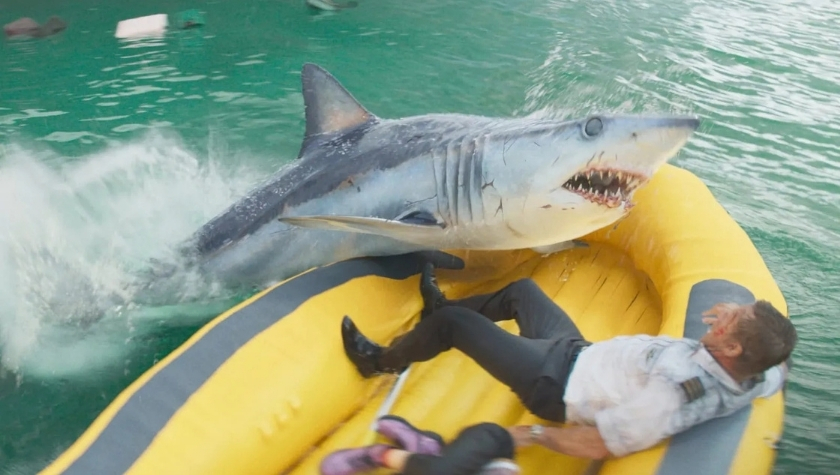
Shark attacks have been a tenet of horror for decades. They’re ruthless, hard to see underwater, and strike anything that looks like food, which is most people kicking their legs. In Deep Water, they are the movie's horror, picking off characters almost from the moment the plane crashes, and the way the sharks stalk their prey and then strike violently rings familiar to anyone who knows the horror genre.
Deep Water is a deliberate mash-up of genres that sneakily keeps audiences off balance. By blending thriller-style suspense, drama, large-scale disaster elements, and shark-chomping horror, the film constantly shifts tone without losing the overall narrative. Each genre takes the lead at different moments, which prevents the story from feeling predictable – who would’ve thought that a plane crash can feel both frightening and, with the way the pilots act, reassuring?
While some genres are more pronounced than others, Deep Water shows how mashing up genres can help screenwriters make their stories feel more unique, unpredictable, and engaging.