
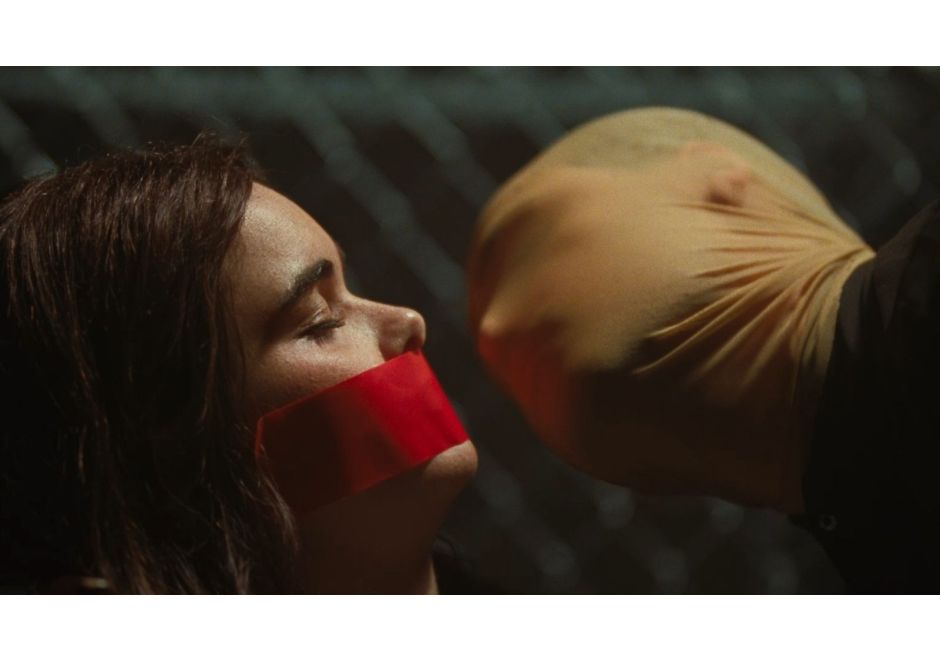
In 1978, Faces of Death shocked audiences by blurring the line between real and staged violence, becoming one of the most controversial cult films ever released. It came out of the mondo film tradition, a genre of shock-driven, fake documentary films sometimes called “shockumentaries.” Today, mondo films are often dismissed as an exploitative, cheap-thrills way to manipulate a less savvy audience, but what’s surprising is how much they feel like a precursor to today’s digital landscape where you never really know if you’re watching content that’s real, or generated by AI.
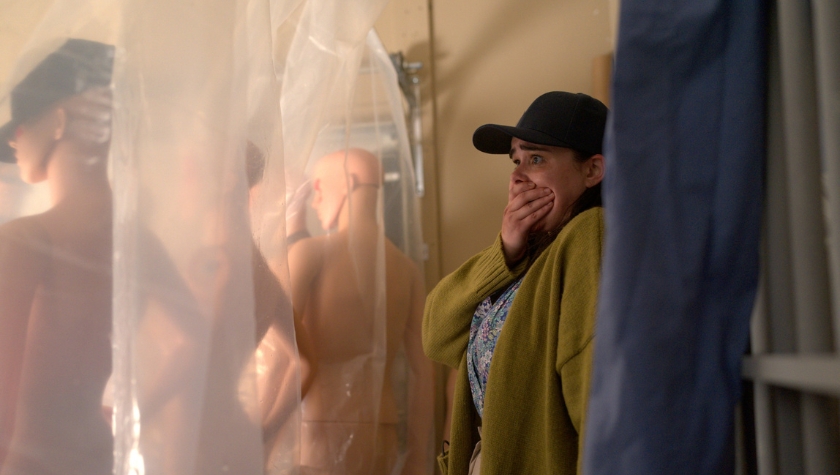
The new version of Faces of Death centers on Margot (Barbie Ferreira), a young content moderator whose job is to filter violent footage online. When she begins to suspect that a series of videos may depict real murders imitating the ones in the original Faces of Death, she takes it upon herself to investigate the elusive content creator, Arthur (Dacre Montgomery). We sat down with director/co-writer Daniel Goldhaber and co-writer/producer Isa Mazzei who have reinvented Faces of Death for the TikTok age.
The Internet Is the New VHS
Mazzei says she and Goldhaber were approached by Legendary Entertainment, who had acquired the rights to the original film in hopes of making a remake. What they discovered doing research for the project surprised them.
“We had never seen the original. It was a little bit before our time, so when we watched it, we started recognizing pieces of it that we had seen online growing up. And that was a really cool experience and a realization that this film has really had an enduring life. We were really excited to figure out our space inside of that,” she says.
They asked themselves the same question any writer might ask when rebooting an older franchise: What does Faces of Death look like now?
“We realized that Faces of Death is online,” Goldhaber says, inspiring him to draw on his experience working as a content moderator after college. He thought this could be a way to explore the psychological toll of moderation work, which is a largely invisible job where people review and approve or dismiss the worst content the internet has to offer.
Pairing that with the original Faces of Death unlocked the new film’s premise: A high stakes predator vs. prey thriller between someone creating violent content and someone trying to stop it.
“We were also interested in the complicity that social media companies have in escalating the violence and anger of our world right now,” Goldhaber says.
That theme elevates the material beyond shock value. Instead of wondering, am I watching something real? The question shifts to, why am I watching this in the first place?
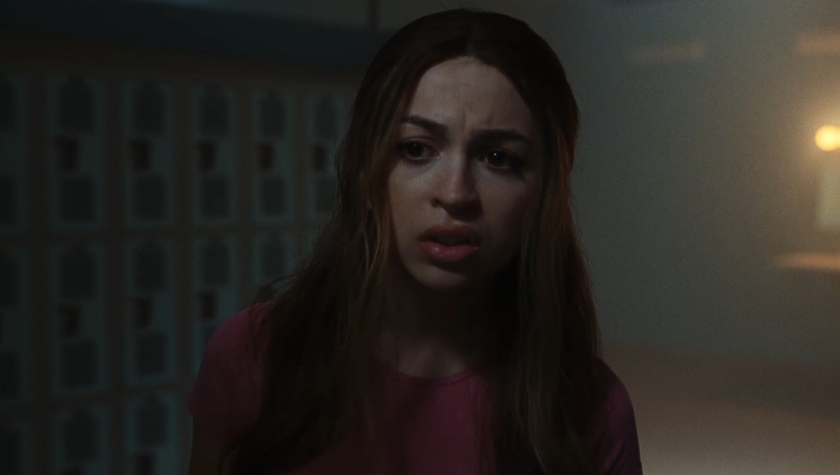
When Reality Is Easier Than Fiction
One of the most disturbing discoveries during production had to do with licensing real footage. To depict Margot’s job authentically, the filmmakers incorporated real death footage into the film, navigating a long legal and ethical process.
“To put it in a movie, we had to go through all these channels,” Mazzei says. “But when I go home and open my phone, I’m just served this content every day without any of those checks in place.”
It’s not just that violent videos exist, it’s that they are curated and delivered to you on your phone every day, both real and AI.
Writing the Algorithm as the Antagonist
One of the film’s freshest ideas is treating the social media algorithm, not just the human killer, as the antagonist.
Mazzei says the way platforms are designed to amplify the most emotionally charged content is what’s so harmful. “It’s the content that keeps us engaged. It’s the attention economy.”
This goes back to the theme of complicity, where the “villain” is a structure we all participate in. Just the film’s existence as a remake becomes proof of that concept.
Goldhaber notes the irony: just as Arthur, the film’s killer, is driven to recreate Faces of Death, the industry itself is driven to remake it.
In the film, Arthur chillingly says, “The algorithm loves remakes.”
It’s this clever layering of relevant, meta themes, that gives such a gruesome film a reason to exist and be examined.
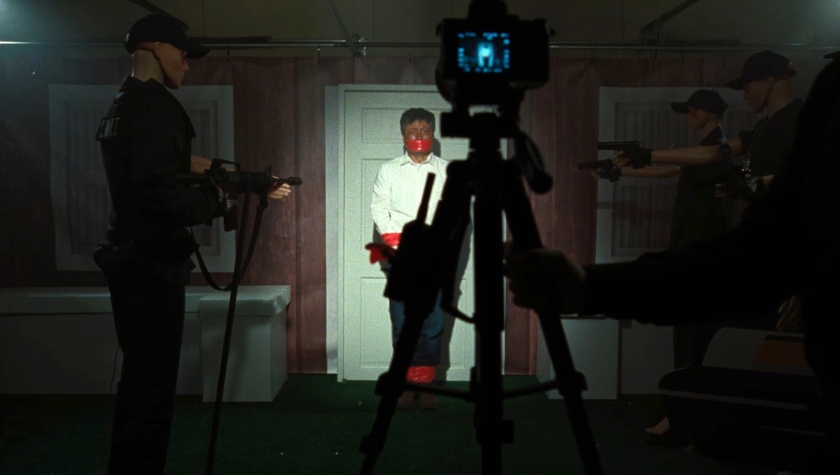
Keeping a Collaboration Alive
Goldhaber and Mazzei have been creative partners for over 20 years. To keep the partnership strong, they have one key rule: If they disagree on something, neither idea wins. Instead, they search for a third option, something both of them can stand behind.
“What we started finding was that the best ideas were something that both of us liked,” says Goldhaber.
It’s a simple principle, but one that gets to a larger truth about collaboration: great ideas don’t always come from compromise, but from pushing forward.
Fighting for the Film
Ironically, a film about censorship and control faced its own battles getting released.
“We’ve dealt with a lot of attempted censorship of the film and our marketing materials,” Goldhaber says.
Despite finishing the film two years ago, the team had to fight to bring their intended version to audiences, ultimately refusing to make major concessions. Their advice to filmmakers facing similar censorship is blunt.
“Stick to your guns. Have dogged persistence,” says Goldhaber.
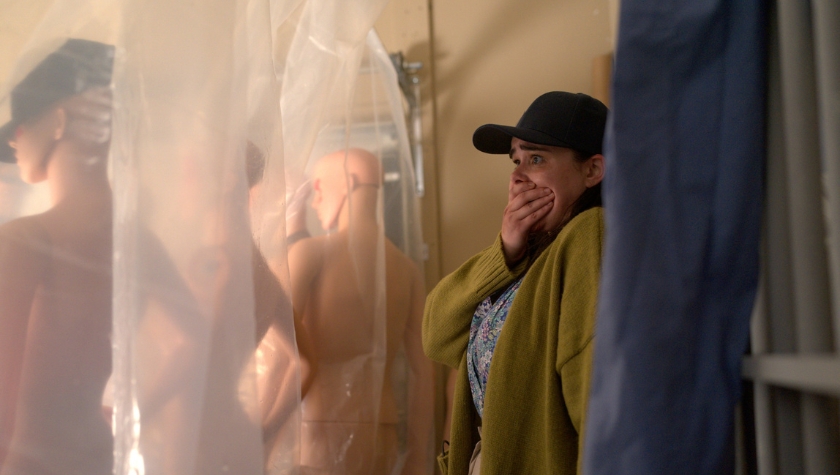
We’re All Complicit
We asked the filmmakers what they hope the audience will take away from this film. Goldhaber was very clear.
“That social media is truly evil,” he says.
So, will the film be promoted on social media platforms? Absolutely.
“I'm posting constantly,” says Mazzei, adding, “I literally am making content to promote. And I think that's part of the conversation we're having, right? No spoilers, but the end of the movie. That's kind of what we're saying. You cannot exist in modern society without being on your phone, but at what cost? And we're all kind of complicit in it. We're all stuck in this loop, we’re stuck in the same place that everyone else is.”
If there’s a central idea behind remaking Faces of Death, it’s not just that social media is dangerous, it’s that participation in it is unavoidable. And the serpent eats itself.
Faces of Death was written on Final Draft, and opens in theaters April 10.