
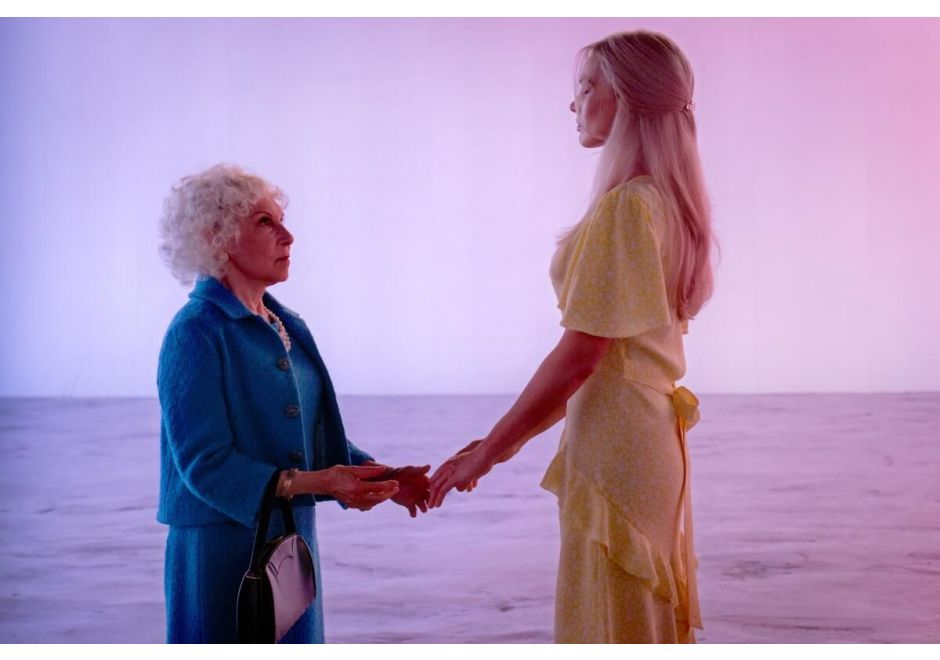
In Barbie, a mysterious woman helps Barbie (Margot Robbie) escape pursuing corporate executives and then speaks with her about the true identity of the toy she represents. This woman is Ruth Handler (Rhea Perlman), a character who appears briefly but plays a foundational role in the film, and is revealed to be Barbie’s creator. Though rarely seen, her presence “haunts the narrative.”
What does haunting the narrative mean?
It’s a technique in which some of the most powerful characters in the film have very little screen time. They, or what they represent, lingers. They appear briefly, sometimes only once or twice, yet their presence shapes decisions, raises stakes and echoes through the story long after they’ve left the frame (and sometimes before they’re on screen).
Another example of haunting the narrative is the Oracle (Gloria Foster) in The Matrix whose presence is felt throughout the film but her scene with Neo (Keanu Reeves) is brief, yet powerful. She frames the ideas of choice, belief and self-knowledge, which is everything that impacts Neo after the conversation.
Haunting the narrative is a practical storytelling tool used in all forms of writing and can help screenwriters add weight, complexity and clarity to their story.
You probably already have characters who haunt the narrative, but let’s take a look at how you can boost their effectiveness and add some layers to your screenplay.
A Brief History of Haunting the Narrative
The ‘haunting the narrative’ concept isn’t new. It can be traced back to the beginning of storytelling, such as in mythology, Greek tragedies and Shakespeare’s plays when gods, witches and oracles appear briefly but define destiny.
They appear in literature as well. Think back to the days in high school and the books you were forced to read. In The Great Gatsby, those judging eyes of Dr. T.J. Eckleburg looms over the story as a symbol. Boo Radley in To Kill a Mockingbird is another character who haunts the narrative as he is discussed far more than is seen.
Characters Who Shape the Plot
Not only can characters haunt the narrative, but so can a force of some kind. Death lingers over the entire story of The Big Chill and you can consider the earthquake in the 1970s disaster film Earthquake to haunt the narrative - it’s a brief moment in the film but greatly impacts the plot.
Characters who haunt the narrative:
- Appear in only one or two scenes
- Are remembered, referenced or felt long after they exit
- Influence the protagonist’s choices, worldview or arc
They also aren’t really major supporting characters, but rather something that tends to be a part of the character or their story that lingers. Some examples are:
- Certain authority figures, like the President in Veep
- Parents, like Superman’s birth parents in Superman
- Ex-lovers, like Jake in Freakier Friday
- Symbols of “the life that could have been,” famously Rosebud in Citizen Kane
As you can see, those who haunt the narrative aren’t necessarily driving the story but they are influencing it.
Breakdown of Modern Examples
Now that you know about haunting the narrative, you’ll begin to notice it a lot more. But they aren’t always used how you would expect, so let’s take a look at some examples used in recent movies and TV shows.
Barbie (2023)
We already mentioned Ruth as someone haunting the narrative, but the movie is filled with other examples. Another one being “Weird” Barbie (Kate McKinnon) who appears early on then vanishes for most of the movie before returning just long enough to frame what happens to dolls who break the system. She represents the cost of nonconformity, which hangs over every choice Barbie makes.
Succession
Logan Roy (Brian Cox) can be considered a character who haunts. While this is debatable, it’s definitely the case in the final season of the show in which he dominates the narrative even when absent. His influence shapes character decisions long after scenes end, and even in episodes where he barely appears. The haunting comes from power, not screen time.
Five Nights at Freddy’s (2023)
The evil William (Matthew Lillard) is the one responsible for creating the demonic animatronics that wreak havoc on those who dare enter the abandoned pizzeria. He’s rarely in the movie but his presence is undeniable throughout.
Haunting the Narrative and the Audience
Ultimately, haunting the narrative is about trusting your audience to:
- Remember
- Connect dots
- Carry meaning forward without constant reinforcement
The Oracle in The Matrix didn’t dominate the plot, she shaped it by getting into Neo’s head and allowing his decisions to drive it. And, since the protagonist is the one we should empathize with, their impact must be felt so that the audience feels it too.
How to Use Haunting the Narrative in Your Own Script
Here are some ways you can have characters haunting the narrative deliberately and effectively.
Limit Their Screen Time
What is the minimum exposure needed for maximum impact? If the character starts appearing too often, they stop haunting and start becoming a part of the story. The goal is to use them sparingly; one or two scenes is enough.
Give Them a Clear Perspective
These characters should have a clear perspective and offer insight. Think back to “Weird” Barbie and how she has a specific perspective on the world. She doesn’t necessarily provide answers, but more of a point-of-view around conformity that lingers over Barbie.
Tie Them to a Decision Point
It’s good to introduce these characters at moments of choice, such as the Oracle in The Matrix. If you have them before a transformation, during doubt or at a crossroads, they can be used to tilt the decision.
Make Them Move the Story
If your story’s not moving, it’s dying. Everyone can feel the point in the movie where you can get up and go to the bathroom or refill the popcorn (you see it in theaters all the time – 5-10 get up and leave at the same time because they don’t think they’re going to miss anything). Haunting characters create importance and have the power to move the story.
If you’re struggling with a story that feels flat or is moving too slow, consider introducing a character who can haunt the narrative.
Whether you’re writing a script from the beginning or looking for ways to revise the current version, ask yourself who influences (haunts) or can influence the protagonist even when they’re not in the room.
And remember, sometimes the most important character is the one who knows when to leave.