
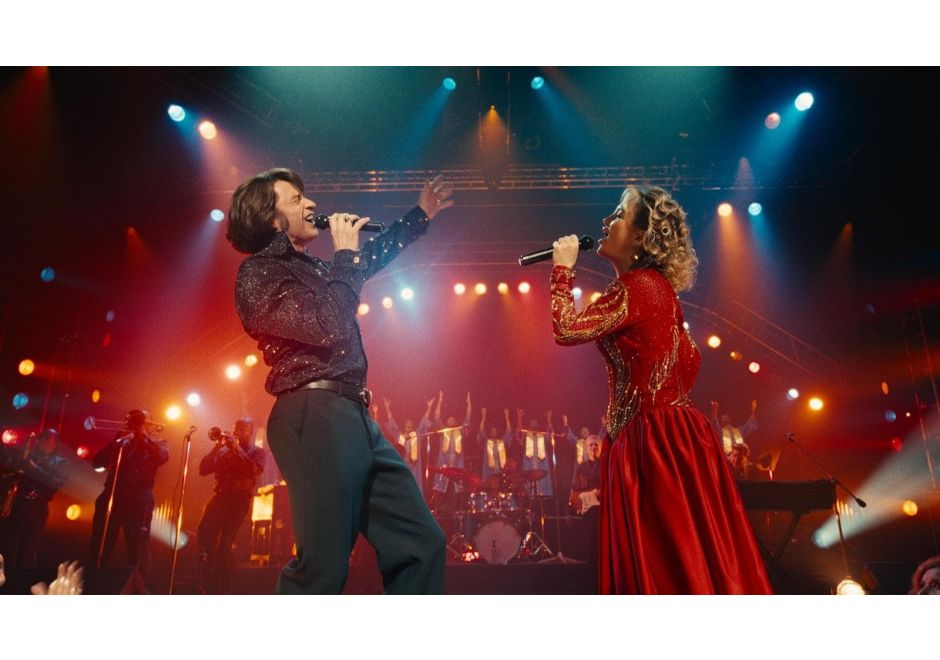
Craig Brewer has always gravitated toward outsiders with improbable dreams. From Hustle & Flow to Dolemite Is My Name and TV’s Empire, he’s built a career on elevating characters most people wouldn’t deem worthy of having their own movie or show. But that’s Brewer’s special talent. It’s as if he has a sixth sense allowing him to know what story will take an audience on a wild but relatable, emotional ride.
His newest film, Song Sung Blue, is exactly that kind of ride: a feel-good musical about working class people pursuing their dreams. In it, Brewer may have found the purest expression of his artistic mission: transforming a small-town love story between two middle-aged Neil Diamond tribute performers into an emotional epic that has audiences openly weeping. I was one of those people. I also saw men in the theatre crying, too.
“I’ve met a lot of men that aren’t criers,” Brewer says with a laugh, still surprised at how deeply the film is landing. “They said, ‘I haven’t cried since watching Field of Dreams,’ and it’s sparked a lot of conversations about what is specifically touching people.”
The film, starring Hugh Jackman and Kate Hudson as real-life performers Mike and Claire Sardina, is based on Greg Kohs’ 2008 documentary. Brewer first saw it in 2009, at a moment when he was privately questioning who he was as a filmmaker.
“I was just beginning to kind of struggle, or at least start to question who I was as a filmmaker,” he says. “What exactly is a Craig Brewer movie? When I saw this documentary, I felt that this is what I’m supposed to be about.”
That clarity came not from showy performances, but from the power of everyday, blue-collar ambition.
“These were characters on the margins,” he says. “People you would not think would be worthy of an epic telling. Their dreams are understandable – doable – like, is that your dream? You just want to play a casino? But if you frame it in a way that gives it life-or-death stakes, it becomes huge. Because that’s what it feels like to them.”
A Love Story for Grown-Ups
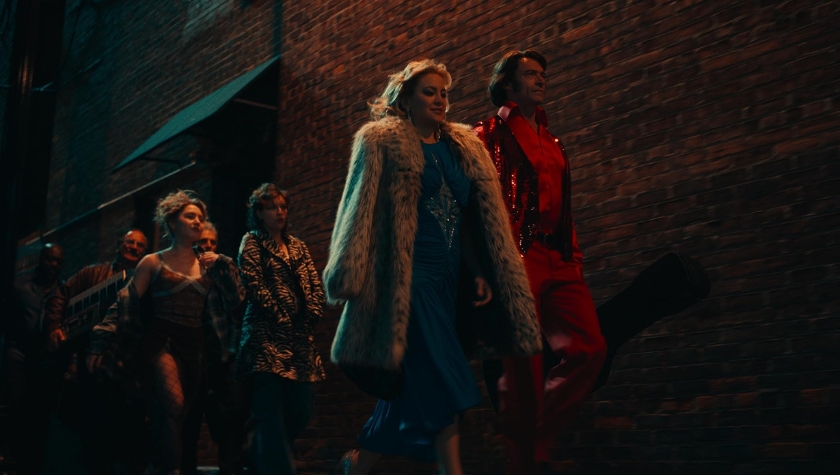
One of the most exciting parts of Song Sung Blue is that it’s a coming-of-age story for middle-aged people – a rarity in Hollywood.
“There’s something that hits differently with a love story in your 50s,” Brewer says. “Usually it’s young people in their 20s: Will they or won’t they? But when you’re in your 50s, you have a whole different set of priorities.”
He describes the beauty of late-in-life relationships not as grand romances but as shared passions and comfortable rituals.
“It may be that you want a man who shares your passion, and then you come home and you’re eating fish sticks and watching Family Feud. And that’s really great.”
Brewer’s affection for these characters runs through every scene. He rejects the idea that older stories must be about regret. Instead, Song Sung Blue explores the optimism of second chances, even amid heartbreak.
“Can there be something in your late 40s and 50s where you say, maybe I can give this a try, and I can do better this time around? That’s what really got me. And I knew how to make this story inspirational.”
Adapting a Documentary into a Dramatic Screenplay
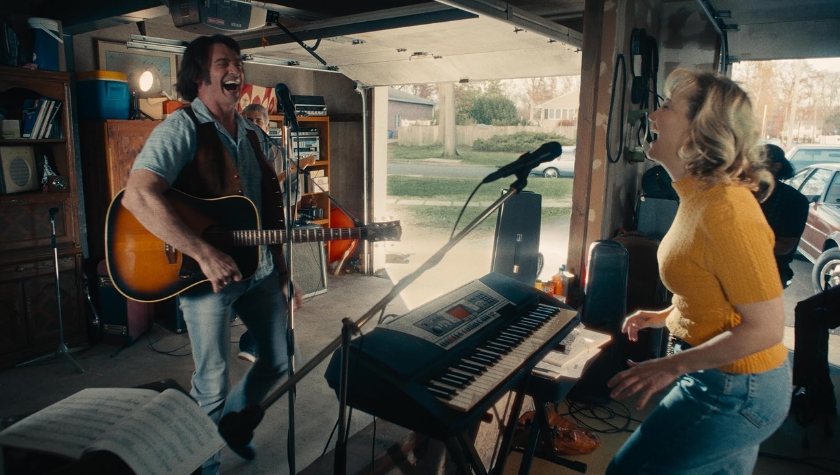
While adapting books had prepared Brewer for shaping existing material, adapting a documentary brought its own challenges.
“It’s basically like a window into a story,” he says. “But you also have to realize that you’re going to be casting this movie, and you may need to compact story elements.”
He resisted a sprawling timeline. Instead of covering eight years of the Sardina family, he made strategic choices.
“I had to be very specific as to what in the documentary I was going to use, and then what I was going to have to change a little bit.”
And unexpectedly, the richest material came not from the documentary, but from the Sardinas themselves.
“I found out so many other elements that weren’t in the documentary,” he says. “Sometimes it may be something really small,” like Rachel learning oil changes from Mike because he was trying to connect with her. “I felt, okay, that’s an interesting element I could use.”
Even dramatic life events like Claire’s accident and Mike’s declining health contained hidden emotional beats the documentary never captured. Those became the spine of Brewer’s story.
“I felt like they were assisting me in making something artistic. They knew that this didn’t happen here, or at this age, but the fact that I could take those moments and put it into a new configuration that still gave them the same feelings. That was helpful.”
One of the most memorable details Brewer added came from a list the documentarian made of things Mike used to say.
“One of them was, people would ask, ‘How you doing?’ and Mike would say, ‘I’m huge!’ He’s not huge. He doesn’t have a record on everybody’s turntable. But he believes that he’s huge. So I put that in the movie. And now it’s the ad campaign.”
Getting to That Vulnerable Place as a Writer
When asked what advice he’d give writers tackling mature love stories, Brewer said this:
“Go to your most precious well – and that’s yourself,” he says. “You’ll be in better service to your characters if you bend them to you and your experiences.”
For Brewer, this meant mining moments of emotional nakedness.
“There comes a moment where a man has been trying to keep his emotions in check, and he just no longer can. I’ve been in those situations where I want to turn away, and those tears come, and I’m both ashamed and unable to stop.”
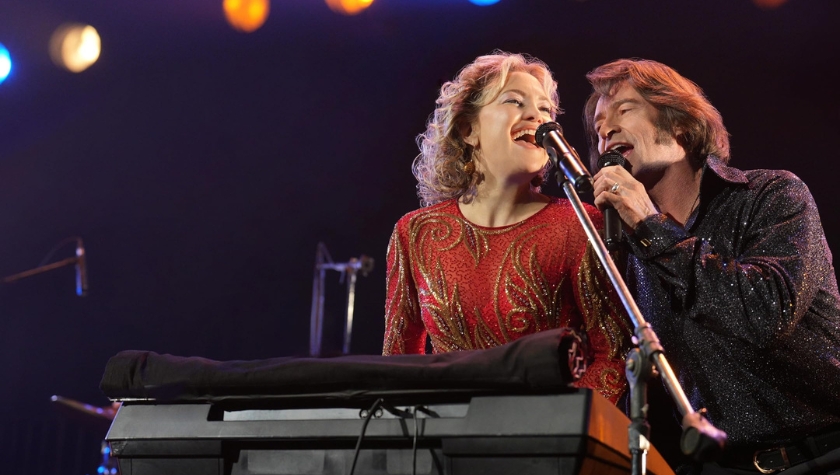
He translated that into one of the film’s most intimate scenes: Mike breaking down, unable to continue performing without Claire.
“She comes up behind him, puts her hand on his chest, and says, ‘Breathe, honey, breathe.’ That vulnerability. That’s what cinema is about.”
Brewer believes these “small” moments become monumental on screen because audiences have lived them.
“You’ll be surprised, on a huge screen, what those small moments turn into. People have experienced that pain, that vulnerability, that hopelessness.”
A Magical Moment on Set
Brewer describes many powerful moments during production, but one event stands out. His voice softens as he describes showing Rachel Sardina footage of Hugh Jackman performing as her father.
“She just begins to laugh and smile and sob all at the same time,” he says. “And then it hit her in the chest: ‘You did it for him. He always wanted this moment.’”
Jackman, standing behind her unnoticed, put his arms around her as she watched him embody her late father.
“She’s having Hugh hold onto her while she’s watching Hugh play her father. I thought, I can’t even imagine what this woman is experiencing.”
Brewer’s own father died at 49, which made the moment even more profound.
“What would that be like if someone cast Hugh Jackman as my dad in a critical moment between me and my dad?”
For Brewer, that day crystallized the purpose of the film.
“Our whole crew felt like we were taking care of Mike and taking care of Mike’s kids.”
Song Sung Blue opens in theaters on Christmas day.