
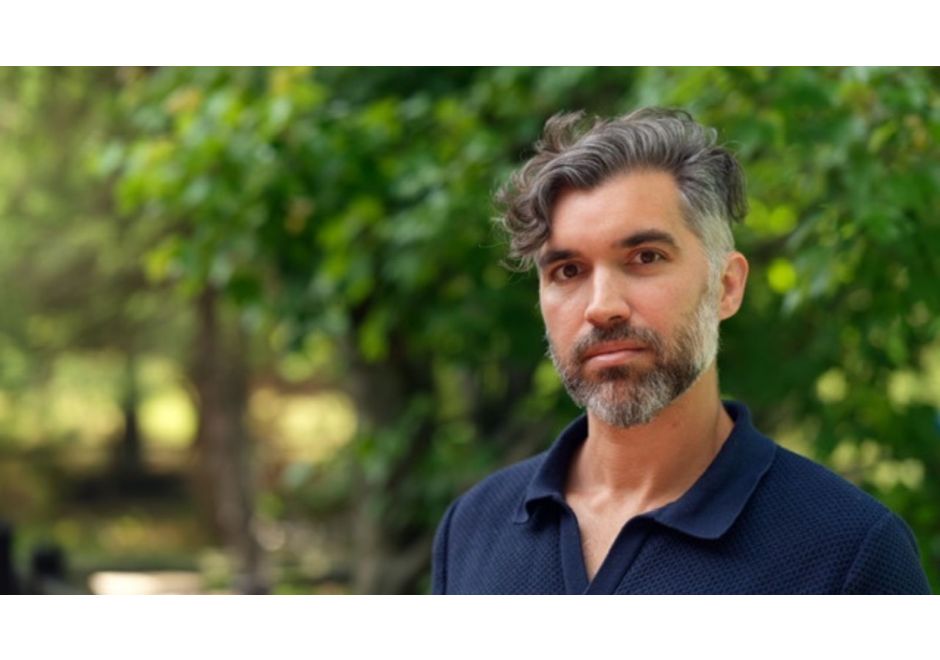
Before Chris Thomas Devlin became one of Hollywood's go-to horror writers, he was like many aspiring screenwriters: A film school grad in Los Angeles, juggling assistant work and trying to figure out how to stand out.
Today, Devlin is best known for writing Cobweb, Texas Chainsaw Massacre (2022), and the upcoming Blair Witch Project Reboot. But to get here, he relied on his instincts and embraced being boxed in as a horror writer.
"I've always been obsessed with movies for as long as I can remember," Devlin says. "Storytelling in general." The process of taking an idea and turning it into something bigger captivated him. "There's something about when it's just you, the screen, and your keyboard. You can create anything. You don't need to ask for permission."
The Best Film School Isn't Always Film School
After moving to Los Angeles, Devlin landed an assistant job at a small production company, where his real education began. Like many assistants, he spent his days reading scripts and writing coverage. That work taught him something important.
"That was the best film school I had," Devlin says. "I was constantly analyzing just a barrage of not very good scripts."
That process sharpened his understanding of what separates a script that gets passed over from one that gets passed up the ladder. And it taught him who the real first audience is.
"Who you actually need to impress when you're starting out as a writer is the army of unpaid interns and underpaid assistants. They're the ones actually reading your scripts," he says.
That realization shaped his writing philosophy: Make it impossible to put down. He focused on three things: Readability, rhythm, and voice.
The Script That Changed Everything
Devlin's first breakthrough came with 'The Wretched Emily Derringer', a darkly comic script about a 13-year-old serial killer in the 1960s. The screenplay landed on the Black List in 2015 and got him meetings and representation. But as Devlin quickly discovered, getting on the Black List isn't the finish line. "It's part one," he says.
Unsure where to place him, producers and studios sent him wildly mismatched assignments, including children's book adaptations.
That confusion led to him defining his voice by picking a lane: Horror. Then, while living in Brooklyn with his wife, Devlin wrote his spec Cobweb.
"It was a very strange script. I was advised against writing it." He wrote it anyway and it sold to Lionsgate in two weeks. "People started thinking of me as a horror writer," he says.
At first, Devlin resisted being boxed in. Then he changed his mind. "You know what you put in boxes? Things you like. Things you want to take out again."
For screenwriters worried about genre labels, it's a smart way to understand why a box can be helpful.

Why Horror Lets Writers Do Anything
Devlin argues horror remains one of the most liberating genres in filmmaking because it's commercially viable, doesn't require big stars, and can be made cheaply. "There's so many interesting and fascinating ideas you can explore. As long as you do it through this genre lens, you will have an audience."
He uses the hit film Backrooms as an example. "It's an art film that is an esoteric, slow cinema, existentialist movie about the inner workings of the human mind. And it made $80 million its first weekend. It's changing the industry. I mean, it's about a middle-aged man and Gen Z is flocking to it in droves," he says. It's proof you can write big ideas without big budgets.
Writing Fear on the Page
Devlin has developed his own style of page formatting that helps tell the story visually and set up scares. It also uses a lot of white space. "I'm a believer that less is more," he says.
Devlin uses what he calls the "geography of the page" to create rhythm and tension. He compares it to poetry and children's books. "I read a ton of Dr. Seuss to my kid. His words are all over the page."
That visual experimentation influenced how Devlin approached Cobweb. To create the perspective of a child and evoke the feeling of a dark fairy tale, he made a radical choice: He removed punctuation from his action lines.
"I couldn't have two sentences, basically, per action line, because they would have to obviously be separated by a period."
Without periods, every line had to function as one flowing thought. It simplified his language and heightened the script's voice. It also created visual unease. For jump scares, Devlin uses abrupt formatting shifts like dashes, right-justified reveals, and repeated phrases to mimic panic.
"It's all about sound. So you know, writing:
Tiktok Tiktok Tiktok
"Or the horrible revelation that the girl who's not supposed to get out of the house or out of the wall is out of the wall. And then I just have:
She got out She got out She got out She got out She got out
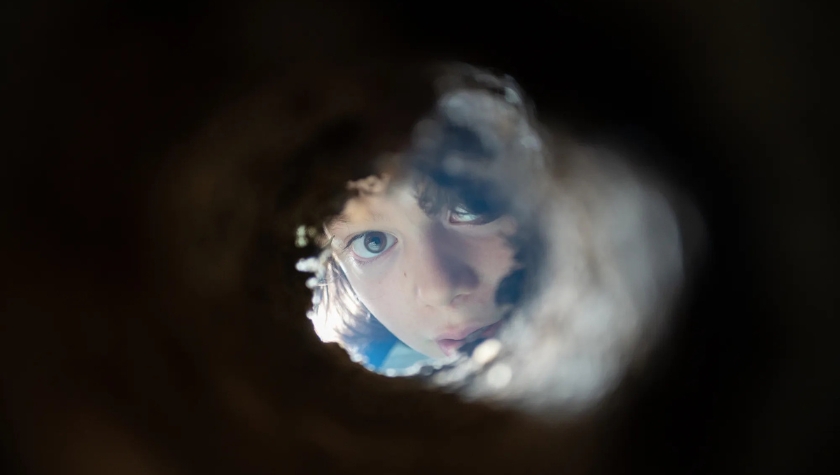
"So, you know, using these things in order to create in the reader's mind the feeling of watching the movie, taking the standard way a screenplay is supposed to be written, and kind of turning it on its head," he says.
He adds that he was initially inspired by screenwriter Brian Duffield's (writer of 2023's No One Will Save You) style, but now has his own toolbox to help him subvert expectations about how people read a screenplay.
Cracking the New Blair Witch
Devlin recently finished his script for the new Blair Witch Reboot, slated for 2027. He says writing the found footage parts of the screenplay was a challenge. "I didn't read any other found footage scripts before writing it. I wanted to develop my own voice."
But he also didn't want to fill his pages with descriptions of the camera work in the found footage. He says that if you want the audience to see a close-up of someone's eye, don't write "close-up."
Write: Their pupil dilates.
The image appears automatically in the reader's mind. That style of scene directions shaped The Blair Witch Reboot.
Rather than emphasizing camera movements, Devlin focused on geography, perspective, and what remains unseen. He says one of the original film's greatest strengths was showing almost nothing.
"The scary thing has already happened. They turn the camera on after."
The Most Important Advice for Horror Writers
Devlin's final advice for aspiring horror writers feels especially relevant right now. In an era of increasingly sophisticated AI tools and endless content, he says the greatest advantage is harnessing your own point of view.
"With the proliferation of AI, literally anyone is capable of competent, anonymous mediocrity. Tell the stories only you can tell in the way only you can tell them."
Look for The Blair Witch Reboot in theaters Sept. 24, 2027.