
In the most simple of definitions, a MacGuffin is a common plot device that sets the wheels of the story in motion, even when the actual MacGuffin may not mean much for the audience. It’s the mysterious hook that compels characters to take action, drives the conflict of the narrative throughout each act, and pushes character arcs and story arcs through the journey of the story.
But if you want to understand how to use them in your screenplays - and how not to use them - it’s important to learn everything you can about one of the most common plot devices in the history of storytelling.
With that in mind, here we break down everything screenwriters need to know about the often mysterious MacGuffin.
What Is a MacGuffin?
A MacGuffin is the thing your protagonists are chasing. And, in turn, your antagonists are chasing the same thing, which creates great conflict for your story. The MacGuffin could be:
- An object
- A goal
- A secret
- Important information
- Or any variation thereof
A MacGuffin can be the narrative spark that ignites the plot, even if the audience doesn’t fully understand what it is, how it works, or why it exists in the first place. It doesn’t matter. The point of it as a plot device is to create objectives and conflicts for the characters and for the story.
Sure, the best MacGuffins are those that the audience does care about. But when you’re writing certain types of action movies, spy thrillers, and other subgenres, using a MacGuffin can help you create turning points, heightened stakes, set pieces, sequences, and story/character arcs with a bit more ease.
Where Did the Term “MacGuffin” Come From?
The cinematic usage of the term itself came from none other than suspense thriller master Alfred Hitchcock, who credited screenwriter Angus Macphail for introducing it into his storytelling vocabulary. In a 1939 lecture at Columbia University in New York City, Hitchcock explained a Scottish joke Macphail told him:
A man is riding on a train when a second gentleman gets on and sits down across from him. The first man notices the second is holding an oddly shaped package.
"What is that?" the first man asks.
"A MacGuffin, a tool used to hunt lions in the Scottish highlands."
"But there are no lions in the Scottish Highlands," says the first man.
"Well then," says the other, "That's no MacGuffin."
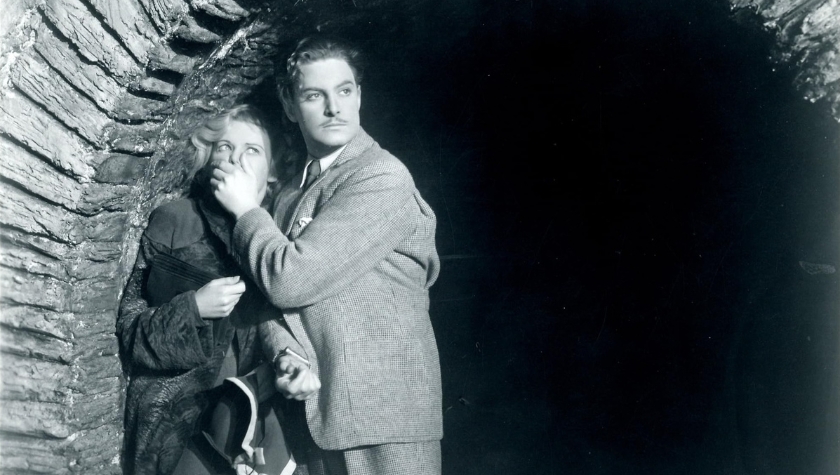
Hitchcock’s revelation was that the MacGuffin in the joke was meaningless, yet it drove the story and instigated intrigue. He would later explain further, “The MacGuffin is the thing that the spies are after, but the audience doesn’t care.” Look no further than Hitchcock’s own films The 39 Steps (the secret plans for a silent aircraft engine) and North by Northwest (the government secret files on the microfilm) as perfect examples of how Hitchcock embraced the term.
Are All MacGuffins Meaningless to the Audience Then?
No. It really depends on the genre and the context. If you look at a successful spy franchise like Mission Impossible, the MacGuffin is always something that the audience isn’t as privy to, or invested in. We care only because the characters care. And there’s nothing wrong with that.
However, the better MacGuffins have a bit more meaning and oomph to them, as they apply to the audience. George Lucas, famous for also using mythological storylines to drive his space opera stories (Star Wars) and adventure flicks (Indiana Jones), pushed against Hitchcock’s notion that MacGuffins are meaningless.
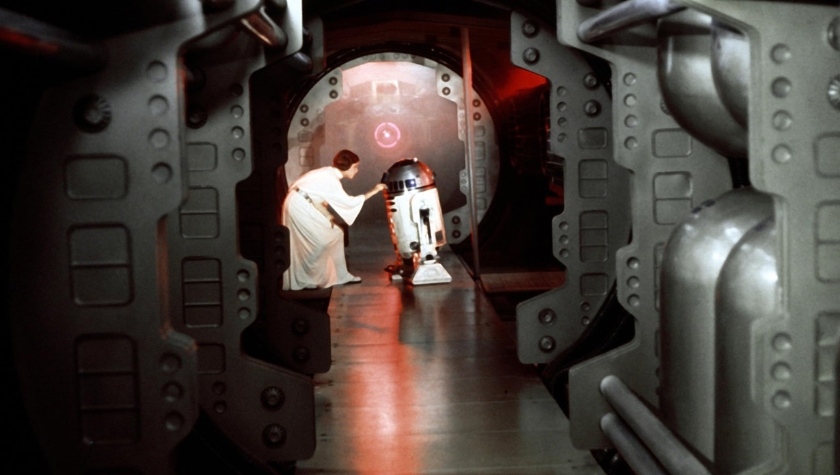
Lucas’s viewpoint is that the audience should care about MacGuffins almost as much as the heroes and villains. He described the character R2D2 as the MacGuffin in Star Wars. The plans for the Death Star were within him, but it was the beloved droid who the Empire pursued because he was in possession of them. We, the audience, cared whether or not the stormtroopers found him.
Lucas’s later MacGuffins (the stones in Indiana Jones and the Temple of Doom as an example) weren’t as coveted to the audience as R2D2, but he made an excellent point that MacGuffins can be something more than nameless, faceless, or unrevealed plot devices.
What Are Some Cinematic Examples of MacGuffins?
MacGuffins come to form in many different ways.
The MacGuffan as an Object
The most traditional form of MacGuffins are tangible objects. These are physical things that characters chase, protect, steal, or destroy.
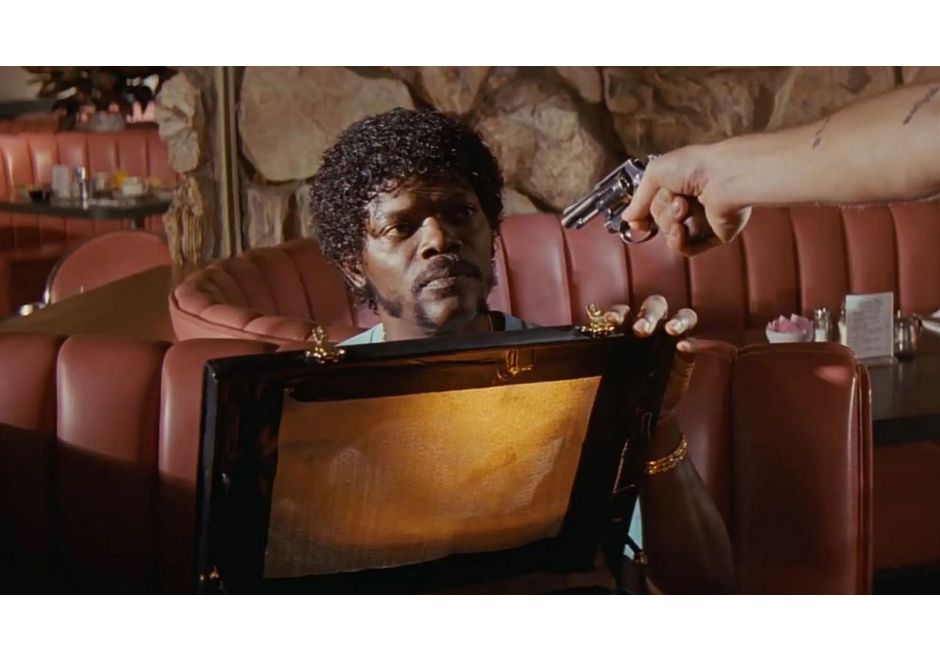
A MacGuffin can be a physical object like the Ark of the Covenant in Raiders of the Lost Ark or the glowing briefcase with unexplained and mysterious contents in Pulp Fiction.
The Ark isn’t just a religious artifact - it’s the story engine that drives Indiana Jones across the globe and into constant, evolving, and escalating conflict with the Nazis.
The glowing briefcase in Pulp Fiction functions the same way. We never learn what’s inside. But we don’t need to. What matters is how the pursuit of it reveals the personalities, morals, and fates of the characters that come in contact with it.
The Infinity Stones in Avengers: Infinity War and Avengers: Endgame are classic object MacGuffins as well. They raise the stakes of the story drastically. But the stones themselves aren’t the story. The sacrifices made, and the consequences the characters go through in their pursuit of the stones, encompass the story.
The satchel of money in No Country for Old Men is the story’s silent catalyst. We don’t know where the money came from and who is the real owner of it. What matters is how the pursuit of it unleashes utter chaos and violence.
The Heart of the Ocean diamond in Titanic drives both the historical and contemporary storylines, but, by the end of the film, it’s the journey of the characters that matters most.

The MacGuffin as a Goal
Sometimes the MacGuffin isn’t something the characters can hold in their hands. Instead, it’s something they are striving for.
Finding Nemo - and Nemo finding his way back to his father - is the MacGuffin of Finding Nemo. It’s right there in the title. The goal of finding Nemo, and Nemo getting back to his father, propels the entire story. Nothing else matters. The dangers of the open ocean, the threats they encounter within, and the confinement of the fish tank in the dentist’s office? All of that exists because of the emotional objective. Because of that common and unchanging MacGuffin goal, the characters reveal themselves with more depth, and more conflict is injected into the story to create a more compelling narrative.
In Rocky, the MacGuffin goal is for Rocky to go the distance. He doesn’t think he can win. He doesn’t even really care about that at all. But his pursuit is to not be a bum anymore - and to be someone that does something nobody has ever done, and to do something nobody thought he could ever be capable of achieving.
Goal MacGuffins go hand in hand with the main story theme, so they can often be thought of not as MacGuffins, but as driving themes that drive the story and characters. But they accomplish what true MacGuffins do - they are a vessel that injects more conflict into the story, reveals character depth, and drives the story forward.
When a MacGuffin takes the form of a goal, it feels more personal. The audience becomes more emotionally invested in the story and characters because they are living vicariously through the characters.
The MacGuffin as a Secret
Secrets are a powerful narrative tool because they create more tension and offer more opportunities for impactful reveals.
In Chinatown, the truth about what’s really happening in the Los Angeles water system becomes the engine that pulls the detective deeper into danger and conflict.
In The Sixth Sense, the secret that little Cole is keeping is the center of everything once it is revealed. It’s a unique type of MacGuffin because when it is revealed, everything that came before the reveal is reframed with that knowledge. But it’s still a MacGuffin because it drives the story of child psychologist Malcolm, as well as the relationship between Cole and his mother.
The MacGuffin as Important Information
R2D2 in Star Wars was the emotional MacGuffin that we cared about. But within him was the important information that everyone was seeking - the plans to the Death Star.
As we mentioned above, in Mission Impossible movies, the characters are usually chasing after and fighting against one another for vital information - with the exception of a couple usages of objects like vials of mysterious substances. Almost all spy thrillers use information as their MacGuffin because the stories center around espionage, which is the practice of spying or using spies to uncover government or military information to exploit enemies.
Even in a drama like Spotlight, a MacGuffin was utilized in the form of seeking out information about systematic abuse. It’s the story’s driving force.
The MacGuffin as Whodunit
This type of MacGuffin could also be defined as the truth. Murder mysteries - including true crime (or true-like crime) stories - center around the truth of, well, whodunit. Who is the murderer or kidnapper?
Look no further than the Knives Out franchise. The stories within Knives Out, Glass Onion, and Wake Up Dead Man are driven by the question of who the killer is. It’s the plot device that drives the characters, the story, and the eventual reveals.

Why MacGuffins Work
MacGuffins are great because they create excellent story momentum throughout the script. Excellent MacGuffins:
- Get the characters moving away from their ordinary worlds.
- Make characters face difficult decisions, which escalates the stakes.
- Drive more and more conflict.
- Reveal who characters really are and what they are capable of.
MacGuffins also simplify the story for the audience by giving them a clear goal to track throughout the movie. Even if the MacGuffin itself is mysterious or unknown, the pursuit of it drives the narrative and keeps audiences invested. Someone wants or needs something. Someone else is trying to prevent them from getting it. Instant conflict is created through that, and the story is constantly well-paced because the audience is always tracking where the MacGuffin is within the story.
When MacGuffins Don’t Work
While MacGuffins are powerful tools, they can backfire if they’re used without well thought-out intentions.
Overexplaining the MacGuffin
One common mistake is overexplaining the MacGuffin. The more time a script explains how a MacGuffin works, or what it entails, the less time the script takes to explore how it affects the characters. Mystery is part of the magic of true MacGuffins. There’s a time and place for more developed and explained MacGuffins for sure. But just do your best to avoid overexplaining them with expositional dumps. Sometimes it’s okay for a character to say, “I have no clue how it works. I just know it does…” or “I don’t know what names are on that list… I just know if the enemy finds them, everything we’ve worked for will be destroyed…”
Hollow MacGuffins
If your protagonist only wants the MacGuffin because the plot says so, the story can feel hollow because the MacGuffin itself is hollow, as are the character motivations for it. There needs to be emotional intent and depth. An already wealthy person losing the winning lottery ticket they bought isn’t as emotionally impactful as a person who really needs that money to survive or better their life.
MacGuffins can’t be hollow. The motivations for a character pursuing a MacGuffin can’t be hollow. They need to matter. They need to have emotional weight. They need to have stakes attached to them.
MacGuffins Overtaking the Story and Characters
When the story becomes more about the MacGuffin than the characters and their journey, the emotional engagement of the audience will quickly fade. The audience won’t feel that sought after catharsis because of a briefcase or some secret files. They feel it as they watch a character’s tough choices, growth, losses, transformations, and arc.
When MacGuffins Aren’t Needed
Not every story benefits from a MacGuffin-driven structure.
Character studies, relationship dramas, and more introspective movies rely more on internal conflict than external pursuits of something.
Emotional goals like forgiveness, closure, and belonging can certainly function as makeshift MacGuffins, but they don’t require a more traditional MacGuffin plot device injected into the script.
MacGuffins are more of an external motivator used to help propel certain stories forward with more momentum. If a story already has strong internal momentum, you don’t need a MacGuffin.
What Genres Work Best with MacGuffin Plot Devices?
MacGuffins thrive with genres and subgenres that require as much momentum as possible. Thrillers, action flicks, mysteries, and adventures naturally benefit from a clear external motivator that sends characters into danger, conflict, discovery, and action. The chase for a secret, object, or vital piece of information gives these types of entertaining stories instant structure and urgency for the audience.
Think of MacGuffins as the track of a rollercoaster ride. Thrill-seekers see the track and can, well, track where the ride is taking them - up, down, left, right, corkscrew, loop-de-loop. However, the true thrill is the feeling, anticipation, and emotional and physical reaction of where it takes you and those around you. It’s the journey that matters most, not the knowledge of the degrees and heights and speed at which you’re moving. You don’t need to know the physics of the tracks and trajectories. You just need to experience the mental, physical, and emotional reactions they create.
So, as you can see, MacGuffins work best with cinematic thrill rides. But, they can also be used effectively in any genre.
Use MacGuffins as Tools to Tell Certain Stories
MacGuffins aren’t for every story or genre. Just consider them as a possible tool that may solve a problem in your screenplay, or enhance it. If you’re going to use MacGuffins, have fun with them. Be creative. Conjure ways to use them effectively, wisely, and to better your cinematic tales.