
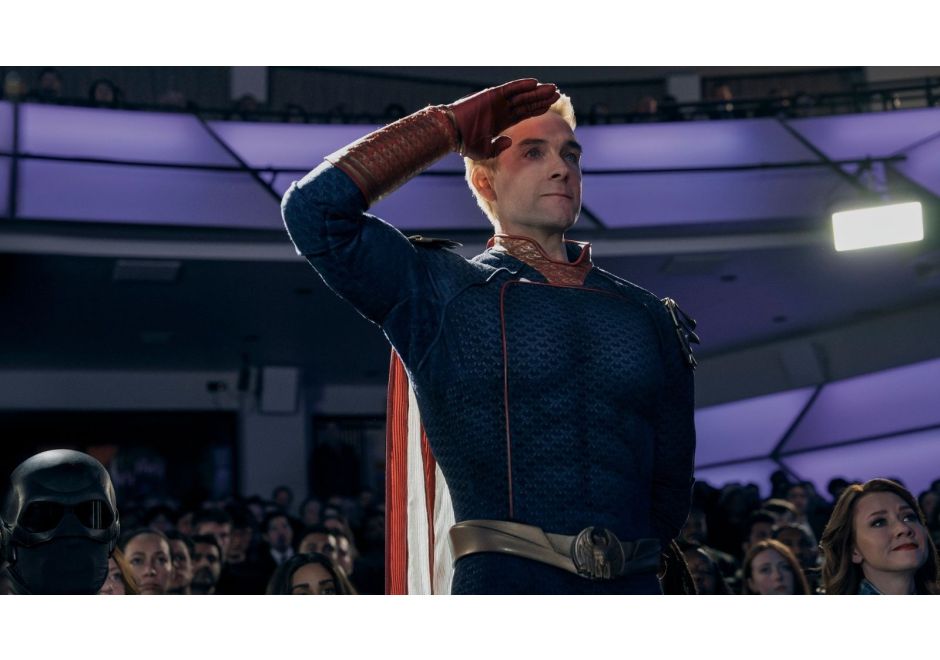
After seven years of exploring television's most unhinged superhero universe, Eric Kripke has finally wrapped the fifth and final season of The Boys. For Kripke, saying goodbye wasn't about letting go of the characters as much as it was leaving behind the people who built the show.
"It's bittersweet," Kripke says. "I miss the actors. I miss the crew. I miss my writers. It was such amazing lightning in a bottle."
Over five seasons, The Boys evolved into one of television's most ambitious ensemble dramas, juggling 15 major character arcs while maintaining its signature blend of grotesque violence, political satire, and emotional honesty. That balancing act may be the most impressive part of Kripke's process.

Start With Character, Not Plot
Kripke says every season begins the same way: with a whiteboard.
Every character gets their own column, and before plot even enters the conversation, he and his writers map out 10 to 15 emotional beats for each.
"That's usually where we start," he says. "Even before plot or episodes."
It's a revealing insight into Kripke's philosophy as a television writer that character drives everything. "Character is plot," he says.
The example he gives is that moment we've all experienced while watching a horror movie when one of the characters makes a really dumb decision.
"You say, 'Why are you going that way? No, no! Why would you do that?' And what's happening there is that usually the writer hasn't done the character work to make you realize, 'Oh, they would definitely have chosen that move, even if it was not in their best interest.' And it's an example of why you have to get the characters right first. Plots are a dime a dozen," he says.
For Kripke, story only works when it forces characters to confront their deepest fears, flaws, and desires. That's the real engine. It's why even a show as wild as The Boys never loses sight of emotional stakes.
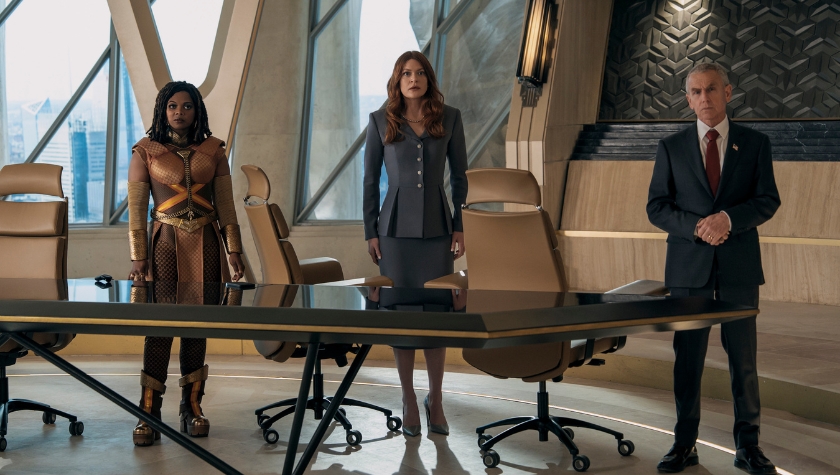
Writing the End by Working Backwards
When it came time to craft the series finale, Kripke used a classic technique many TV writers rely on: reverse engineering.
He started by identifying the moments the audience had been promised since season one. The biggest being Butcher (Karl Urban), finally killing Homelander (Antony Starr).
"We need to make good on what we've been saying since season one," Kripke says.
He knew Homelander had to be vulnerable so Butcher could face him on equal footing. And every step of the final season had to push toward that inevitable collision.
For Kripke, finales are about honoring contracts with the audience. If you plant something early enough, you have to pay it off. And not just in plot.
He reveals that while fans may think the show's central conflict is Butcher vs. Homelander, the real emotional spine has always been Butcher vs. Hughie (Jack Quaid).
"That was the very first thing I knew back in the pilot," he says.
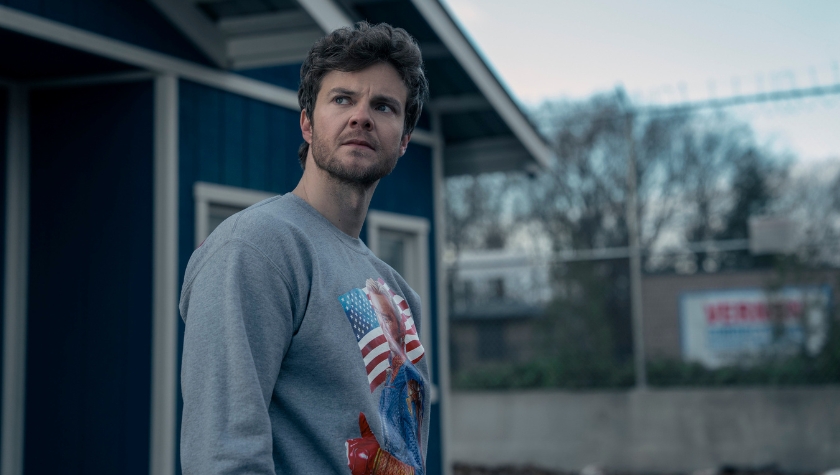
The Secret to Writing Fight Scenes
With The Boys known for its chaotic, brutal, and often wildly inventive action scenes, Kripke also shared some of the most practical craft advice on how to write fight scenes on the page.
His biggest rule is that the fight should never stop the story.
"They're fighting as a way to express emotion," he says.
Too often, writers treat fight scenes like spectacle, something separate from the emotional spine of the scene. Kripke says it's the opposite. A fight should function like dialogue. It's conflict expressed physically.
Before writing a single punch, he says, figure out the emotional objective underneath it. Is a character trying to dominate? Escape? Punish? Protect? That emotional intention shapes everything.
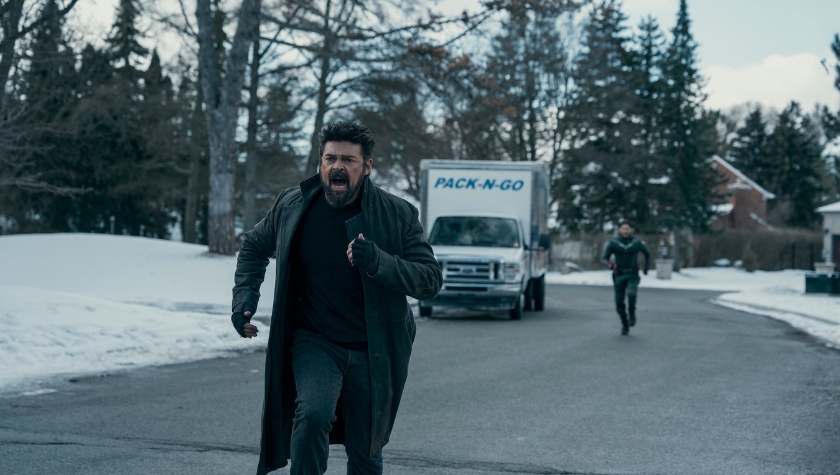
A Butcher fight, for example, should feel different than a Hughie fight because their psychology is different. The choreography should reflect that. That's where character and action become inseparable.
Kripke's second rule is purely technical, but equally important: "Never write a line of dialogue during a fight scene that's more than two lines."
It's a pacing tool. Too much dialogue can kill momentum. Fight scenes should create a tempo on the page. Short bursts of description mimic the rhythm of combat itself: impact, reaction, movement.
"It's actually okay if it's longer than one page," Kripke says. "The problem is when it's these big thick chunks."
And then there's Kripke's favorite action word: "Pivot. Turn is boring and spin is too fast."
Specific verbs create sharper mental images. Pivot tells you exactly how a body moves.
For Kripke, even in the bloodiest chaos of The Boys, clarity is king. Readers should feel like they're watching the scene unfold.
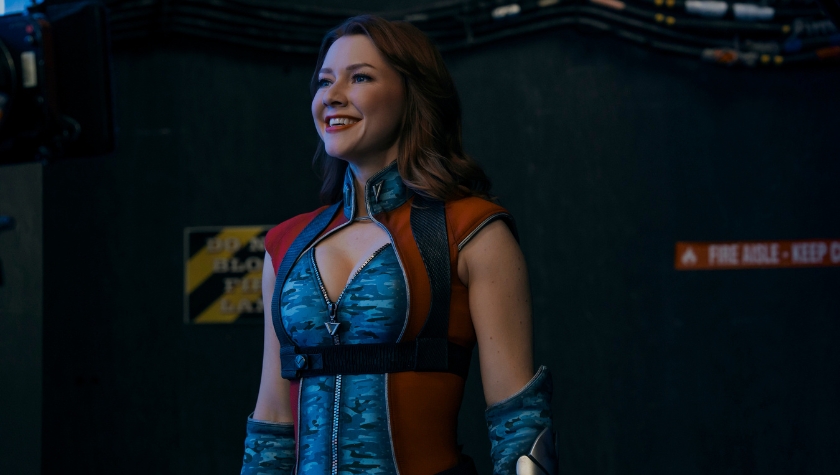
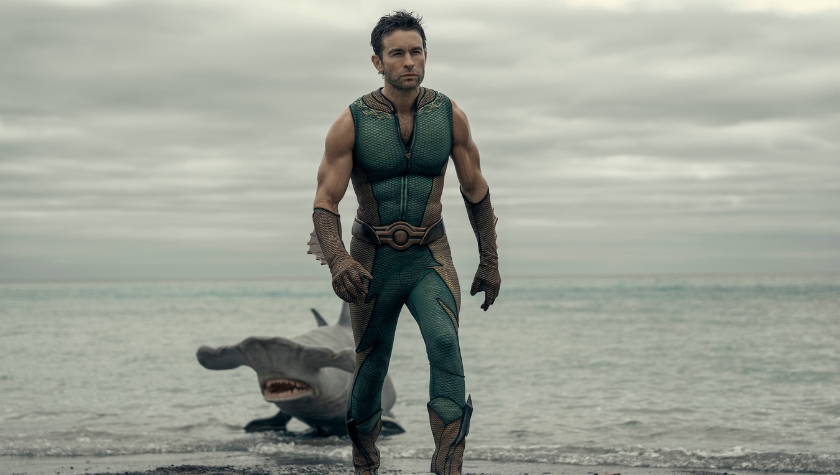
Here is an excerpt from a fight scene between Annie (Erin Moriarty) and Deep (Chace Crawford) in the series finale script, "Blood and Bone," written by Judalina Neira and David Reed.
    EXT. CHESAPEAKE BAY - SAME TIME

    Find Annie and Deep, mid-fight. Deep is all blind rage,
    but Annie is all focused courage and bravery. She's grown
    from the girl we first met; he hasn't changed at all. He
    gets a BRUTAL HIT on Annie, she tumbles back --

    He closes in for the kill, as she climbs to her feet,
    determined. And like the TOTAL FUCKING BAD ASS SHE IS --
    she delivers a PUNISHING SERIES of COMBOS, his head SNAPS
    back and forth like he's at a tennis match -- FUCK YES,
    ANNIE! Until finally -- her eyes FLARE with light -- and
    she BLASTS HIM backwards, sending him flying --

    With a huge SPLASH, he lands in the bay. As he surfaces,
    he looks frantically around, then swims for shore...

                              DEEP
                    Fuck -- fuck

    ON ANNIE, confused -- why does he seem so afraid?
Not only is the action clear, but it's also loaded with character-specific emotion and even some humor to make the read enjoyable.
Writing Villains Who Don't Think They're Villains
One of Kripke's biggest strengths on The Boys has been making Homelander both terrifying and weirdly human. "No one gets up in the morning and says, 'I'm going to do evil today.'"
Instead, Kripke takes the time to figure out why they believe they're right. That philosophy makes Homelander more than just a narcissist. It makes him psychologically coherent.
"He's completely oblivious to his own faults," Kripke says. That obliviousness is what makes him so dangerous and so entertaining.
Hook Readers Fast
For aspiring TV writers who are working on their own spec pilot, Kripke's advice is blunt: get to the point faster.
"It used to be hook your reader in the first seven pages," he says. "Now I'd say the first two."
That means opening with something undeniable — something strange, urgent, funny, or shocking enough to keep a reader from tossing your script onto the pile.
But once you hook them, Kripke says you need a story engine. Not just character arcs or theme. But the engine.
"What's under the hood that makes the conflict happen?" he says.
For The Boys, it's simple: powerless humans versus corrupt superheroes. For Supernatural, it was two brothers driving town to town fighting monsters.
A clear engine keeps your show moving when character drama slows down. It's practical advice from a writer who has spent nearly two decades building great television. And now, after bringing The Boys to its bloody conclusion, Kripke says he's taking a break.
"I'm going to sleep," he says. After five seasons of chaos, he's earned it.