
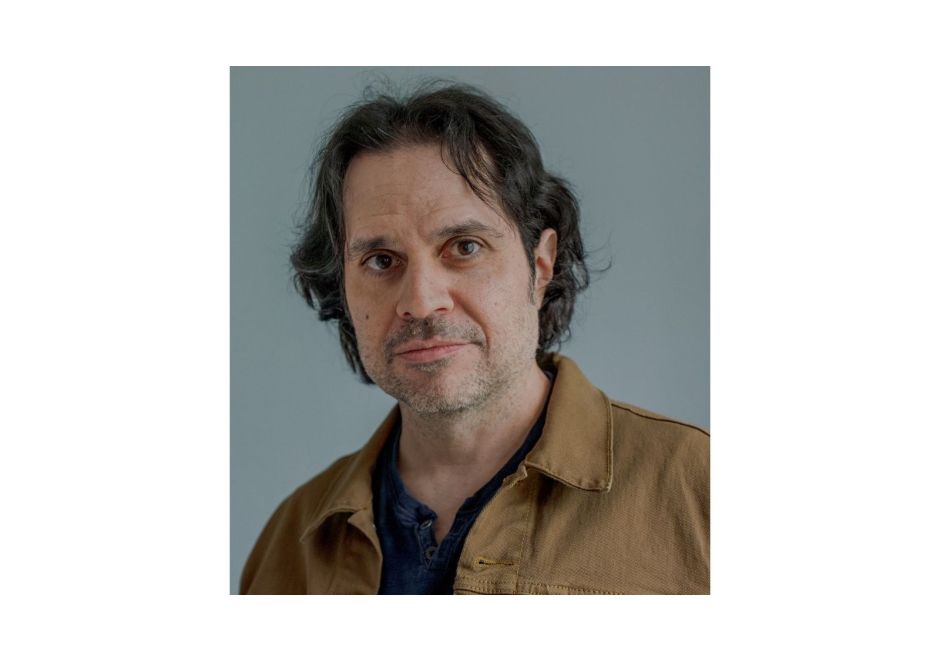
If the name Edwin Cannistraci sounds familiar, it may be because you’ve read one of his many insightful screenwriting articles on the Final Draft blog. Or it may be because you saw in the trades that Cannistraci’s latest spec script, Capricorn, made the 2025 Black List. Either way, Cannistraci is a fantastic writer whose career has not only benefitted from bold choices – but also perseverance.
Cannistraci’s path to becoming a screenwriter has been an ocean of unpredictability. “For 19 years now, there’s been a lot of ebbing and a lot of flowing,” he says.
He dropped out of community college, moved from Philadelphia to New York City, and spent his early twenties chasing a rock-and-roll dream. When the rock star fantasy fizzled in his mid-twenties, he moved back home and decided to become a novelist. He wrote five unpublished novels in three years.
“They weren’t that good,” he admits. “But people would read them and say, ‘Your dialogue’s pretty good. Maybe you should write screenplays.’”
One editor at Random House told him something that stuck. The book was funny, she said. He clearly had a voice. But comedy publishing wasn’t interested in unknowns. Screenwriting, however, might be a better home for that voice.
That suggestion led Cannistraci to team up with an old high school friend and former bandmate, Frederick Seton. Together, they wrote a rough draft of a dark, absurdist comedy called Pierre Pierre. It changed everything.
The script landed them representation at ICM and made the Black List in 2007. The following year, Pierre Pierre sold to Fox for a reported million dollars.
“I was literally washing dishes in New Jersey and suddenly I had a million-dollar deal with Jim Carrey attached,” he says.
Cannistraci and Seton quickly found themselves at studio lunches, general meetings, and rewrite roundtables alongside high-profile writers, many with Ivy League backgrounds.
At one Judd Apatow rewrite session, Cannistraci sensed getting the cold shoulder from the other writers. “Our manager told us, ‘Yeah, they hate you guys, because you came out of nowhere, had a million-dollar spec sale, and didn’t pay your dues.’”
At the time, he laughed it off. But now he realizes he had skipped a stage in his career that most writers can’t avoid.
Over about a five-year period, Cannistraci and Seton were in high demand. They sold multiple scripts, including O’Gunn that was another big sale with Jim Carrey attached. They worked with Universal, Paramount, Warner Bros., and Disney, collaborating with filmmakers like Jay Roach and Todd Phillips.
But over time, the industry shifted. Studio comedies became harder to sell, especially absurdist, R-rated material that might not translate globally. Projects stalled and the work slowed down. Even Pierre Pierre, which came close to production multiple times, couldn’t get off the ground. “I discovered I would eventually have to do something I didn’t do the first time around: pay my dues.”
So, Cannistraci went back to the drawing board. The industry had changed but so had he. While he remains friends with Seton and they occasionally collaborate, he began pounding out spec scripts on his own. Instead of absurdist comedies, he wrote stories that made sense to who he was now, not who he’d been at 28. He delved into character-driven biopics with darker, more dramatic undercurrents.
That pivot led to Man in the Box, a biopic about comedian Paul Lynde, which made the rounds during the pandemic. It led to new representation, and reintroduced Cannistraci to the industry as a solo writer with a more grounded, dramatic voice.
From there, Cannistraci wrote a Jerry Lewis biopic centered on the 1976 telethon and Lewis’s reunion with Dean Martin. The script, Jerry, was purchased by Baha Productions (I Play Rocky) and the project is in development.
Six months ago, he wrote the first draft of Capricorn in a matter of weeks. It’s an erotic thriller inspired by Joe Eszterhas and Brian De Palma. “I just wrote it to have fun,” he says. “Something rock and roll. Something that might actually get made.”
Here’s the logline: A married couple spice things up by starting a sexual relationship with a mysterious young woman, and it entangles them in a web of deception and danger.
The script opens like one kind of movie but after a surprise reveal, it becomes another film entirely. Cannistraci is careful not to reveal the twist, describing the logline as, “Essentially the first act.” The response to the twisty, genre-bending script has been overwhelming.
“I had like 15 production companies in two weeks Zooming me,” he says. “People were pitching me for their services.”
Though he’s seen the film business morph and grow in surprising ways, Cannistraci has morphed and grown, too. “If I had just kept writing the way I did when I was a young man, I would have written myself into non-existence,” he says.
He compares career longevity to Miles Davis’ constant reinvention, from bebop to cool jazz to fusion. The challenge isn’t to chase trends, it’s to evolve.
“Think of yourself as an artist,” Cannistraci says. “Perfect your craft. Read scripts. Watch good movies. Live your life. If you grow as a human being, you grow as a writer.”