

Filmmakers have been fascinated with what lies beyond our earth dating back to 1902's A Trip to the Moon, about a group of astronomers who send a rocket to the moon, which is considered the first ever science fiction film. But even before that, storytellers would imagine encountering aliens (or demons), such as in Johannes Kepler's Somnium, where a boy is transported to the moon and meets a "daemon" (demon) supposedly written at the beginning of the 17th century.
These are early works exploring space. But what happens when space comes to us?
Perhaps the most influential storyteller of our time when it comes to visiting extra-terrestrial visitors is Steven Spielberg. For almost 50 years, he's asked what happens when an alien being visits planet Earth.
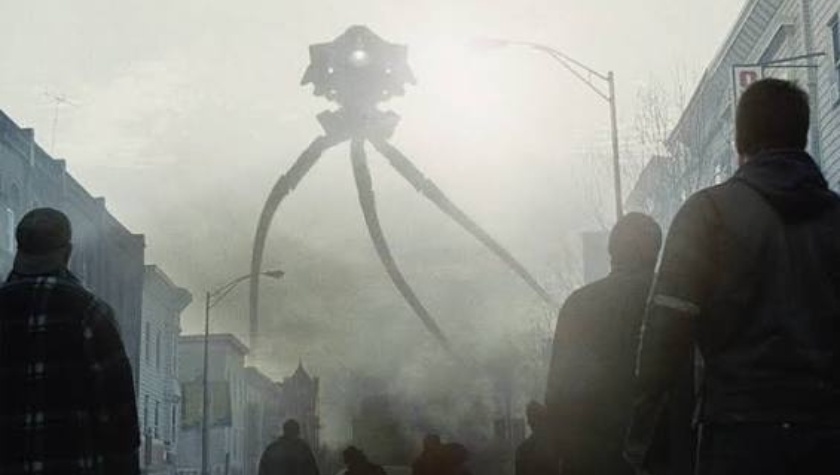
His most recent film, Disclosure Day, focuses on two competing groups of people: those who want the truth out there, and those who will do almost anything to stop it. And with Disclosure Day marking his fifth major film about extraterrestrial visitors, many have pondered whether Spielberg knows more about aliens than he's letting on.
"I know no more or no less than anybody who has paid attention to the entire UFO phenomenon, from Roswell to today," Spielberg said in a Collider interview. "I have just gleaned things from the same sources, the same public, exposed sources, like documentaries and congressional testimony, whistleblowers, and I have been, based on the circumstantial evidence from 2017 until recently, pretty convinced that this is really happening."
Disclosure: What Happens When People Find Out?
Disclosure Day's central question is what would happen if people found out aliens are real, and how we would be shifted as a civilization.
"It sort of upends us and makes us rethink everything—government, religion, division, race, you name it," Colman Domingo, who plays an oracle of sorts in Disclosure Day, said in a Time interview. "It puts that all aside, and we have to form another union. I think, in a beautiful way, we're all together in this."
It's the unknown of what happens when the world learns about the unknown. Reaction to disclosure is dependent on how people find out. For instance, in War of the Worlds, Earth learns of aliens and must adapt quickly and militarily, while in E.T. the Extra-Terrestrial, a boy and his family find the alien and come to its aid.
Disclosure Day also wrestles with the idea of religion and alien life; would we shed our notions of God and our belief systems if they were challenged in this way?
"It brings into question how much really we can control," Emily Blunt, who plays a meteorologist suddenly having a strange new power of divine empathy, said in a Time interview. "I think it would be an arrogant thing to presume we are alone in the universe or that we are the most powerful, technologically advanced civilization. All the research we did...what was evident is the people who had these experiences... they knew what they had seen, they had shifted because of it. It was inarguable they had experienced something profound."
Disclosure Day is a culmination of 50 years of Spielbergian aliens. And while Disclosure Day is the latest of dozens he directed, they've all had an impact on the cultural conversation of whether we're alone in the universe and what disclosing that information would mean. Here are other Spielberg films that grapple with the alien unknown.
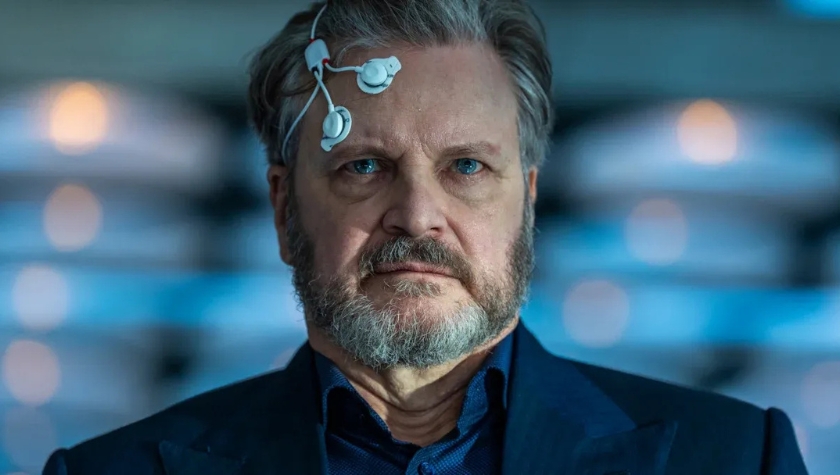
Close Encounters of the Third Kind (1977)
Close Encounters of the Third Kind follows ordinary people who experience unexplained encounters and become obsessed by a need to understand what they witnessed. Rather than portraying aliens as invaders, Spielberg presents them as a mystery and asks what it would feel like to know something extraordinary was out there.
The film is one of Spielberg's first explorations into humanity's reaction to disclosure. In the movie, governments attempt to manage information, control public perception, and keep the truth hidden, while those who have had these close encounters struggle to make sense of what they experienced.
Close Encounters of the Third Kind is about the protagonist's obsession, becoming so consumed by understanding his encounter that he nearly abandons his family in pursuit of answers.
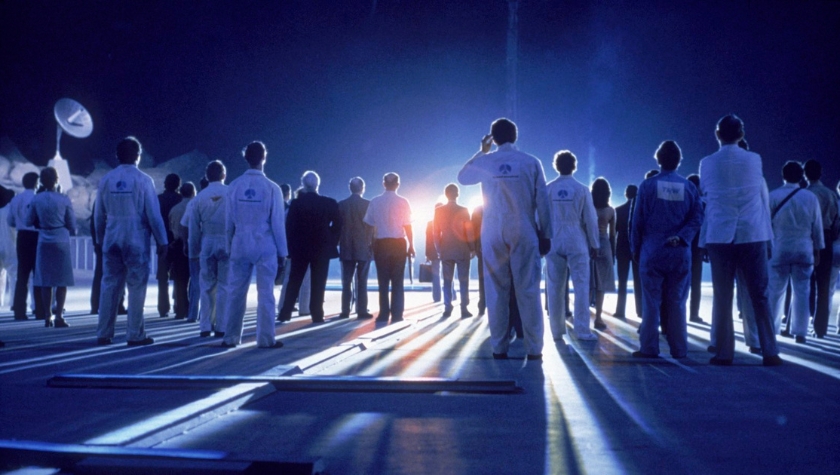
E.T. the Extra-Terrestrial (1982)
Disclosure Day asks what happens when the world learns aliens are real. E.T. asks a much smaller question: what happens when just one child does? The film treats first contact not as a massive global event but as a deeply personal one. E.T. isn't a conqueror, invader, or mysterious intelligence but just a stranded traveler who follows a path of Reese's Pieces and ends up forming a friendship with Elliot, a lonely boy coming of age amid his parents' separation.
With a few notable exceptions, aliens in popular culture were often portrayed as threats to civilization. E.T. represented a significant shift in perspective. Elliot and his family see E.T. as a living being in need of help, while the government agents and scientists represent the fear of managing the unknown.
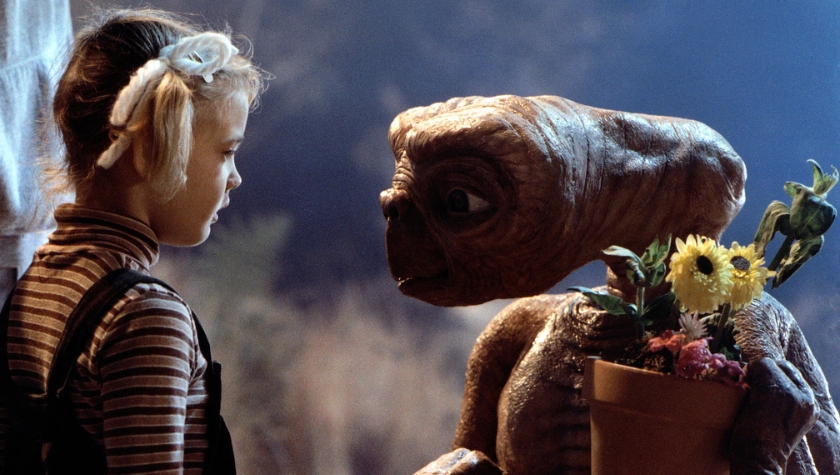
War of the Worlds (2005)
By far, Spielberg's darkest version of extraterrestrial contact is War of the Worlds, based on H.G. Wells' classic novel and famously inspired Orson Welles' 1938 radio adaptation, which convinced some listeners that an alien invasion was actually occurring. Spielberg's adaptation follows an ordinary father trying to protect his children as Earth is suddenly attacked by a technologically superior alien force.
The most frightening aspect is that these invaders never attempt to communicate but seem bent on complete destruction. Spielberg manages to convey the feelings of fear, confusion, and helplessness that accompany a catastrophic event, similar to the United States after 9/11. Unlike his previous two films, it's no longer about government conspiracy, curiosity, empathy, or trying to help — it's about the everyday individual trying to survive. And unlike Close Encounters of the Third Kind or E.T., the first encounter with extraterrestrials is violent and terrifying.
Indiana Jones and the Kingdom of the Crystal Skull (2008)
Unlike Spielberg's other films that featured aliens, Indiana Jones and the Kingdom of the Crystal Skull approached extraterrestrials through the lens of mythology and archaeology. The film uses ancient mysteries and UFO lore surrounding crystal skulls and lost civilizations to show that aliens aren't modern-day visitors but were part of humanity's distant past.
While the 1947 Roswell incident seems to be the starting point at which proof of extraterrestrial visitors exists, this movie asks whether they've been here all along, even suggesting that history and religion were affected by their visitation. Spielberg treats aliens like he has previously, seeing them as beings that expand humanity's understanding of itself.

Spielberg's aliens are mirrors that reveal something about humanity, especially their reactions. The answer to the question of what happens when humanity encounters something beyond itself varies from film to film. Sometimes aliens inspire wonder; other times they provoke fear. They are a reflection of our hopes, anxieties, beliefs, and capacity for change.
Disclosure Day, like Spielberg's previous extraterrestrial films, isn't really about aliens, but how humanity chooses to respond when confronted with the unknown and the empathy we have for our fellow humans and extraterrestrial visitors.