
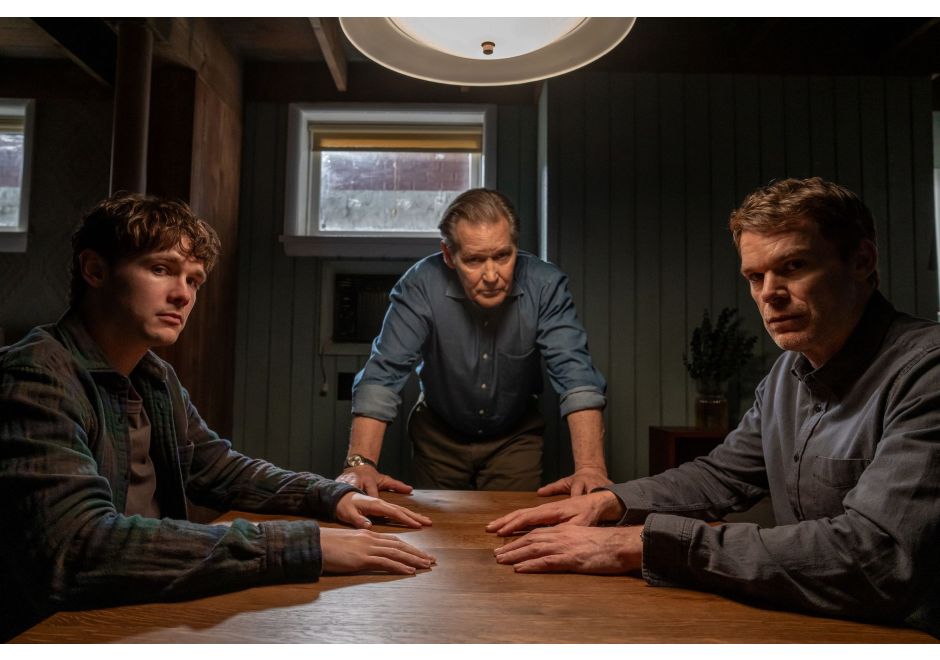
Dexter: Resurrection creator Clyde Phillips has spent two decades living inside the mind of a serial killer. But when he talks about why the franchise continues to resonate with audiences, he says it’s all about character.
“We don’t reinvent the wheel,” Phillips says. “There certainly is a character spine.”
That spine is Michael C. Hall’s Dexter Morgan, a vigilante killer whose “dark passenger” has somehow sustained one of television’s longest-running antihero franchises. Twenty years after Dexter first premiered, Phillips is still actively expanding the mythology while shooting Season 2 of Dexter: Resurrection.
For TV writers, Phillips’ process is a revealing look at how long-running series survive in an era where most shows disappear after a season or two. His philosophy is deceptively simple: Keep the audience leaning forward.
Writing Comfort and Discomfort at the Same Time
Phillips says one of the central creative challenges of Dexter is balancing contradiction.
“The goal is to always have the audience leaning forward. We also want them to be comfortable and uncomfortable at the same time,” he says.
That contradiction in tone has always been part of the show’s DNA. Dexter is a procedural thriller, a dark comedy, and an intimate family drama. Phillips believes the series works because the writers never lose sight of its emotional core, no matter how outrageous the premise becomes.
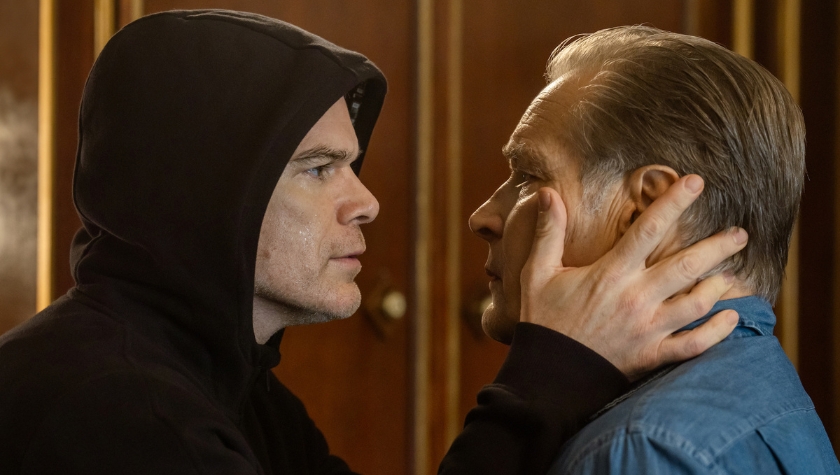
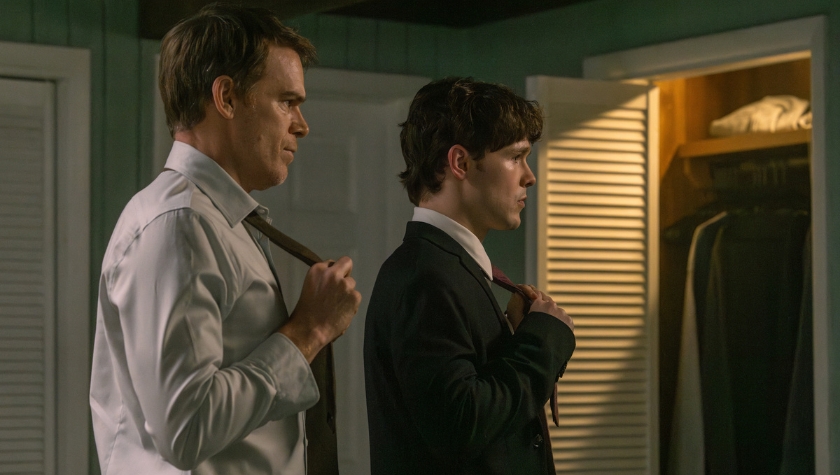
In Dexter: Resurrection, that emotional core became a father-son story centered on Dexter and Harrison (Jack Alcott). Phillips brings authenticity to their relationship from personal experience.
“Well, father and son is a big issue in my life, unfortunately, and perhaps now, fortunately. I did not have a good relationship with my father, and in fact, when my wife was pregnant, I wrote
her a note and gave her a little Tiffany spoon and said, ‘The sins of the father end with my father.’ And in fact, one of the episodes was called ‘Sins of the Father,’” he says.
It’s a great example that even the most heightened genre storytelling works best when it’s rooted in real emotional truth. The serial-killer mythology may draw viewers in, but the emotional wounds are what keep them watching.
Balancing Humor and Violence
One of Dexter’s defining storytelling devices has always been his inner monologue. Phillips says the voiceover remains one of the show’s most valuable tools.
“We get to dig into Dexter in ways that you ordinarily would not. Talking about his deepest emotions, his deepest vulnerability, and his humorous take on stuff.”
I was new to the Dexter franchise and didn’t know what to expect. I’m happy to report that the show is surprisingly funny. Lots of other people agree.
“I go to screenings all the time with audiences, and they're laughing out loud at the show, while watching the horrific stuff that Dexter is forced to do,” Phillips says.
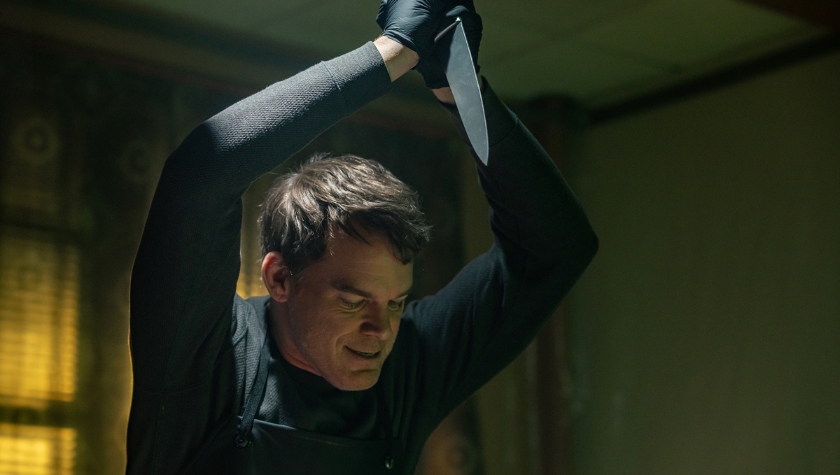
That mix of horror and humor becomes especially important when dealing with violence week after week. After more than 100 on-screen kills across the franchise, Phillips says the writers constantly ask themselves one question: “What if?”
“The first couple weeks of the room is all ‘What if?’” he says. “What if we killed a person this way? What if Dexter doesn’t want to kill the person and then finally realizes he has to?”
Rather than relying on just shock value, the writers build kills around emotional stakes and moral tension. Dexter’s violence always has narrative purpose.
“Each time he kills somebody, he’s saving the lives of the people that person would’ve gone out and killed,” Phillips says.
The “Pre-Magic Draft” Process
One of the most interesting insights Phillips shares is how the writers’ room develops episodes.
Phillips works closely with executive producer Scott Reynolds, who started as his assistant 20 years ago and is now his longtime creative partner. Their approach encourages maximum creative freedom in early development.
“We write what are called pre-magic drafts,” he says. “Then Scott [Reynolds] and I take them over and make them magic drafts. First, we want just everything you can think of on the page, stuff we want to see.”
Ideas are collected on what Phillips calls the “NPO board,” short for “No Particular Order.” Images, kill concepts, emotional moments, or random fragments all go onto the board before structure is imposed.
“I would say about a third of it gets into the show,” he says.
Sometimes an entire sequence can emerge from a single visual idea. Phillips recalls writing down only one word in his midnight notes: “Handcuffs.” That image later evolved into a major finale scene.
“I come in every day to the writers' room with what I call midnight notes, stuff I think of in the middle of the night,” he says.

Building a Killer Ensemble
One of the standout elements of Dexter: Resurrection is its ensemble cast, which includes Peter Dinklage, Uma Thurman, Kristen Stewart, Neil Patrick Harris, Eric Stonestreet, and Krysten Ritter.
Phillips says many actors are eager to join the franchise specifically because of the lead actor.
“People want to work with Michael,” he says.
One of the season’s most memorable characters is Leon Prater, Dinklage’s twisted collector of serial killers. The idea originated from a disturbing real-life story brought into the room by Reynolds about a pig farmer who allegedly invited killers together for debauchery.
“Thank God, Peter [Dinklage] said yes. It's so brilliant. I never in my life would have thought to have done that, but I guess it's sometimes finding that kernel of truth can really set you on your way,” he says.
With Dinklage’s superior acting chops, the show becomes super bingeable – and unforgettable.

“Every Word Is a Drop of Blood”
Phillips also talks about the emotional toll of writing, especially spending so long in this dark genre. Referencing a famous quote often attributed to Ernest Hemingway, he said, “The way you start writing is you sit at your desk and you open a vein. Every word is a drop of blood.”
Staying in that space of emotional vulnerability may be the most important takeaway from our chat. The material becomes memorable when writers expose something truthful about themselves inside the fiction. “That’s what you do. You write yourself.”
Clyde Phillips’ Advice for TV Writers
After decades working in television, Phillips’ advice remains surprisingly practical.
“Read everything. Fiction, nonfiction, biographies, science fiction. I’m never without a book,” he says.
He advises being aggressive in your career while also being kind to people along the way. And the last piece of advice is unexpected: Think bigger than your budget: “Nothing is impossible. If you can think it, it can get shot.”
Phillips believes writers sometimes limit themselves too early by assuming an idea is too expensive, too ambitious, or too strange to make.
For a writer who has spent two decades reinventing ways for a fictional serial killer to surprise audiences, the advice ultimately comes back to a writer’s curiosity about people, emotion, storytelling, and the world itself. That curiosity may be the real secret to why Dexter still lives.
Dexter: Resurrection was written on Final Draft and can be streamed on Paramount+.