
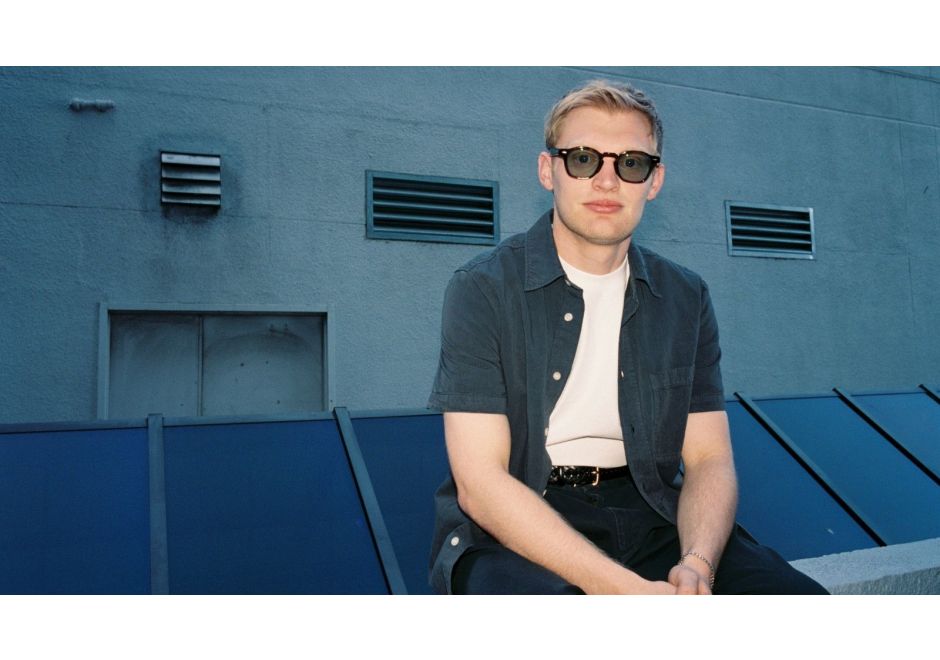
Made with a reported budget of $750k, Curry Barker’s Obsession has now grossed over $520 million worldwide. Part of the film’s success is certainly due to the 27-year-old’s natural instinct as a storyteller. Part of it may have to do with Barker’s willingness to first build an audience on YouTube. And part may be due to the extraordinary popularity of the horror genre at the moment. Or maybe he had a real One Wish Willow that he used strategically to create this box office sensation. However he did it, we jumped at the chance to sit down with Barker and learn how he painstakingly crafted a character-driven story that didn’t need a big budget to dazzle audiences.
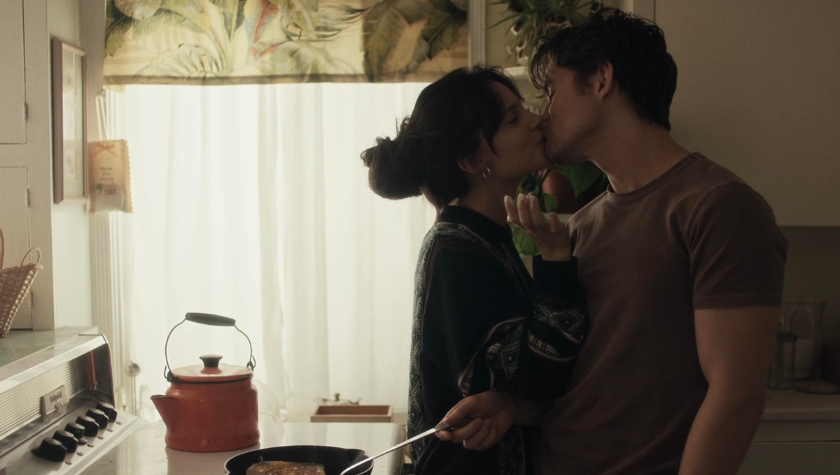
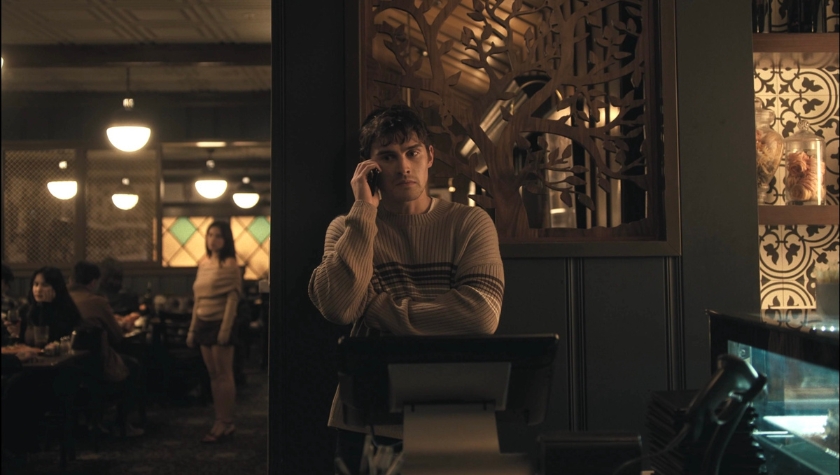
Obsession follows Bear (Michael Johnston), a shy young man who’s desperately in love with his friend Nikki (Inde Navarrette), but Nikki doesn’t see him the same way. When Bear discovers a magical tree branch called a One Wish Willow, he wishes Nikki would love him more than anyone else in the world. His wish comes true, but Nikki’s newfound devotion quickly turns from a good time to a bloody, homicidal crusade.
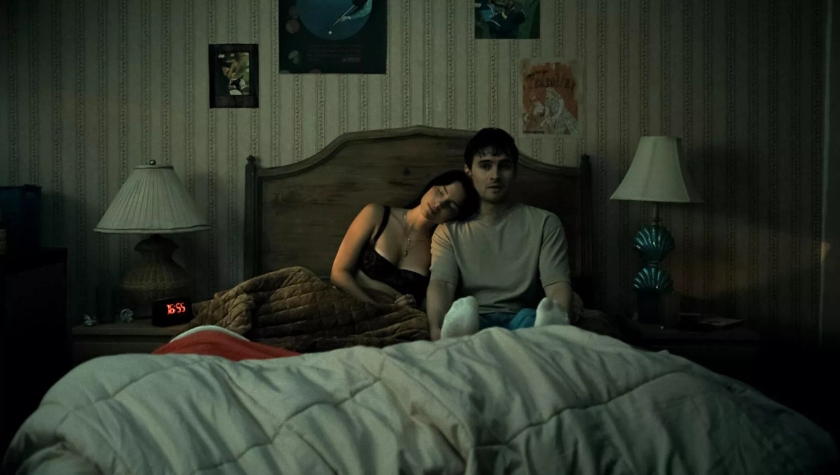
Barker says he began conceiving the story by asking a simple question: How far can obsessive love go before it becomes something monstrous? Initially, he imagined a movie about two people who were obsessed with each other, or perhaps one person whose romantic fixation spiraled out of control. But he didn’t have a complete story - yet.
“It wasn’t until later that I thought it could be a wish that goes wrong,” he says. “And then I was like, oh my God, I got it.”
Suddenly, Barker had his story engine.
Creating the One Wish Willow
A wish requires some sort of mystical charm or talisman. He considered familiar wish-granting objects like a monkey’s paw, a wish bone, even a shooting star. But none were unique enough.
“I wanted to have some sort of item that you could purchase at the store that felt kind of harmless and felt kind of innocent,” he says.
So Barker decided to invent his own. The result was the One Wish Willow, a seemingly harmless novelty toy that grants a wish when broken. Its simplicity makes it an effective horror device. But once Bear makes his wish, the rules become increasingly sinister, and he soon discovers the wish cannot be undone.
Making Obsession Feel Real
One of Barker’s biggest screenwriting challenges was figuring out how to continually escalate Nikki’s behavior without making her actions feel random or repetitive. Surprisingly, he says he may not have pushed the character far enough.
“Actually, looking back at it, I don’t know if I went far enough,” he says, admitting that he’s thought of additional disturbing scenes since completing the film. But finding fresh ways to demonstrate Nikki’s obsession wasn’t easy.
“The challenge is, it has to be rooted in some sort of reality. It can’t just be, she does crazy shit for the sake of doing crazy shit.”
For Barker, every horrifying action needed an emotional justification, even if Nikki’s behavior was completely irrational. “It needs to be because she loves Bear, and it has to be rooted in, I’m doing this for him because I love him so much. Or, I’m doing this for him because I’m getting jealous, and I feel like he’s not paying enough attention to me.”
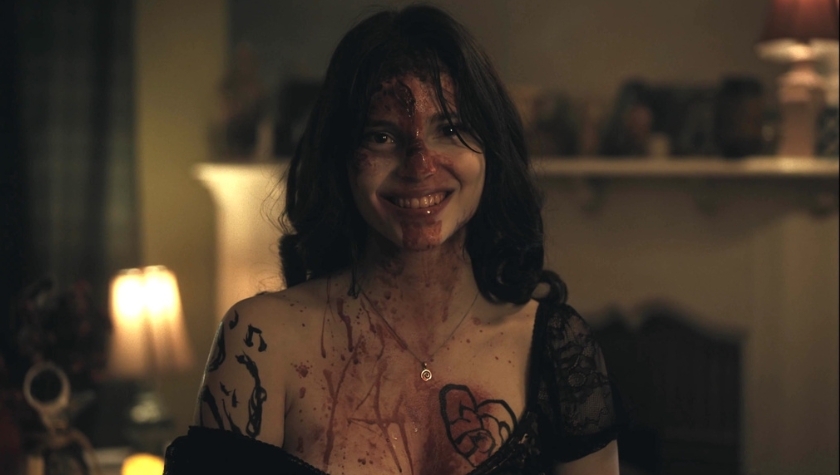
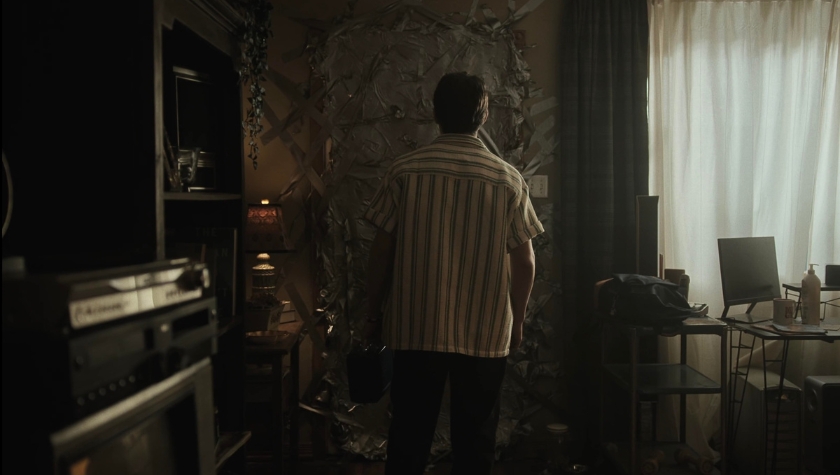
Keeping Nikki’s behavior grounded in character motivation helps explain why some of the film’s most disturbing moments aren’t necessarily its most violent. In one scene, Bear wakes up to discover Nikki has cut his hair while he was sleeping. The act is relatively minor compared to the later violence, but it’s deeply invasive. Bear has a very relatable, authentic freak-out.
Again, going back to Nikki’s character motivation, Barker also considered that Nikki might want to keep Bear’s hair as a memento or add it to a shrine, which she later does. By allowing Bear to react like a real person, Barker makes Nikki’s behavior feel even more unsettling.
Finding Horror in Character
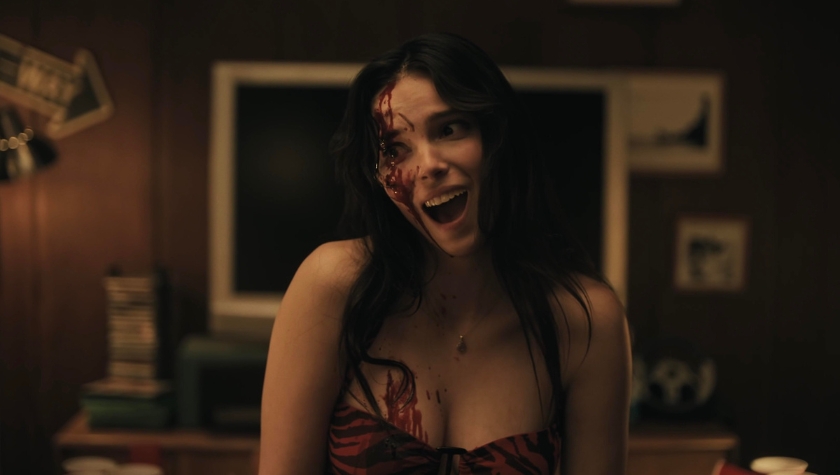
Another memorable scene occurs at a party when Nikki shares a grotesque, sexually disturbing reinterpretation of the fairy tale Hansel and Gretel. While the scene initially appears designed simply to shock the other characters, Barker says it actually connects to an important detail about Nikki’s relationship with Bear.
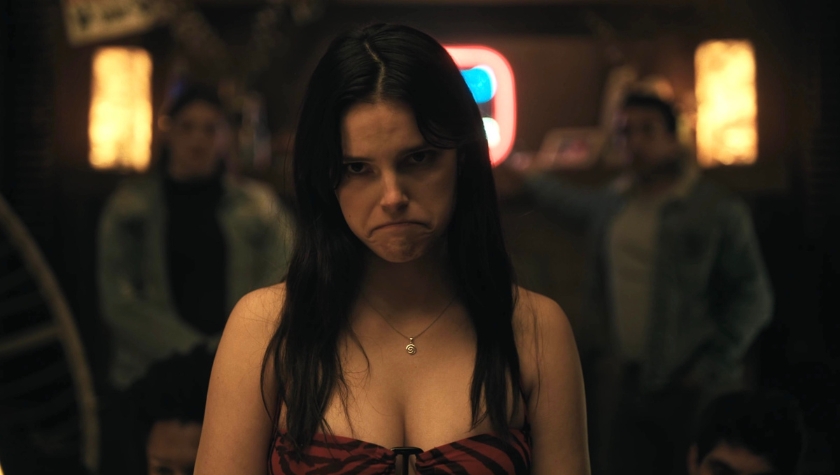
Earlier in the film, Bear learns that Nikki once described him as being like a little brother to her. Barker used that detail to motivate the twisted fairy tale. “If the real Nikki sees Bear as her brother, but this entity is so in love with Bear, then incest would be an interesting thing to bring up in her writing,” he says. Even Nikki’s most outrageous dialogue is rooted in character rather than shock value alone.
Barker Outlines but Leaves Room for Discovery
When it comes to structuring a screenplay, Barker doesn’t treat his outline as gospel. “I do outline, but I also like to outline with room for discovery,” he says.
Often, he’ll begin writing and discover that his characters or story have taken him in an unexpected direction. “I find myself reworking the outline, then writing again, then reworking the outline to fit the new thing,” he says.
One thing he does try to establish early, is the ending. “To me, the ending is so important,” he says. Barker recalls advice from Aaron Sorkin about how a disappointing final act can undermine everything that came before it. “He said you can do a two-hour movie and your first hour and 30 minutes could be the best thing that anyone’s ever seen, but if those last 30 minutes suck, then you won’t get any credit for the first hour and 30 minutes. That really stuck with me,” says Barker.
Another storytelling principle Barker relies on is the “but then, therefore” approach to structuring scenes. Rather than writing a series of episodic events connected by “and then,” he tries to ensure that each scene directly influences what happens next.
“And then, and then, and then can be really boring,” he says. “But if you follow but then, therefore, it kind of forces you to connect all of the scenes in some way.”
We also weren’t surprised that Barker writes his scripts in Final Draft, admitting he sought out the software early in his career.
“I think I used Celtx for a year, maybe? And I was like, I want to use the real deal,” says Barker.
From YouTube Sketch Comedy to Feature Filmmaking
Before making Obsession, Barker developed his comedic instincts through his YouTube sketch comedy work, That’s a Bad Idea, and his horror short The Chair. Although The Chair was accepted into a few film festivals, Barker wasn’t seeing the career momentum he’d hoped for. “Nothing really was breaking for me, or changing my life,” he says.
Eventually, he decided to put The Chair on YouTube. The results surprised him. “It just blew up on YouTube,” he says, explaining that the film attracted far more attention online than it had through festivals. That exposure helped open doors to feature filmmaking.
Although Barker had already written several feature screenplays, none had been produced. His earliest completed script was actually a straight comedy, but he’s now happy working in horror, a genre he believes offers tremendous creative freedom. “I really like that it’s such a broad genre. I could really do anything,” he says. “There’s no limits.”
Advice for Filmmakers: Write What You Can Afford to Shoot
For aspiring filmmakers hoping to shoot an original low-budget film, Barker offers practical advice: Don’t write a movie you can’t afford to make.
“Write one location, maybe two locations,” he says, emphasizing the importance of using places and resources already available to you. “Look around at your surroundings and think, what story can I tell with the resources that I have?”
While limitations can feel frustrating, Barker believes they’re actually beneficial for filmmakers just starting out. “You should be limited for your first couple films,” he says.
His advice is to build those limitations into the screenplay itself rather than writing an ambitious production and hoping to figure out how to pay for it later. “Don’t try to shoot something for $1,000 that should cost $40,000. Write something that maybe could cost $1,000.”
That’s some of the best advice we’ve heard in a long time.
Obsession is currently streaming on various platforms.