
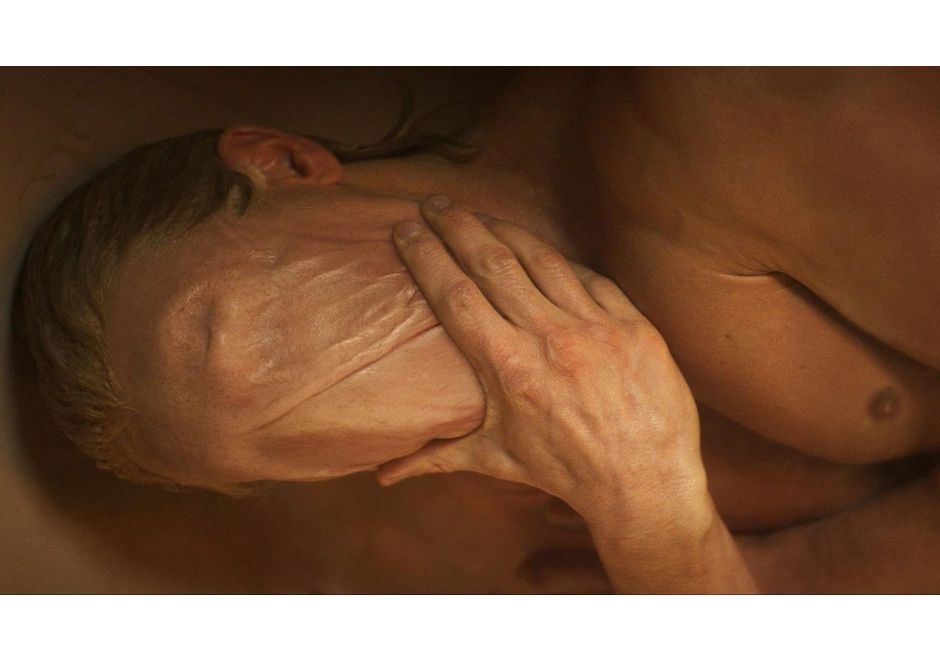
Villains are no longer just obstacles for heroes; they've become the protagonists in their own journey. With Joker, The Penguin, and now Clayface, audiences increasingly want to understand how monsters are made. The latest trailer for Clayface dropped, providing more information on the story of a struggling actor relying on dashing good looks to get him by when a gangster disfigures him. When he undergoes a genetic modification experiment, he is left with the power to shapeshift and a desire for revenge.
Clayface "unravels one man's horrifying descent from rising Hollywood star to revenge-filled monster in a story that explores the loss of one's identity and humanity, corrosive love, and the dark underbelly of scientific ambition," DC Studios stated per Deadline.
With the recent release of the final trailer for Clayface, set to arrive in theaters October 23, it's suggested that the film will lean heavily on body horror and the tragedies of losing what's most important to the character. This isn't mere superhero spectacle, but a deep look into the origins of a villain.
Clayface coincides with the Matt Reeves Batman saga, which started with Robert Pattinson starring as the Dark Knight in 2022 and the next film in the series, The Batman: Part II, scheduled for release in 2028.
The Origins of Villains
Are babies born good or evil? Is it nature that sets their behavior or nurture that turns them into cruel creatures?
When it comes to storytelling, the audience has a hard time accepting evil for evil's sake. Audiences tend to believe people become cruel because of their circumstances. In many stories, a fundamentally decent person is often pushed down the wrong path until they become the antagonist in someone else's journey. Good or bad, we're all the heroes of our own stories, and that's true for every character written in a screenplay.
Recently, there has been an influx of films addressing the origins of some of the most sinister characters in cinema:
- Wicked
- Cruella
- Maleficent
- Joker
- The Penguin
- Star Wars: Episode 1 – The Phantom Menace
- The Hunger Games: The Ballad of Songbirds & Snakes
Most of these films showed how the would-be villains started out as people with good intentions, only to be pushed to their limits where they found they succeeded when they became bad.
While many comic book movies will have the origins of an antagonist within the context of the overall story (like Batman Returns, Thor: Love and Thunder, and Spider-Man), audiences have been clamoring for movies and TV shows centered specifically around the villain before they meet their nemesis. These movies are often more than just an origin story, though, and often revolve around a compelling subgenre.
Where Body Horror Meets Comic Books
Horror movies are designed to poke at our deepest fears, which often includes bodily harm.
Shanee Edwards, in the article 'THE SUBSTANCE and how to write Body Horror', describes body horror as "...a subgenre of horror that focuses on the grotesque and unnatural transformation of the human body. Body horror takes the fear of the fragility of our bodies to the extreme using graphic and disturbing imagery that usually includes lots and lots of blood."
David Cronenberg is considered the master of body horror. His films, like The Fly, Crash and Videodrome, test the limits of the subgenre while inspiring modern filmmakers to create their own masterpieces within this space, including films like Evil Dead Burn and Lee Cronin's The Mummy.
The Substance, for which Demi Moore picked up several awards for her acting, reignited the passion for this subgenre as it followed a has-been celebrity who uses a cell-replicating substance to create a younger version of herself. Now, body horror gets its front-and-center turn in the DC Universe (DCU) with Clayface.
"I've wanted to do a Superman movie since I was a kid, but I would also be really keen to do a standalone Clayface movie as a horror/thriller/tragedy," writer Mike Flanagan mentioned in a 2021 MovieWeb interview. He got that chance and has co-writing credit on the new film.
The idea behind body horror, even within the Batman universe, isn't new; take a look at Harvey "Two-Face" Dent or The Penguin. When characters are evil, it becomes challenging to find ways for audiences to empathize with them.
How to Make Audiences Root for the Villain
Examples like Hannibal Lecter, the Joker, Tony Soprano and Walter White show that audiences are willing to root for the right villain when writers get them to emotionally invest in them. Moviegoers don't have to agree with a character's actions as long as they understand why they're making those choices.
From the trailer, viewers see that Clayface can garner that type of empathy because he's an actor desperately seeking success in an industry built on appearance and rejection. In his profession, these features are important to him — so what happens when they're taken away?
Not only do the ambitions become relatable, but so do the consequences. In high school, who hasn't stared at a giant red pimple on their nose and wondered how their fellow students will react? What about the idea of spilling coffee on your shirt while on the way to a job interview?
Appearance and rejection: the audience can understand those fears. This, and likely other universal emotions, will allow audiences to empathize with Clayface long before he becomes one of Batman's foes.
Memorable villains aren't defined by the terrible things they do, but by the understandable motivations that lead them there. Take away the violent actions of Walter White and Tony Soprano and see what makes them human; they want to leave a legacy, they're eager to be the top of their field, and they care deeply for their families.
The Latest Iteration of Clayface
Clayface has had several versions since his introduction back in 1940. At that time, comic book writer Bob Kane based the character on Lon Chaney's portrayal of The Phantom of the Opera. The original Clayface follows a B-movie actor who goes insane and begins dressing as a horror villain he once portrayed. Since then, the character has been revised with several versions, including a scientist, a terrorist, and a former firefighter.
Clayface will be similar to the original — an actor who gets in over their head in the criminal underworld. The trailer has generated excitement about the possibility of creating a memorable antagonist who will eventually fight Batman, but before that happens, he must first become someone audiences genuinely care about.
Watch the Clayface trailer here.