
Now that the 2026 awards season is in full swing, with Oscar nominations following hot on the heels of the Critics Choice and Golden Globe Awards, the most celebrated filmmakers of 2025 are on the campaign trail. Participating in panels, roundtable discussions and glitzy red carpet events, a wide array of writer/directors are experiencing moments in the spotlight. But behind each of these triumphant creatives is a humble origin story.
From industry veterans like Paul Thomas Anderson, whose awards favorite, One Battle After Another, marks 30 years of feature filmmaking, to younger accomplished names like Nia DaCosta, whose acclaimed Hedda comes just seven years after her debut, every one of these filmmakers started small, clung to their own voices, and forged ahead against all odds until they found themselves in the coveted awards conversation. From self-funding projects to developing films in the Sundance Labs, here are 7 of 2025’s biggest filmmakers who started small.
'Slacker' (1990)
Writer/Director Richard Linklater (Blue Moon & Nouvelle Vague)
Few filmmakers understand what it means to start small quite like Richard Linklater. Thirty five years after his microbudget debut feature, Slacker (1990), Linklater accomplished the rare feat of having two different films nominated for Best Picture at this year’s Golden Globes, and both were small productions in their own right. The first, Blue Moon (2025), follows the melancholy end of a creative life during changing times, that of songwriter Lorenz Hart in 1943, as played by Oscar-nominated Ethan Hawke. The second, Nouvelle Vague (2025), follows the creative beginnings of French New Wave filmmaker Jean Luc Godard in the changing times of 1959 Paris. Both adhere to a thoughtful, laid back, dialogue-driven aesthetic that can be traced back to Linklater’s origins.
While Moon may have personal ties for 65-year-old Linklater, who’s all too familiar with maintaining relevance in a changing industry landscape, Nouvelle Vague feels particularly pertinent, since Linklater was at the forefront of another independent film movement with Slacker. The Texas cinephile didn’t move to Hollywood to break into the business, but instead scraped together roughly $23,000 from friends, family and community members to write and direct an independent film about various misfits in Austin. Friends from the Austin Film Society, which he founded in 1985, and other community members helped him make the film, and after gaining distribution and a cult following, Slacker managed to gross over a million dollars. Linklater followed it up with studio film, Dazed and Confused (1993), and has been making thoughtful, human comedies ever since. His two recent critical darlings show an adherence to a distinct voice and independent spirit that Linklater has kept alive for 35 years.
'Cronos' (1992)
Writer/Director Guillermo Del Toro (Frankenstein)
Around the same time that Linklater was breaking the bank to make his movie dreams come true, Mexican filmmaker Guillermo Del Toro was taking an even bigger gamble on his debut feature. In order to finance his vampire movie, Cronos (1992), Del Toro put his house up for collateral, sold his car and founded his own special effects company, the first in Mexico. He had been mad about monsters since his Guadalajara boyhood, a love affair that solidified with the central creature of Mary Shelley’s Frankenstein, a novel that Del Toro finally got to put his own spin on with current awards darling, Frankenstein (2025). His first movie monster, however, would take everything to get on screen.
To get Cronos made in a Mexican film industry that was largely averse to financing horror films, Del Toro knew he’d have to pay and pave his own way. He had been studying his craft in every aspect of the industry, and even trained under American makeup legend, Rick Baker, and put all of his skill and passion into Cronos. The big gamble paid off when the film won the Grand Prix at the Critics Week section of Cannes in 1993 and launched Del Toro into Hollywood. Thirty-some years later, the DNA between the sympathetic grandpa-turned-vampire in Cronos and the creature in Frankenstein is as clear as day. Del Toro bet everything on his love of monsters, and forged a career dedicated to expressing his passion through cinema at any cost.
'Hard Eight' (1996)
Writer/Director Paul Thomas Anderson (One Battle After Another)
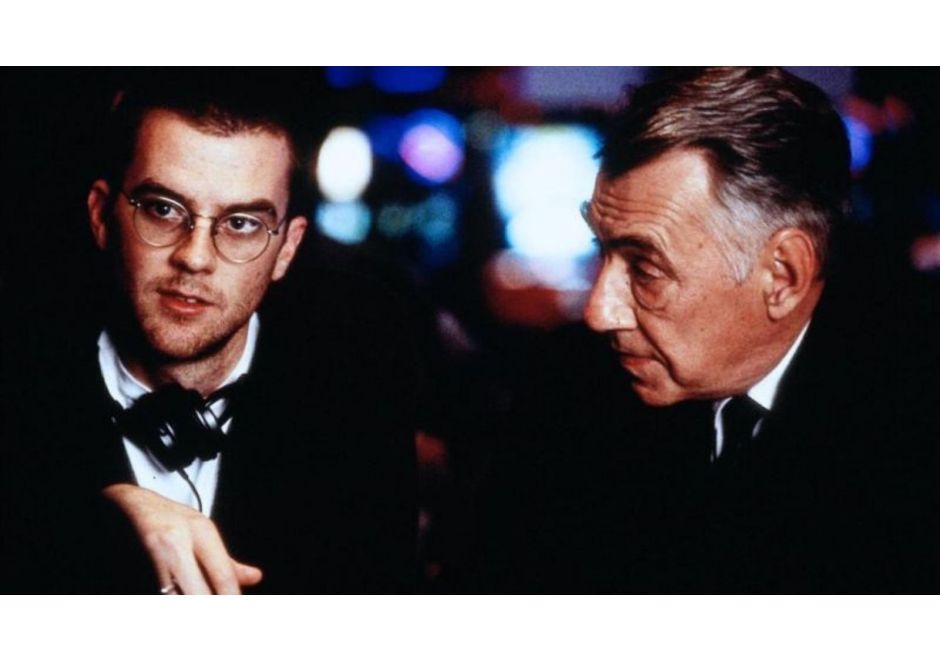
Oscar favorite One Battle After Another finds writer/director Paul Thomas Anderson working with his biggest budget yet to spectacular results, but he started out by following a similar self-funding route to Linklater and Del Toro. After dropping out of NYU film school he used the tuition money he saved to finance his own short film, Cigarettes & Coffee (1993). The film depicts the offbeat conversations of several patrons at a desert diner. One of these patrons, played by Philip Baker Hall, would provide the basis for Anderson’s first feature. The short got into the Sundance Film Festival in 1993, after which the Sundance Institute invited him to develop the feature version as part of their 1993 Directors Lab.
Anderson found financing for the resulting script, a small, Vegas-set neo-noir, with the company Rysher Entertainment, and cast Hall in the lead role. After a labored production process during which he had to fight the production company to maintain his creative vision, eventually compromising on a title he didn’t want, Hard Eight premiered at the 1996 Sundance Film Festival. His sophomore feature, Boogie Nights (1997) became an Oscar-nominated hit the following year and the rest is history. But it all started with a $20,000 short and an intense belief in his own talent.
'The Pleasures Of Being Robbed' (2008)
Writer/Director Josh Safdie (Marty Supreme)
Shortly after graduating from Boston University, young New York filmmaker Josh Safdie managed to network his way into meeting American businessman Andy Spade, a scenario that’s not entirely dissimilar from the premise of Safdie’s Oscar-nominated Marty Supreme (2025). Safdie and his filmmaker brother, Benny, had made several lo-fi short films that impressed Spade, so he hired Safdie to make a short film to promote his wife’s fashion brand, Kate Spade. Safdie could then use the remaining funds to make a longer film, an opportunity that he intended to take full advantage of.
Safdie co-wrote the script for what would become The Pleasure Of Being Robbed (2008) with his friend, Eleonore Hendricks, who also stars as the whimsical, central kleptomaniac. They shot Eleonore’s misadventures guerilla style, using 16mm film on the streets of New York, with the help of Benny and other members of their filmmaking collective. Safdie padded the runtime to feature length by slowing down the end credits, and managed to get it into the 2008 editions of SXSW and the Cannes Film Festival. IFC acquired the film for distribution, and the Safdies continued to apply this street-level, guerilla style of filmmaking to further films, leveling up with each new project. Safdie’s latest solo effort, Marty Supreme, represents the largest scale realization of that New York hustler spirit in both subject matter and aesthetic, and has garnered Safdie Oscar nominations for writing, directing and producing, a celebration of the grit and “dream big” mentality that got his first film and career off the ground.
'Fruitvale Station' (2013)
Writer/Director Ryan Coogler (Sinners)
Nearly twenty years after PTA’s Sundance Lab attendance, an Oakland, CA native and USC grad named Ryan Coogler would attend the 2012 screenwriting program. The resulting screenplay, based on the tragic transit police killing of Oscar Grant, a fellow Oakland native, became Coogler’s debut, Fruitvale Station (2013). By telling a story that was deeply personal to him and filming on location in the hometown he knew so well on a budget of under a million dollars, Coogler delivered a powerful debut that premiered at the following year’s Sundance Film Festival, winning both the Dramatic Audience Award and Grand Jury Prize.
For the lead role of Grant, Coogler cast Michael B. Jordan, whose revelatory performance launched the actor to leading man status. They would reteam on several iconic franchise films before returning to original filmmaking with the period musical vampire fantasia, Sinners (2025). The smash hit movie, based in part on Coogler’s late uncle’s love of blues music, is in every way as personal as Fruitvale. With a reported production budget of $90 million dollars instead of the humble $900,000 of his debut, the film represents a blockbuster upscaling of the same personal ethos that Coogler began with. While Fruitvale was overlooked by the Academy Awards, Sinners made up for it with a record 16 Oscar nominations, a testament to embracing your voice and following your personal vision, whether on a microbudget or on a grand scale.
'Songs My Brothers Taught Me' (2015)
Writer/Director Chloe Zhao (Hamnet)
Also at the Sundance Labs with Coogler in 2012, was Chinese-born writer/director Chloe Zhao, whose lush and heartbreaking adaptation of the Maggie O’Farrell novel, Hamnet (2025), is another awards front-runner. Zhao bounced around as a teenager, from China to the UK to Los Angeles to New York, developing a love of filmmaking that culminated in a debut feature inspired by a trip to the Pine Ridge reservation in South Dakota. The ever-curious Zhao met and took photographs of the Lakota people on the reservation, and her experience inspired a film project which she further developed at the Sundance Labs.
With a struggle to raise and maintain the microbudget funding, and instances of gear theft during production, Zhao fought hard to complete the Lakota family drama Songs My Brother Taught Me (2015). The struggle paid off when the film premiered at the 2015 Sundance Film Festival to much acclaim. Her ethereal style, which places an emphasis on Zhao’s love of nature and characters’ connections to their physical environments, continued to solidify with further small, regional films including Nomadland (2020), which won Zhao Oscars for Best Picture and Director. She even managed to maintain her personal aesthetic in the Marvel franchise machine, with Eternals (2021). Hamnet operates in the same mode as each one of Zhao’s films, telling the story of Agnes and William Shakespeare’s journey of love and grief in a style that goes back to her first filmmaking experiences on the Pine Ridge reservation with nothing but a tiny budget and a vision.
'Little Woods' (2018)
Writer/Director Nia DaCosta (Hedda & 28 Years Later: The Bone Temple)
Writer/director Nia DaCosta is currently receiving critical acclaim for the release of her fifth movie in eight years, 28 Years Later: The Bone Temple (2026), but it was only in September that a smaller, more personal project of hers, Hedda (2025), premiered at the Toronto International Film Festival to much acclaim. DaCosta took a break between big franchise films to write and direct the adaptation of the 19th century play, Hedda Gabler, and Tessa Thompson garnered a Golden Globe nomination for her stirring performance in the titular role. It marks a special reunion for the filmmaker and actress, who met ten years earlier at the Sundance Labs, where DaCosta was workshopping her debut crime drama, Little Woods (2018).
DaCosta studied filmmaking at NYU, got her masters in London, then was working as a production assistant and making short films when she conceived of a story about a woman in rural America with a Western, frontier aesthetic. She wrote a script about a woman forced to return to drug-running to quickly get money for her struggling family, and hit it off with Thompson while further developing the script at the Sundance Labs. They were able to find just under a million dollars to finance the feature version and the film premiered at the 2018 Tribeca Film Festival where DaCosta won the Nora Ephron Prize for female filmmakers. It wasn’t long before she was directing big franchise films, but by returning to personal, self-generated material and reteaming with Thompson, her original muse and supporter, DaCosta is receiving some of the greatest acclaim of her career.
From gambling on self-funding to utilizing brand deals and filmmaker labs, every one of 2025’s acclaimed filmmakers started out small, hustling on tiny budgets to fight their way into the industry, and in the process, kicked off long-lasting, celebrated careers.