
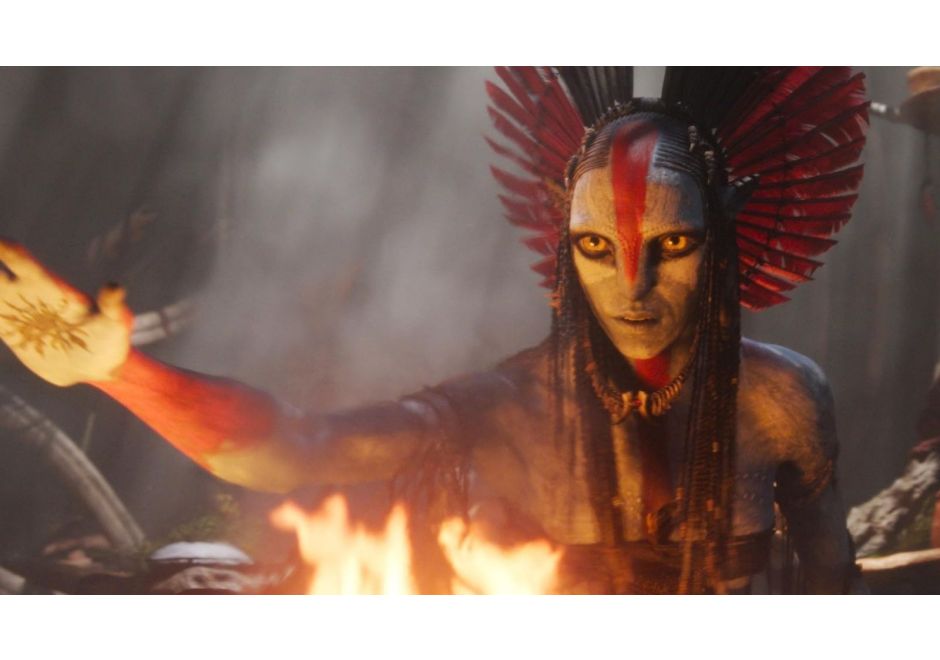
The visual effects in Avatar: Fire and Ash are nothing short of amazing, a feat of technology that continues to awe and inspire since the first film in the groundbreaking franchise. All the movies have been helmed by James Cameron who… well, do I really need to tell you who James Cameron is?
Everything about the film, from the planet Pandora to the Na’vi and human people to the machines, are master classes in world building. But no one is going to sit through a three-hour fireworks show. Audiences may come for the visuals, but they’ll stay for the story.
Cameron’s story, which he shares screenplay credit with Rick Jaffa and Amanda Silver, is about a distant planet fighting colonization and internal feuding combines cutting-edge spectacle with emotionally-driven storytelling and empathetic characters. While the first two Avatar films had themes around environmental protection, corporate greed and vulnerability, the third film took a different approach.
“In Fire and Ash, the emphasis on environmental issues took a back seat, as I had a specific theme in mind for that project,” Cameron said in an Esquire interview indicating he wanted to focus on loss. “I felt compelled to explore its meaning and consequences. Losing someone you love… changes your life forever. The vengeful reactions often seen in (superhero) movies feel unrealistic — that’s not how people truly process grief. My goal was to represent the human experience authentically: behind these big blue aliens lies a profound story about family and loss.”
Symbolism in Storytelling
Symbols have been a part of storytelling for millennia. It helps convey messages, foreshadow events or represent concepts. In The Great Gatsby, a green light at the end of Daisy’s dock was used in the novel and subsequent adaptations to symbolize love and the inability to achieve the American Dream — something that was seen, but out of reach for Jay Gatsby.
In film, visual cues or symbols can add depth to a story and activate the audience’s imagination, enhancing the audience’s viewing experience. For example, think of the color red in American Beauty seen in the roses throughout and the door of the family home. Another example is the use of oranges in The Godfather, which Vito Corleone (Marlon Brando) is purchasing when shot, on the table during the meeting of the five families and, when Corleone dies, he’s in an orange grove eating an orange.
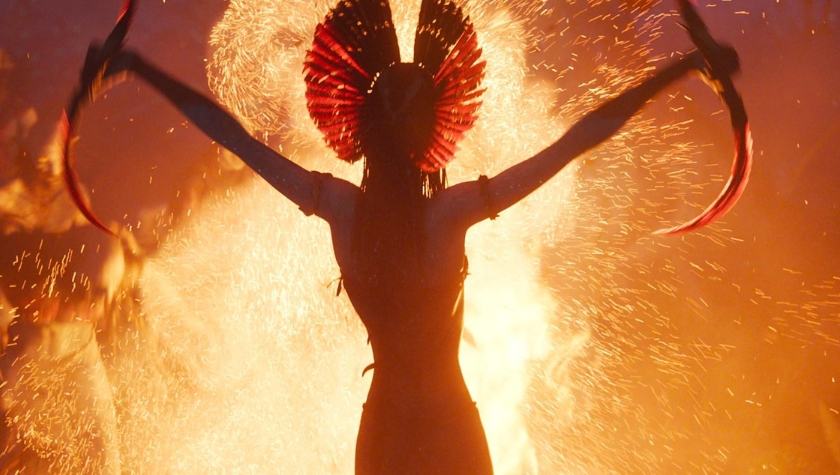
Avatar: Fire and Ash uses fire as a symbol of destruction and hatred.
“(Fire and ash) directly refer to a hostile clan that appears in the new episode, but fire is also a symbol of destruction and hatred; it’s a chaotic, devastating force,” Cameron explained in his Esquire interview. “It brings to mind what we experienced in Los Angeles, where flames devoured homes and neighborhoods. The ashes symbolize mourning. It’s the pain that fuels the fire of hatred in an endless cycle. Think about the Israeli-Palestinian situation or Russia’s aggression in Ukraine — these conflicts just keep going, with each side blaming the other. How can we break this cycle?”
Build Character Through Pressure
There are a lot of choices the characters in Avatar: Fire and Ash have to make. It’s through these choices that the audience learns about the characters and how they have evolved over the films.
Initially, Jake Sully (Sam Worthington) was in search of purpose, but not anymore. As the leader, it’s up to him to make tough choices, some of which go directly against the wishes of his family and may put them all in peril. For instance, while Spider (Jack Champion) has grown close with the family, he’s a human, and Sully knows its best for him to be where the humans are; at the very least because his respirator is starting to malfunction and if he doesn’t get a new one or reach a place of breathable air, he dies. This is the catalyst for the story.
At the same time, Sully is trying to protect his son Lo’ak (Britain Dalton), which builds resentment and causes emotional conflict between the two. As Sully makes decisive choices, he must live with the ripple effects of those decisions. This builds pressure, forcing the character to make more choices and putting him in situations where every option threatens something he values. The impact of the choices the characters make keeps the story moving and the audience more invested in its outcome.

Embrace the Fun
The story is about Sully and his family so the main focus of the film is on them. But there are other characters who deserve some screen time. In fact, there is a long scene between two villains Varang (Oona Chaplin) and Quaritch (Stephen Lang). It’s a compelling dance between two villains with similar goals. While it’s a bit strange to leave the protagonists for so long, Cameron had a specific purpose for doing so.
“Why did we spend 10 minutes — which is an eternity in screen time — not on our main characters, not on our protagonist characters?” Cameron said in a Variety interview. “Because it was cool. That’s my ultimate modus operandi. If it’s cool, we’re gonna explore it. And I’m very proud of that scene where he goes to her, and they go inside the tent, and they tussle over the power. It’s a fun scene.”
A story does need to move forward and it’s not always a good idea to shift away from the protagonists for an extended period of time just because the antagonist is cooler (they usually are because they get to have all the fun). Audiences want to be entertained so if something seems cool and it works, then it’s okay to deviate from the other characters for a little while.

Keep It Simple and Structured
One criticism often leveled at Avatar is that its stories are simple: bad guys want to take over and a hero must rise and save the day. That criticism misses the point.
All the Avatar movies succeed because it embraces classic narrative structure, such as clear goals, rising conflict, emotional payoffs and definitive heroes and villains. Avatar: Fire and Ash doesn’t fight against story fundamentals, it leans into them.
Cameron isn’t reinventing structure but uses it to create a compelling story. What’s harder?
-
- Open up a Word doc and write whatever you want, or
- Write a 300-word story about an unlikely hero stopping a bank robbery
A is much harder. You can sit there for days trying to figure out where to begin. With B, you know the parameters and you can let your imagination run wild. You have a sandbox to play in and this limitation fosters creativity.
“I believe in the three-act structure, I’ve just never succeeded in doing one,” Cameron said in a MasterClass. “Terminator is five acts, with a coda. Aliens is four acts. None of my stuff ever fits the three-act structure. If you think in terms of act breaks you’ll create transitions that are interesting. There are plenty of books on screenwriting. Read the books. Know the rules. And then just break them.”
With Avatar, James Cameron sought out to represent the human experience authentically through a unique visual style and complex characters placed in situations where they must constantly choose a path that could potentially put them or their loved ones in danger. Avatar: Fire and Ash works because it respects the audience’s emotional intelligence and doesn’t rely solely on spectacle. Sure, Cameron has access to hundreds of millions of dollars and is a genius when it comes to encouraging the invention of new technology, but his storytelling methods are no different than anyone else’s.
Story is more than fireworks, it’s about the emotional journey.