
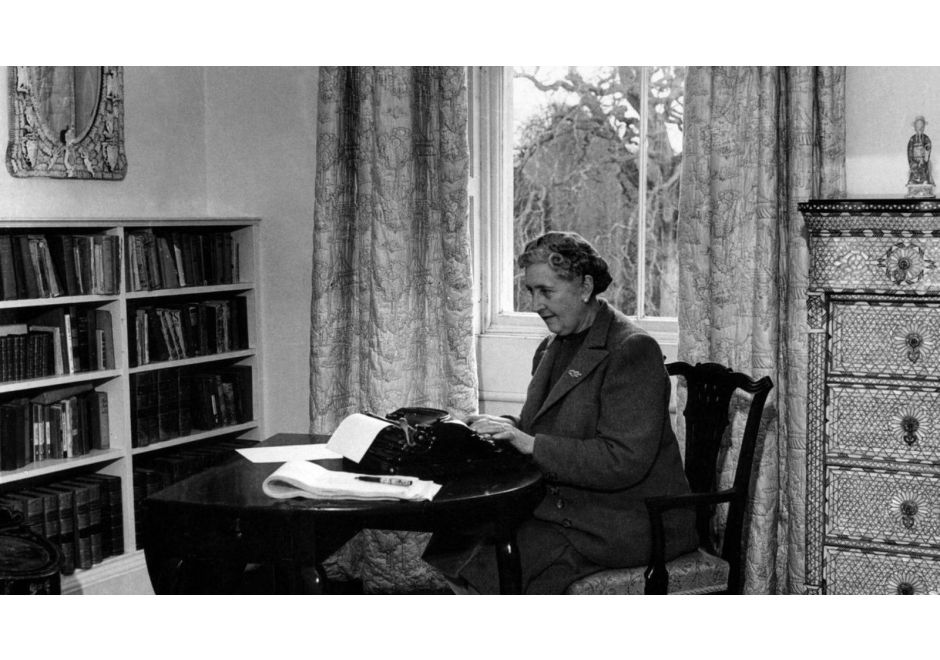
Born in 1890, Agatha Christie has had considerable sway over the murder mystery genre for over 100 years. Her famous “Whodunit” novels are still being adapted into movies, including most recently A Haunting in Venice (2023), Death on the Nile (2022), and Murder on the Orient Express (2017). She literally wrote the book on creating a compelling murder mystery.
But one of Christie’s biggest mysteries revolves around 11 days in 1926 when she went missing. The acclaimed author, who has written over 80 books and is one of the best-selling authors of all time, disappeared and set off a nationwide hunt to find her, or possibly her dead body (spoiler: she wasn’t dead).
What caused her to disappear? Was it her rocky marriage? The mounting pressure brought on by her worldwide fame? An impending nervous breakdown? Or something else?
Eleven Missing Days, a new film set to star Felicity Jones as Agatha Christie, will seek to answer what happened when Christie simply vanished. The story will follow a Belgian detective - similar to Christie’s famous sleuth Hercule Poirot – as he investigates her disappearance, trying to sift through the speculation and find the missing mystery writer.
The troubled life and times of writers have been the subject of several films, showing how they overcame mental illness, external threats, and cultural adversity to become the heroes of the literary world.
Here are 5 movies about famous writers you’ll want to check out (and, as a writer, might even relate to).
Fear and Loathing in Las Vegas (1998)
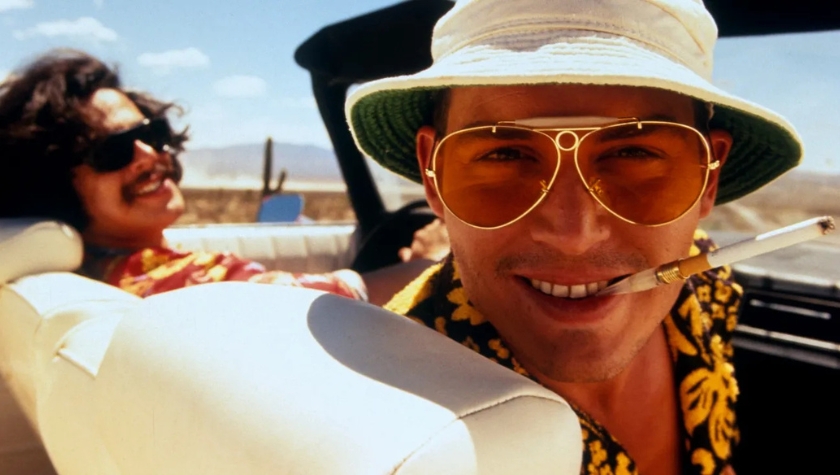
Hunter S. Thompson was a unique character. He is seen by many as the writer who popularized “gonzo journalism,” a term for when a journalist makes themselves the subjective viewpoint of the story. While the book the film is based on is considered a work of fiction, it’s believed to be rooted in autobiographical events.
The movie, co-written and directed by Terry Gilliam, follows Thompson (Johnny Depp) and Dr. Gonzo (Benicio Del Toro), his lawyer, as they road trip across the western United States, consuming copious amounts of drugs and alcohol. The plot and set pieces are deliberately chaotic, yet it becomes an enjoyable experience for those seeking a trippy glimpse into Thompson's mind.
Another biopic on Thompson worth checking out is Fear and Loathing in Aspen, which focuses on Thompson’s (Jay Bulger) electoral run for sheriff in Pitkin County, Colorado, in 1970.
Capote (2005)
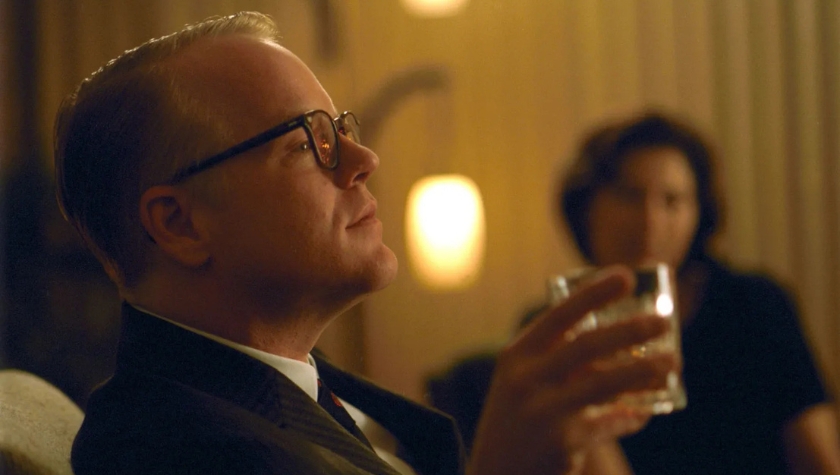
Some biopics encompass the entire life of the subject, while others focus on a transformative period. Capote is about writer Truman Capote (Phillip Seymour Hoffman), and the 6 years he spent researching and writing about the gruesome murder of a family in Kansas. The result is the non-fiction novel, In Cold Blood.
The movie takes a detailed peek into Capote’s creative process, including how he interviewed subjects, gathered information, and the toll it took as he befriended one of the killers on death row.
Similar to Hunter S. Thompson’s style of journalism, Capote also began inserting himself into the pieces he wrote. How far will Capote go to get his story? And what does it mean to become part of the story you want to cover?
Capote combines historical accuracy and insight into the writing process, not to mention a brilliant performance by Hoffman for which he won an Academy Award. 2006’s Infamous tells a similar story starring Sandra Bullock, Toby Jones, and Daniel Craig.
Trumbo (2015)
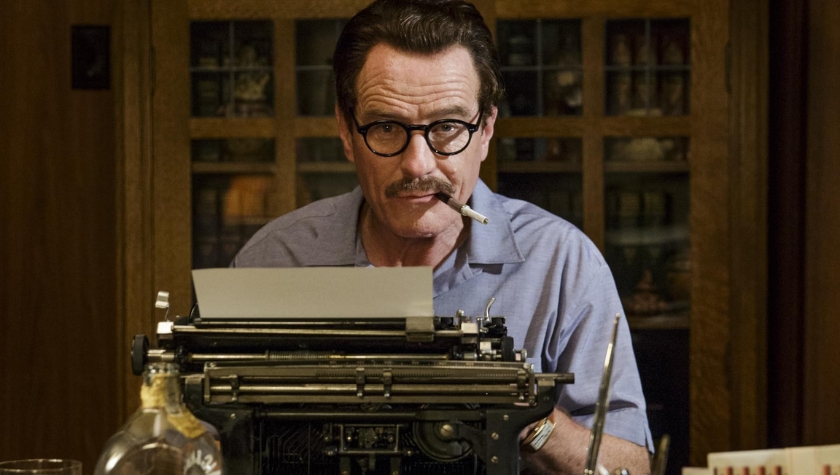
Dalton Trumbo was a screenwriter whose political beliefs got him canceled from Hollywood. In the late 1940s, Washington politicians, under the House Un-American Activities Committee, were leading the charge on ridding influential institutions of communists and communist sympathizers. Hollywood was a target. This led to Trumbo being blacklisted from the industry and to his serving 11 months in jail for contempt of court because he (and other writers) refused to name names.
Trumbo is about this tumultuous time in his life. What makes it compelling, though, is that Trumbo (played by Bryan Cranston) was still writing and selling screenplays during this period. During the two-year blacklist period, he wrote 18 screenplays that were produced under a pseudonym, two of which won Academy Awards for Best Screenplay, but he could not be present to accept.
Mary Shelley (2017)
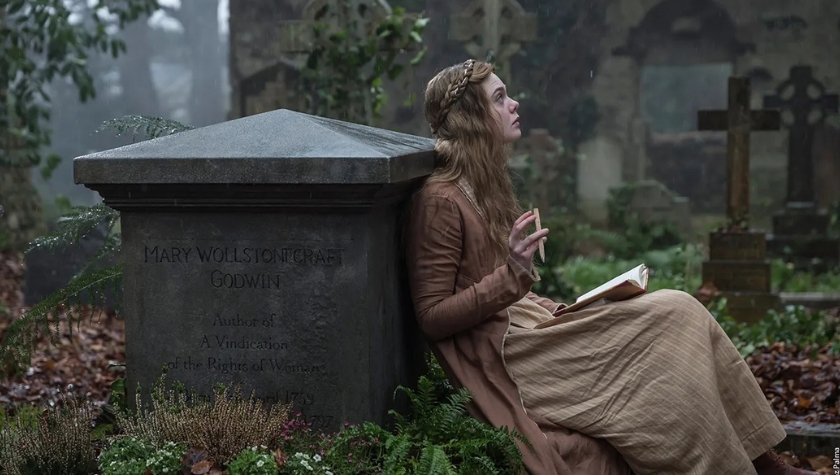
Mary Wollstonecraft Godwin (Elle Fanning) had a desire to tell stories, and continued to write in spite of her stepmother’s insistence that she stop and her father’s criticisms. At the same time, she meets Percy, a handsome poet who is studying with her family. Mary and Percy, though, embark on a scandalous relationship; she was 16, and he was 21, for one thing, and he was married. While many warn her to run away from him (including his wife), the ideas of love win out, and they get married.
Things start to take a downturn as they struggle through poverty, her first child dies, and Percy continues with his unfaithful ways. The story culminates in the summer of 1816, when the idea for Frankenstein begins to take shape.
Mary Shelley shows the story behind the creation of Frankenstein, not from a genius-at-work angle, but rather how the author’s life shaped her views and enabled her to conceive one of the most famous characters in literary history.
American Splendor (2003)
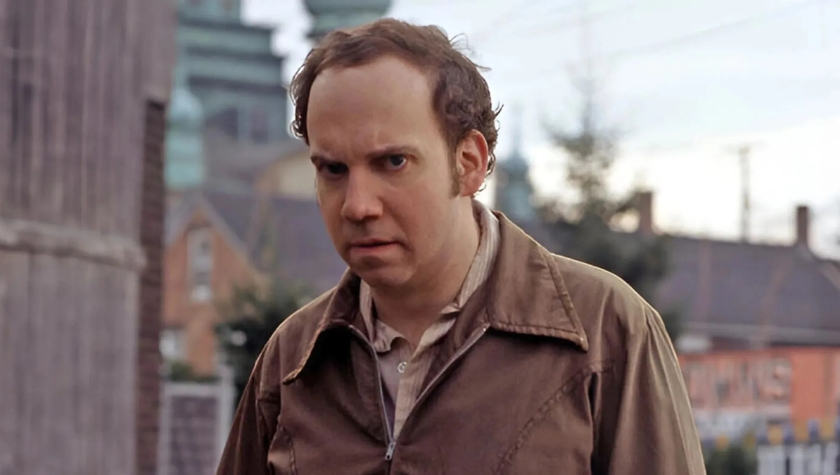
Harvey Pekar was a comic book creator whose existence as an everyman struggling through life before it took him on an unusual journey to fame, landing him on The Late Show with David Letterman, led to a somewhat bitter relationship between the two.
The movie, which was adapted from Harvey’s own comic books, follows Harvey (Paul Giammati) as he goes from file clerk at a VA hospital to underground comic success. What sticks out is that his comics aren’t about superheroes but offer a truthful look into the unglamorous life of a working-class, middle-aged man, and how that found a cult following. When writers like Harvey become too honest in their work, it can take a toll on the close people in their life as they become fodder for stories – that’s what adds complications in Harvey’s life as he navigates cult fame while still living a somewhat ordinary, mundane life.
Writing tends to take place alone in a room, so it’s up to the person telling their story to find the angle that would entertain an audience. Movies about journalists, for example, tend to veer toward detective-type stories in which they track down leads, gather information, and eventually solve a problem that makes the front pages.
Movies about writers aren’t about writing, but moments in their lives that elevate them beyond just being an author. There may not be a story on Agatha Christie if she hadn’t disappeared for 11 days, or Dalton Trumbo if he hadn’t defied Congress and found a way to still write despite being blacklisted. Ultimately, they must become characters in a story with built-in stakes, making decisions that drive the story forward.