
Scaring an audience isn’t easy. Why? Because the audience knows the tricks. They know that when a character slowly approaches a closed door, something or someone is probably waiting for them behind it. They know that when the creepy musical score suddenly mutes to silence, a jump scare is likely on its way.
For more than a century, audiences have seen just about every type of monster, killer, ghost, demon, and creature imaginable. They have also experienced every type of scary scene.
Despite that, the horror genre is perhaps the most successful genre overall, as far as consistency and popularity. And the genre manages to accomplish this by giving the audience many of the same types of viewing experiences. Even endless horror tropes, cliches, and trends continue to perform well because they tap into the audience’s common and universal theme - fear.
Yet every once in a while, a horror movie delivers a scene that gets under our skin in a different way than we’ve seen before, beyond the normal jump scares and creepy visuals.
The best horror scenes aren’t the most bloody and violent. The best of the best are masterful cinematic moments that manipulate anticipation, perspective, sound, darkness, isolation, and our own imaginations. They don’t just show us something scary or creepy. The best of the best horror scenes that stand the test of time make us participate in the scare by forcing us to wonder what’s in the shadows or behind the door. We’re not living vicariously through the characters. It’s a level above that. Instead, we’re going through the experience as participants, waiting for the moment the screenwriters and directors are going to shock, scare, frighten, and terrify us.
Here are seven of the most terrifying horror movie scenes, and how they manage to scare audiences so much. For the best experience (beyond going and watching the whole movie), watch the scene first in the provided link and then read our input on why the scary horror movie scene works.
1. The Hospital Hallway – The Exorcist III
A nurse works alone during the night shift at a hospital. In a fixed camera wide shot, we watch as she moves through the hallways, checks rooms, returns to her desk, hears noises, investigates them, and goes about her nightly routine. The camera always remains positioned far down the main hallway, watching everything unfold from a distance. Nothing particularly frightening happens for an uncomfortable amount of time.
That is exactly why the scene works. Director William Peter Blatty (writer of the original The Exorcist novel, as well as its direct sequel novel Legion, which he adapted for the screen as The Exorcist III) forces the audience to stare at the entire frame, searching for impending threats, danger, and terror. The longer nothing happens, the more convinced the audience believes something will. And how he strings the audience along in that fashion is brilliant.
When the killer finally appears behind the nurse at the most unexpected time, the sudden horrific visual, accompanied by a chilling musical note, is utterly terrifying. It’s one of the greatest examples of suspense created not by showing us something scary, but by making us wait so long for it. This creates an anticipation that becomes almost unbearable because we know something is going to happen. We just don’t know when. And guessing when as we watch the nurse go through menial task after menial task is brilliant.
2. The Twin Girls in the Hallway – The Shining
Little Danny Torrance rides his Big Wheel through the enormous and maze-like hallways of the Overlook Hotel when he suddenly stops. Standing at the opposite end of a long hallway are two young girls, twins, dressed identically. They stare directly at him. Danny stares back in horror. They then tell Danny that they would like him to come play with them “forever and ever and ever.” Danny then sees flashes of their murdered bodies before the hallway returns to normal.
The scary scene works so well and is so memorable because director Stanley Kubrick takes a moment that in normal places would be very innocent and natural (kids meeting in a hallway and wanting to play with one another) and turns it into something deeply unnatural.
The horror genre has mastered the art of making something as innocent as children seem creepy and horrifying. Children aren’t inherently frightening. Neither is the visual of two girls standing in a hallway. But setting up the location and informing us that Danny and his parents are the only ones in the whole hotel transitions the presence of unexpected guests from innocent to terrifying and creepy. And just when we’re feeling unsettled because of these unexpected guests, we see flashes of their bloody murders.
It’s a masterful scene of horror that has stood the test of time for generations.
3. The Shower Murder – Psycho
Marion Crane steps into the shower of her motel room at the Bates Motel. It’s a calm scene because she believes the worst of her problems may finally be over. She stole money from her job. She escaped the city. And now she can enjoy a relaxing shower before bed.
As she showers, we, the audience, see the door open. We then see something through the translucent shower curtain. It’s a figure. The curtain is suddenly ripped aside. A silhouetted figure that looks like an old woman suddenly raises a knife. The now-iconic musical score plays as the figure stabs Marion over and over - far too many times than we’d like to see. Nothing too graphic. Most of the impacts are implied or offscreen. Just utter horror until Marion falls dead, her killer disappears, and Marion’s blood washes down the drain.
Director Alfred Hitchcock’s scene works because it shatters any sense of safety we thought we had. He made us believe that Marion was the lead protagonist who was going to carry us throughout the whole movie. But within the first act, Marion is dead. And we know danger is lurking when a private investigator and her sister come looking for her.
The scary scene works on another level beyond the scary moment itself. From that point on, we know that no one is safe in this movie. Wes Craven’s Scream brought this type of scene and realization to a whole new generation when Drew Barrymore’s character in the opening is stalked, toyed with, and brutally murdered. When the audience knows no one in the story is safe, the anticipation goes to a whole new level. And anticipation is a horror writer’s greatest tool.
4. The Kitchen Attack – Paranormal Activity 2
The kitchen represents the most ordinary places within the film. And it’s a place we can all identify with. If you’re into remodeling, it’s also a kitchen that many look at as one of those great styles of kitchens that we’d all want.
But once the haunting starts, things change. Once again (as utilized in the hallway scene of The Exorcist III), a fixed camera offering a wide shot of a location forces us to search for dangers and threats. We’re anticipating the scares as we watch the protagonist enjoy a cup of coffee and a magazine. We’re watching the frame and waiting for something to happen.
And then something does happen as all of the cabinets and drawers suddenly open! It’s a terrifying jump scare. But then we linger on the protagonist’s reaction. We imagine what we would feel in our kitchens if the same thing were to happen. We wait for more potential scares as she does. It’s brilliant because instead of a scary old house or abandoned hospital, the movie asks us to be afraid of our own regular households. We know we’re going to have to go home and face the same fear.
Once the movie establishes that anything within any security camera footage frame can move without warning, even ordinary household objects can become a source of suspense, tension, anticipation, and horror.
When you place a scary story and a scary moment within places that audiences can immediately identify with, you’re giving them the added bonus of taking their fears home with them after the movie ends.
5. The Tent Attack – The Blair Witch Project
Heather, Mike, and Josh are already lost, exhausted, and on edge. But then the noises outside of their tent at night come. Something is outside. They hear sounds they can’t explain. Are the voices and laughter coming from monsters or children? The terror escalates until they rush out of the tent after whatever is out there begins pushing on the outside of the tent. Now they’re in the darkness running for their lives, not knowing what is following them.
It’s a scary scene that likely made a lot of people never want to camp again, no different than how Jaws made many never want to swim in the ocean.
What makes the scene particularly scary is what we don’t see. There is no creature revealed. We don’t see a witch standing outside of the tent waiting for them. The characters can’t identify the threat, so we, the audience, can’t either. That allows our imagination to create something far worse than anything the filmmakers could ever conjure. For those few moments in the tent, as well as the terrifying seconds of them running out, we’re right there with those characters. Confused and horrified.
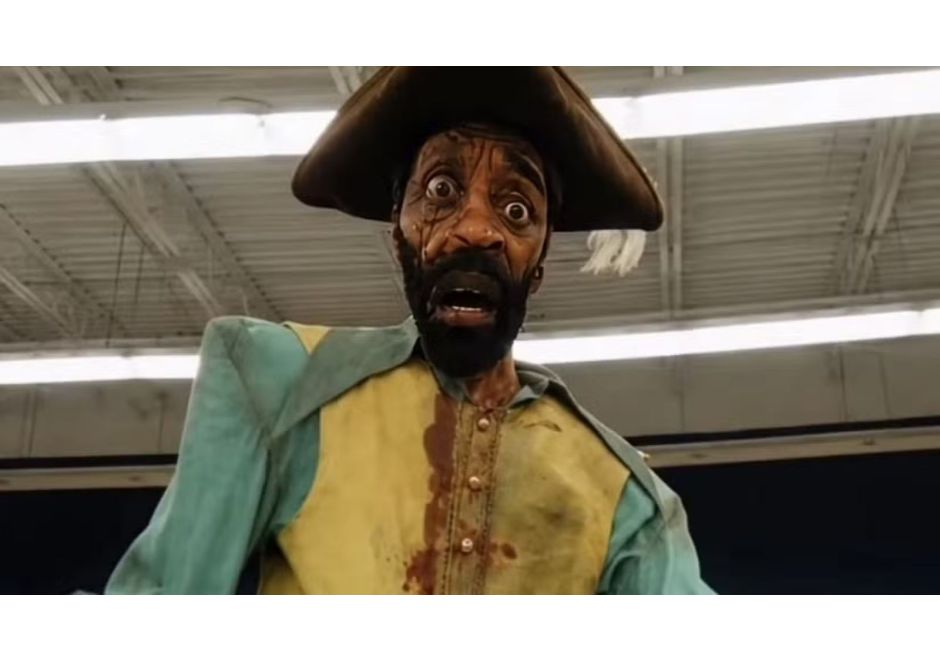
6. Pirate Clark’s Chase Sequence – Backrooms
The terror of the Backrooms concept comes from being trapped in an environment that seems surreal, endless, repetitive, and, well, just off. During the Pirate Clark’s chase sequence, that underlying and creepy dread becomes immediate survival horror (a sub genre of its own) as the character is forced to flee through a maze-like environment with a terrifying threat pursuing her.
The sequence works because the environment was already unsettling enough. Now we are being chased through this surreal maze of rooms and obstacles by an unimaginable threat that we can’t even comprehend. But there’s no time to comprehend it.
The endless corridors and familiar-but-unfamiliar become horrifying characters of their own. Every turn into another corridor or room adds even more suspense. Each of them also throws more limitations at the character. Too much space means there’s no place to hide. Too little space means there’s nowhere else to go.
Where you put your characters in your horror stories can and will enhance any scares you throw at them. Conflict is everything in screenwriting. The more, the better. The more horrifying and surreal, the scarier your script will be.
7. The “Watching You Sleep” Scene – Obsession
Few things make us seem more vulnerable than being asleep. We’re unconscious, defenseless, and completely unaware of what’s happening around us. Obsession taps directly into that relatable and universal fear with this scary scene.
It first starts with dramatic irony, where we know something the protagonist doesn’t. We’re watching him sleep as well. But we know she is somewhere nearby. We want to warn him, but we can’t. So we have to wait and see how the scene is going to play out. Anticipation grows and grows as he wakes up and looks for her. We see his point of view and see the unsettling frame of the camera shot with far too many shadows than we’d like to see. When we hear her voice nearby, within that frame, we search for her but can’t find her. Until she suddenly appears from where we’ve been looking the whole time. Match that with her cries and screams and strange sounds she emits. It is utterly horrifying.
It works because quiet is met with deafening noise, shadows reveal terrifying imagery, and the horrifying character is so utterly unhinged and unpredictable that we never know what to expect. The director then adds some surreal and unnatural character movement to enhance the horror of the scene.
What Screenwriters Can Learn from Great Horror Scenes
If you look closely at these scenes, you’ll notice that they don’t all scare us the same way.
- The Exorcist III makes us wait.
- The Shining throws some disturbing imagery at us.
- Psycho attacks when we feel the most safe.
- Paranormal Activity 2 makes the familiar unfamiliar, and then makes us go home to face fears in our formerly comfortable and safe environment.
- The Blair Witch Project makes us use our imagination, which is much more horrifying than anything that makeup, wardrobe, and special effects can conjure.
- Backrooms makes us feel unsettled.
- Obsession manages to use everything from those above six examples to create one of the newest, and now-iconic, scariest horror movie scenes of all time.
The key screenwriting lesson is that screenwriters have control. You control the cinematic experience you’re giving not just the audience, but the initial industry readers reading your scripts. When you study how the great horror scenes work, you can add those lessons to your toolbelt and bend and mold them to fit the horror stories you’re telling.
What other scary scenes do you think deserve to be on the master list of horror scenes to study?