
You write, revise, refine... but do you read aloud?
Saying the dialogue you've written out loud and hearing how it lands, whether it sounds natural and has a good rhythm, is an excellent way to 'test' your screenwriting. Does it sound the way you meant it to?
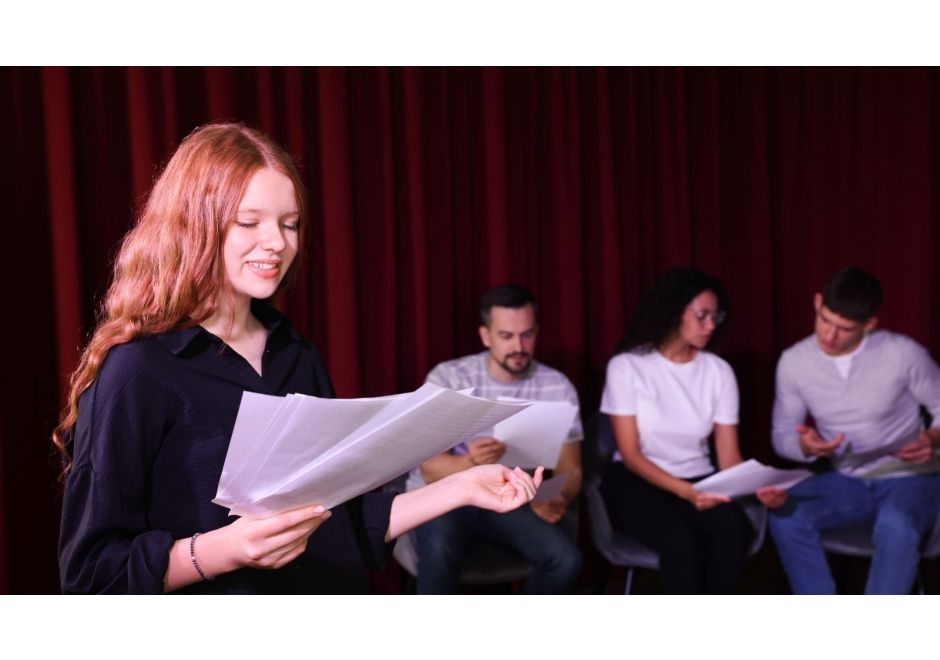
Table reads take that process a step further. They are usually laid out exactly as you would imagine: actors, a director, the writer, sitting around a table reading the screenplay. Different voices for different characters bring authentic life and new perspectives. Especially in a first read of a script, that's when the surprises—good, the bad, and the ugly—jump off the page to life, and story discoveries are made.
If you've never been part of a table read before, let's walk through the benefits of this screenwriter's secret weapon.
1. Your dialogue will sound different out loud than it did on the page.
You know the intention behind what you wrote, so if you're the one reading it out loud, those intonations and subtext might come out inherently. When the table read cast reads the dialogue, they come in blind and perform based on cues in the action lines and the feeling they get solely from what's on the page. And that may not always match the intentions you planned.
So, be prepared for discovering new dimensions to a single line of dialogue or that one villain's monologue; you never know what might be revealed. Actors may pick up on something that you hadn't intended, for better or worse, as they add their own layer to your story.
You'll also hear where the dialogue works well, where an actor is tripping up on a word, or if they're unsure of how to play the subtext behind the line, and most importantly: if all your characters sound different (or the same). For comedy writers, instant feedback on whether a joke lands will also show where dialogue and timing need punching up.
2. You'll get a feel for pacing
Hearing the dialogue out loud to feel the rhythm through how it's delivered will give you an idea of how the written lines translate to real time. Where actors trip up on a word or phrase that slows down the pacing unexpectedly. Same goes for the action lines. Because yes, the description and action blocks are read aloud, too.
Pacing is important to story progression. For example, action movies have a certain number of explosions—both figuratively and literally—expected. In thrillers, it's crucial to evenly drop the reveals like breadcrumbs that keep the momentum of the central mystery at a heart-pounding pace. Pacing is equally important in straight dramas and comedies for a strong central narrative architecture.
Hearing the dialogue will give you a heads-up where lines will be exchanged rapid-fire and where they'll slow down to a more coy exchange laden with subtext. You'll also hear if you've, well, heard it before, so to speak, and know where to revise for something more original moving forward.
3. Story and character questions (and answers!) in real time
Keep in mind that a live table read is often the first time an actor is reading the lines, so it'll be a completely unfiltered, first response. That visceral, emotional yay-or-nay reaction is invaluable for a screenwriter to know. If an actor re-reads a line, chances are, they didn't understand it or the verbiage is tripping them up. Along with the structural benefits of hearing what works, actors may pose questions about character motivations and backstory, or why a certain plot beat is occurring. So come prepared to answer in-depth questions.
Conversely, this is your opportunity to ask the actors questions: What hit for them? What didn't feel like it landed the way you'd intended?
Keep track of these clarifying moments for when you dive into rewrites, because they can add depth to characters that wasn't there before, heighten aspects of the story that you hadn't realized needed it, and crystallize others for a better translation from page to screen.
4. Not everything will be a "performance," and that's normal
While professional actors will embody their character as much as they can while staying seated at the table read, there will be certain aspects that aren't "performed," and that's totally normal.
For example: There won't be any physical blocking involved. Actors will deliver tone and energy with the lines as best they can with the limited understanding that comes with a first read. You might hear a light accent, if required. But the table read is the time to clarify and solidify motivations and characterizations, which will likely evolve during the process.
So don't expect a fully acted-out scene with all the trimmings from start to finish. That's not what this process is about. And remember: this will be the first, maybe second, time they've read the script, which is actually in your best interest for the most honest, instinctual responses.
5. You'll leave with more questions and ideas than you started with.
And that's fantastic! In fact, that's the point. Film and television is a collaborative process, and that's what makes it so special. You may have created the story, but bringing it to life is a team effort. Hearing how actors breathe life into your characters, sometimes bringing their own baggage and inspiration to the table, is a beautiful thing.
There's no need to feel anxious. This can be a fun, inspiring process if you prepare yourself for that kind of environment. Leave ego and defensiveness at the door. Open yourself to the possibilities, come prepared, and let the creative process be what it is.
Hosting your own table read?
Table reads don't have to be around an actual table, either. Ideally, they're in a space large enough for everyone to sit in a loose circle facing each other so reactions are visible to everyone, but they can also be over Zoom, where actors can still make eye contact.
Paying your actors for a table read might be out of reach, but feeding your cast and crew, offering portfolio-building clips, and giving them the chance to network in the film community are all valuable perks. Be honest about the time commitment, too. There should be enough time allotted not only for the read-through, but for questions and in-depth discussion.
The immediate benefits of a table read
The feedback you receive during a table read is instantaneous, and that's invaluable. From the character insights the actors bring to the table, to the questions that arise from hearing the story out loud that range from pacing to plot, you'll ultimately be more prepared going into a rewrite than you would've been had you just left the script alone and come back to do your thing without a table read in between.
Now that you know what to expect, the process should be a little less scary and more about why we all got into screenwriting in the first place: crafting the best possible story.