
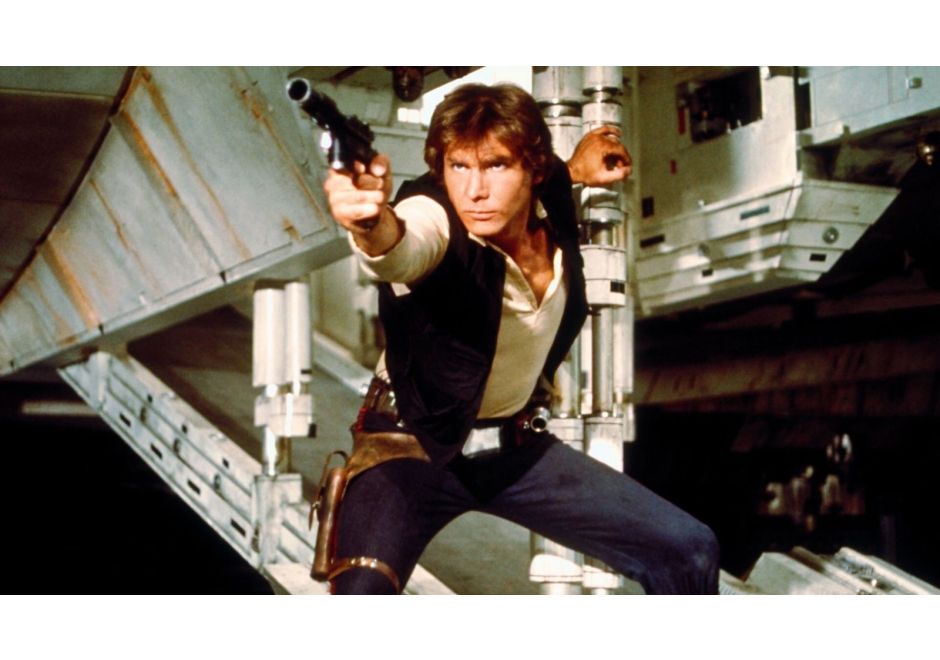
The “loveable rogue” character is a mainstay of adventure storytelling. This charismatic archetype, often with a mysterious past, is known to act criminally out of self-interest. Screen legends like Humphrey Bogart and Clint Eastwood made their names in such roles, but as is the case in Casablanca (1942) and A Fistful of Dollars (1964), the characters’ hearts often win out over their hardened cynicism.
When applied in a supporting role, the way George Lucas used Han Solo in Star Wars: Episode IV - A New Hope (1977), a good, lovable rogue can inject a fresh energy into your story. This character serves as a foil to your protagonist, throws curveballs that send the plot in exciting directions, and often has the audience questioning their loyalty until the final beat.
If your screenplay could use a loveable rogue supporting character, here are five great examples to study.
HAN SOLO - Star Wars: Episode IV - A New Hope (1977)
It takes about 45 minutes for dashing smuggler Han Solo, played iconically by Harrison Ford, to appear in Star Wars: Episode IV - A New Hope. By the end of his introduction, he shoots and kills a bounty hunter who’d been trying to shake him down for money he owes to a notorious gangster. In short, he stands in stark contrast to our wide-eyed, innocent protagonist, Luke Skywalker, who enlists Solo to transport important information to the Rebel base and aid their fight against the Empire. But Solo attaches himself to no causes and doesn’t believe in their spiritual doctrine. He’s only interested in money.
By the film’s end, however, his loyalty to these newfound friends and their cause wins out, and he returns to help their fight. Solo’s arc, going from selfish criminal to aid in a righteous cause, echoes Bogart’s in Casablanca, and helped cement the supporting loveable rogue with a heart archetype for the next 50 years.

DOC BROWN - Back to the Future (1985)
The iconic Dr. Emmett “Doc” Brown in Back to the Future is so lovable that viewers might forget he’s a crazed criminal prone to endangering kids and animals and putting the fabric of reality at risk. In an instance of purely visual storytelling, writer/director Robert Zemeckis introduces Doc with only the set dressing of his workshop. Here we learn that Doc lost his inherited mansion in a fire, that he spends his insurance money on crazy inventions, and that he stole highly dangerous plutonium from Libyan nationalists. All this before we even meet the man, whose lab coat and crazy white hair confirm a madness that helped him invent time travel.
We don’t know how our protagonist Marty McFly became friends with this old kook, and it hardly matters by the time Doc sends Marty back in time, but if Doc has any sort of redemption arc, it’s that Marty’s friendship gives him something to live for. By the end of the film, the science-obsessive, so entrenched in the rules of time travel, allows himself to break one of his own rules, altering his fate by reading Marty’s letter explaining how he’s going to die. When asked to justify his actions, he utters, “Well, I figured, what the hell?”

MOUSE - Devil in a Blue Dress (1995)
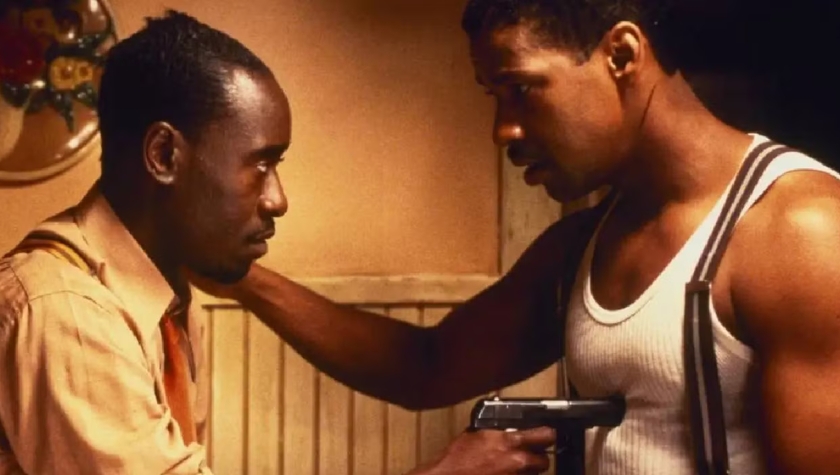
Carl Franklin’s neo-noir film, Devil in a Blue Dress, adheres to a 40s private eye structure. Denzel Washington plays Easy Rawlins, an Angeleno trying to make an honest living and leave his violent Texas past behind, when a mysterious man pays him to find a missing woman. The case poses unseen dangers, prompting Rawlins to reluctantly call in a figure from his past for help. Enter Mouse, played with star-making, hot-headed electricity by Don Cheadle. If Easy’s trying to navigate the case without getting into trouble, Mouse is the psychotically violent friend he’s gonna need by his side to survive. In fact, Mouse is almost too dangerous to fit neatly into the “lovable rogue” category, but his supporting presence is so exciting that it bears including.
Mouse shows up at the movie’s midpoint, rescuing Easy from an assailant with his comically giant gun. “You want me to shoot this son-of-a-bitch, Easy?” he asks in a swaggering Texas lilt, immediately summing up his whole code. He’s fiercely loyal, and so worryingly eager to kill that he’ll pull the trigger without fully understanding the situation. And he doesn’t come with a typical redemption arc. After a deadly final shoot-out, he heads back to Texas, unchanged and almost definitely counting on more bloody showdowns ahead.
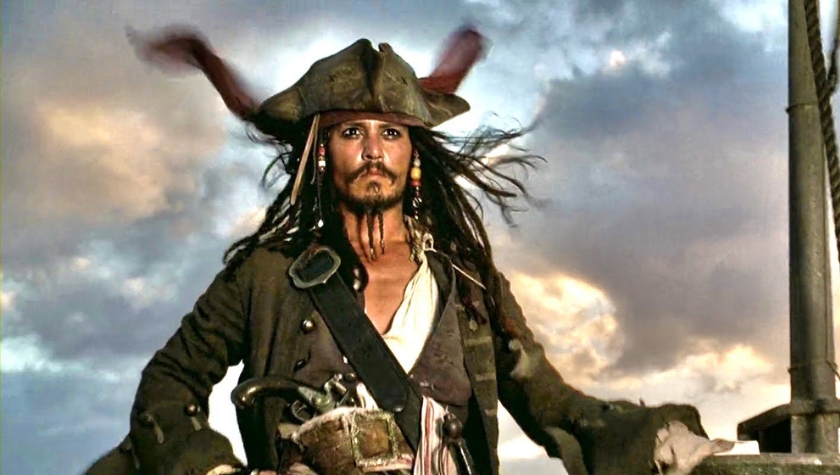
CAPTAIN JACK SPARROW - Pirates of the Caribbean: The Curse of the Black Pearl (2003)
Perhaps the most famous Han Solo descendant is Captain Jack Sparrow, who we meet in Pirates of the Caribbean: The Curse of the Black Pearl, standing proudly on the mast of a sinking boat as he arrives in Port Royal. Even in such a pathetic circumstance, Sparrow maintains a performative regality indicative of his narcissism. Actor Johnny Depp lends the character such a drunken whimsy that it’s hard to determine whether Sparrow’s a selfish mastermind or just plain crazy. The Skywalker analog, Will Turner, an ordinary blue-collar boy with a secret dark lineage, needs the assistance of a criminal and skilled captain to track down the evil-doers and save a noblewoman. Sound familiar?
Sparrow’s only ambition is to reclaim his ship, the Black Pearl, from the same baddies, so he helps Turner for as long as it’s useful. Sparrow shifts allegiances several times, ultimately helping Turner defeat his foes by the end, but whether it’s out of newfound friendship or continued self-preservation is made ambiguous by a line typical of the now world-famous character: “Me? I’m dishonest, and a dishonest man you can always trust to be dishonest. Honestly, it’s the honest ones you want to watch out for. Because you can never predict when they’re going to do something incredibly stupid.”
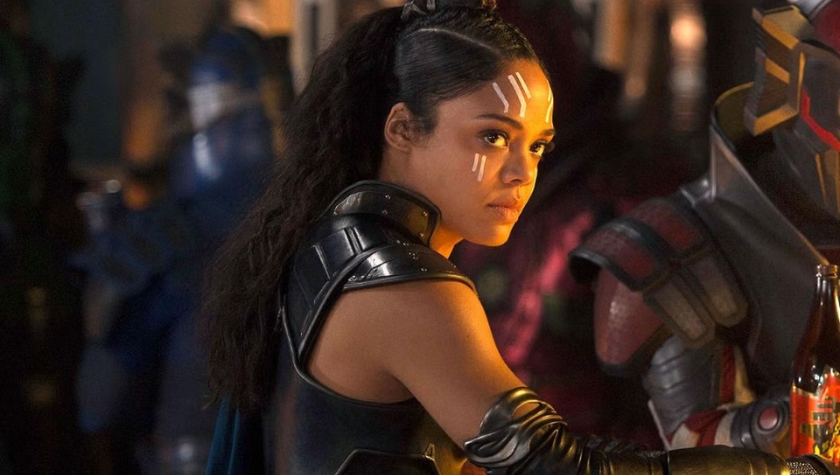
VALKYRIE - Thor: Ragnarok (2017)
Tessa Thompson’s Valkyrie arrived in the third Thor installment as one of the most exciting, lovable rogues in recent memory. A former brave warrior, currently exiled on Sakaar, a planet with a garbage dump aesthetic that mirrors its misfit population, Valkyrie enters the movie by rescuing Thor from a group of scavengers. She immediately undercuts her heroism, however, by chugging a bottle of liquor and drunkenly stumbling into a trash pile. She’s not even there to save Thor, but intends to kidnap him herself in exchange for a reward.
Like the rogues before her, she’s only interested in money and survival, having become a bounty hunter after watching her sister warriors get slaughtered by the film’s big bad, Hela. Over the course of the film, however, she reclaims her former self in order to help Thor defeat Hela. Amid the comic chaos of Taika Waititi’s film, Thompson’s edgy characterization and redemption arc as Valkyrie add an extra layer of liveliness to the franchise.
Movie history is littered with other supporting rogues, from salty shark-hunter Quint in Jaws (1975) to “rock star” scientist Ian Malcolm in Jurassic Park (1993) and eccentric bounty hunter Dr. King Schultz in Django Unchained (2012). It’s worth studying the nuances and differences of all these characters in order to help build a new lovable rogue that best serves your own story.