
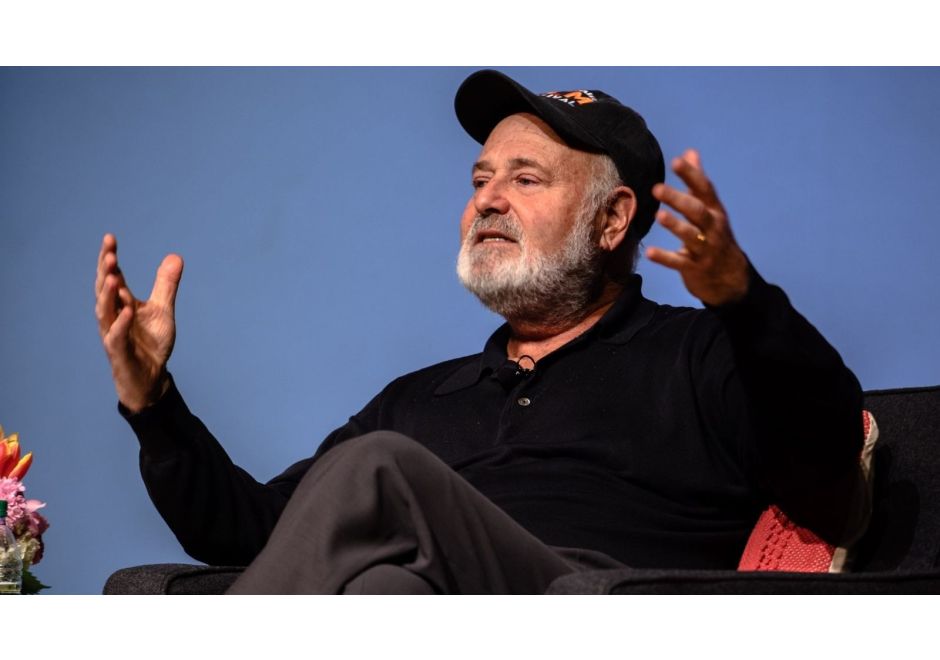
The 80s and 90s gave us some of the most iconic box office dominating directors we’ve ever seen - Penny Marshall, Nora Ephron, Steven Spielberg, Ron Howard, James Cameron, Robert Zemeckis, Harold Ramis, Ivan Reitman, etc. Among them was Rob Reiner, perhaps the most underrated of the bunch.
Few filmmakers during that era - or any era since - navigated different tones, genres, and cinematic catharsis with the consistency and range of Reiner. He quickly became the master of comedy (This Is Spinal Tap), coming-of-age (Stand By Me), fantasy (The Princess Bride), romantic comedy (When Harry Met Sally...), psychological horror (Misery), and courtroom drama (A Few Good Men). Each of these films demanded a radically different muscle, and yet Reiner mastered them all within a single, extraordinary, and near-sequential run. Other iconic directors of that time usually stayed in their genre lane. Not Reiner.
Born into comedy royalty, Reiner began life as the son of legendary performer, writer, and director Carl Reiner. Carl was a comedic icon, spanning through decades of laughs in The Dick Van Dyke Show and through brilliant cinematic collaborations with Mel Brooks.
Reiner didn’t coast on his father’s laurels though. Nor did he have trouble escaping from his father’s shadow.
Instead, Reiner carved his own comedic identity, first through acting. His most memorable comedic launch was his portrayal of Michael “Meathead” Stivic on the heralded TV series All in the Family.
But it was his turn as a feature film director that captivated the masses. He quickly became one of Hollywood’s most dependable hit-makers. And across five defining movies, Reiner demonstrated an instinct for different tones and genres that most directors never achieve even once.
In short, you knew when you were watching a Rob Reiner movie. Not because he was directing yet another comedy, yet another coming-of-age flick, or yet another psychological horror movie - but because his mastery of character, casting, atmosphere, and direction could be found within multiple tones and genres.
These five featured films do more than showcase his versatility. They reveal a filmmaker who understood that story and character always came first.
Here we share the five Rob Reiner movies that define the director the most. And, in turn, we share five movies that define generations of movie lovers.
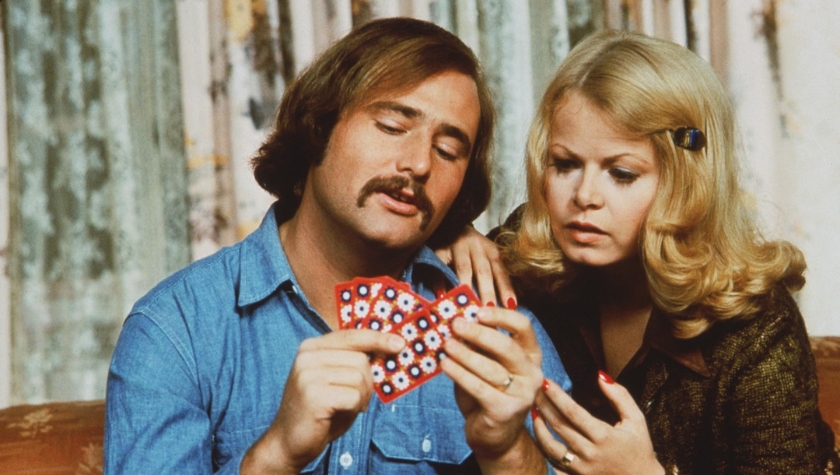
1. 'This Is Spinal Tap' (1984)
A fictional British heavy metal band documents its disastrous American tour, revealing egos, absurdity, and the fragile line between ambition and delusion.
This Is Spinal Tap stars Christopher Guest, Michael McKean, Harry Shearer, and the director himself (playing a version of himself), Rob Reiner.
This movie was a mockumentary, long before Hollywood embraced anything like that. Reiner invented a new cinematic language and genre, embracing improvisation, restraint, and realism to sell the illusion that this band really existed. Reiner didn’t rely on cinematic winks, underlined jokes, or laugh tracks. The humor emerges from behavior, not punchlines and slapstick.
In a brilliant move, Reiner cast comedians who could convincingly perform as musicians as well, enhancing the illusion that Spinal Tap was a real band. Guest, McKean, and Shearer offered hilarious yet subtle performances, playing their roles with total sincerity. And, again, it’s their behavior that sells the laughs. Reiner played documentarian Marty Dibergi, grounding the chaos of the band with wide-eyed curiosity. He basically stands in for the audience as we lived vicariously through him as he witnesses the band’s hilarious antics.
One of the film’s most famous moments - the amplifier that “goes to eleven” - was improvised on the spot. It was a perfect example of Reiner’s usage of improvisation which, at the time, wasn’t as prevalent as it later became in feature film comedies. While it was initially misunderstood by the audience (and some critics), having only grossed $6 million globally, the film became a cult hit, later leading to actual Spinal Tap concerts, and a 2025 sequel.
Make no mistake, there’s no Borat or The Office without This Is Spinal Tap.
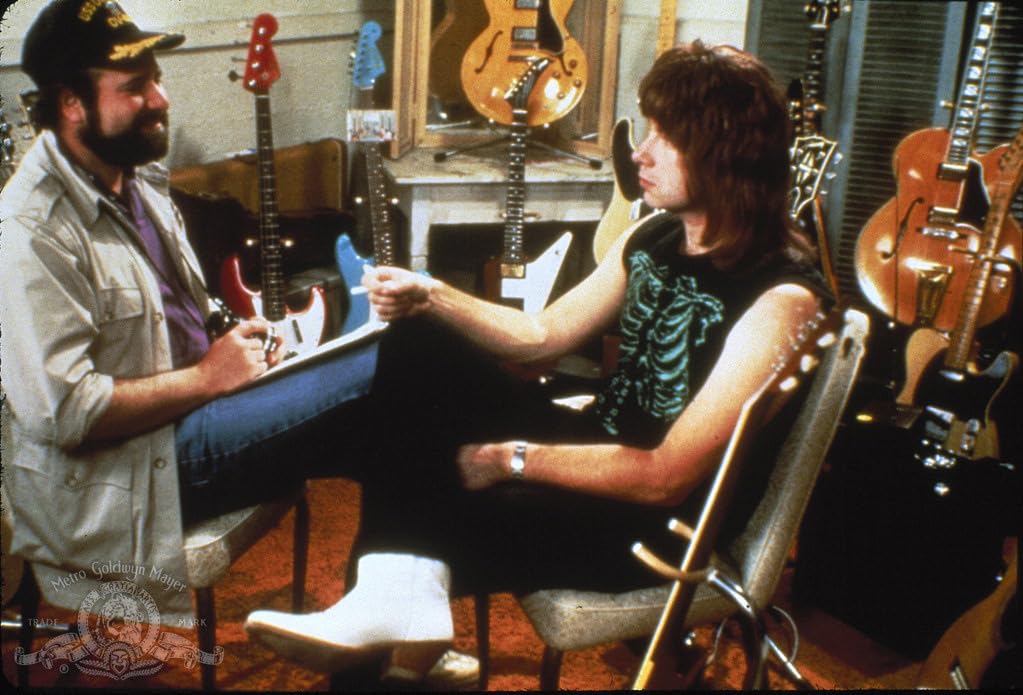
2. 'Stand By Me' (1986)
Circa 1959, four friends set out on a coming-of-age journey to find a dead body, discovering brotherhood, loss, and the fragile boundary between childhood and adulthood.
Stand By Me stars Wil Wheaton, the late River Phoenix, Corey Feldman, and Jerry O’Connell. Adapted from Stephen King’s novella, The Body, the box office hit is cited as one of the most emotionally honest coming-of-age films ever made. While Stephen King was enjoying successful adaptations of his horror novels for the past decade, this was the first King adaptation that had no supernatural elements.
Reiner’s direction was masterful, making audiences forget about supernatural expectations with King’s work. Instead, he focused on what the novella did so purely well - focusing on how childhood feels and is remembered through adult eyes. It didn’t matter if someone in the audience was a child of the 1950s, 1960s, 1970s, or 1980s. The characters and their coming of age resonated with everyone. Reiner also stayed true to the novella’s realistic and hard-edged language and tone, pushing up against the studio not wanting an R-rating. Instead, he stayed true to King’s words and delivered one of the most successful R-Rated movies in history at the time.
Reiner brought out the best in his young cast. He was a father figure, both stern and loving. A lesser director may have leaned into sentimentality. Reiner resisted that temptation. His film understands that growth and maturation often arrives through disappointment and emotional pain, not triumph.
The late River Phoenix, who would die tragically just seven years later, delivered a career-defining performance, largely coached by Reiner himself. During the filming of River’s most emotional scene, Reiner taught him how to dig within his own past trauma and emotions to find the truth of a scene. Wil Wheaton’s Gordy anchors the film with restraint and vulnerability, Corey Feldman’s Teddy brings hilarity with surprising trauma, and then-newcomer Jerry O’Connell’s Vern offers humor and hijinks amid sincerity. All of these performances were shepherded by a director who became an onset father and friend.
One of the film’s most haunting lines - “I never had any friends later on like the ones I had when I was twelve” - was written by Stephen King himself in the novella. However, it was Reiner who embraced that line as the beating heart of what remains to be one of the best Stephen King adaptations of all time.

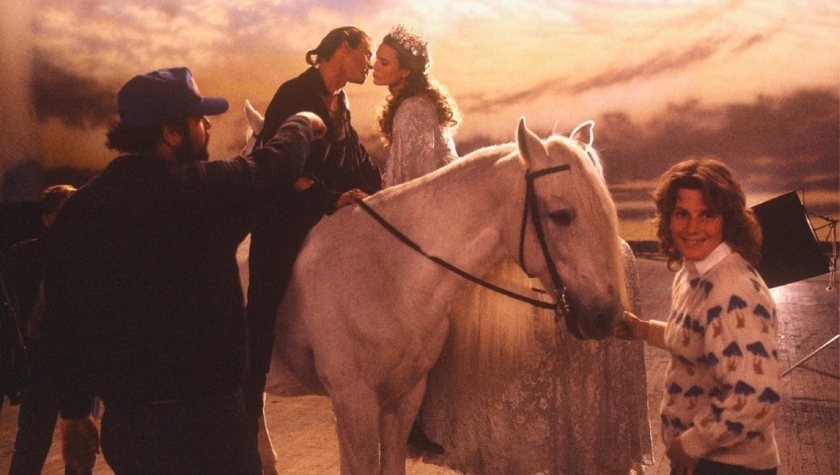
3. 'The Princess Bride' (1987)
A farmhand-turned-hero embarks on a fairytale adventure filled with swordfights, romance, and unforgettable characters.
The Princess Bride stars Cary Elwes, Robin Wright, Mandy Patinkin, André the Giant, and many others (including a cameo role from long-time friend and collaborator Billy Crystal). The screenplay was written by the great William Goldman, adapted from his own novel.
Reiner managed to adapt what many thought was unadaptable - a fantasy adventure. It is one of the rare films that, much like Stand By Me, transcends generations without ever feeling dated. It is simultaneously a fairy tale, a satire of fairy tales, and a sincere, swashbuckling romantic adventure. The film has a tone that is nearly impossible to balance. But Reiner did so successfully, seemingly effortless.
Reiner’s direction, accompanied by an amazing script by Goldman, makes the film work by fully committing to the world, no matter how heightened. The characters are brilliant, as are the performances. Even the framing device - a grandfather reading a story to his sick grandson - reinforces the film’s understanding that stories are meant to be shared, passed down, and revisited.
The studio didn’t know how to market a genre-blending fantasy. Was it pure satire of an already-difficult genre to sell to an audience? Was it a straight up fantasy, meant to be taken seriously? Reiner remained steadfast. He trusted the script and the chemistry of the cast he put together.
The Princess Bride was a moderate box office success - but it would go on, much like This Is Spinal Tap, to become a cult hit. It is yet another Rob Reiner film that stands the test of time as a pure classic.
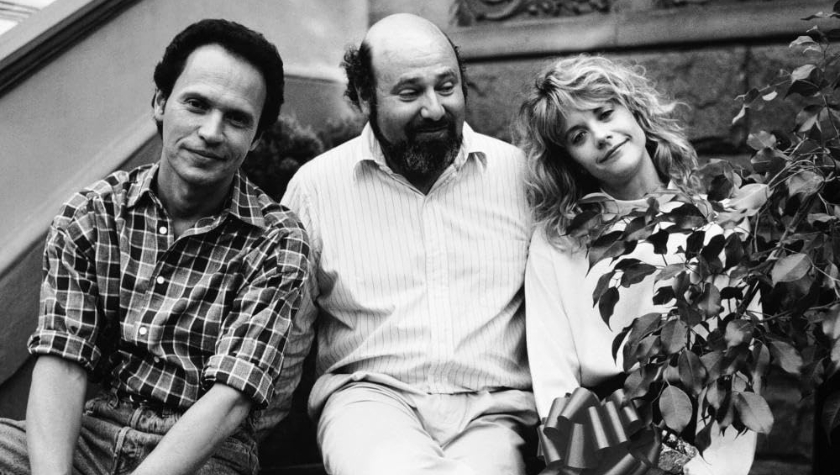
4. 'When Harry Met Sally...' (1989)
Two acquaintances - natural opposites - repeatedly cross paths over twelve years, always debating whether or not men and women can ever truly be just friends.
When Harry Met Sally... stars Billy Crystal and Meg Ryan, two opposing forces that always seem to reunite in life. The film redefined the romantic comedy, basically creating the genre that audiences embraced in the 1990s and early 2000s. The Rom Com genre is still going strong to this day, largely because of the example set in this movie.
Reiner’s direction didn’t idealize romance. Instead, he dissected it with patience, humor, and rare emotional intelligence. Reiner and Nora Ephron wrote the script together, using their unique friendship as a catalyst for bits and both hilarious and edgy dialogue exchanges.
There’s a rhythm to Reiner’s direction. Scenes unfold in long, dialogue-driven exchanges where character flaws are not only visibible, but essential. Billy Crystal’s Harry is neurotic, defensive, and relentlessly analytical. Across from him is Meg Ryan’s Sally. She’s precise, guarded, and deeply self-aware. Their differing personalities and viewpoints create brilliant conflict that Reiner used to drive each scene. It’s interesting because the romance doesn’t come from love-at-first-sight intimacy - it comes from friction.
One of the most iconic scenes in cinematic history can be found in this gem of a film - the infamous fake orgasm scene. The scene was inspired by a real conversation Reiner had with Nora. That blend of lived-in truth and sharp wit can be found all throughout the whole film. That is the reason why it resonates with so many. Once again, a continual theme in Reiner’s movies: we have a story that defies generational gaps. Everyone knows what it is like to fall in love, fall out of love, and struggle to make sense of it all. It’s relatable. No different than how we relate with coming-of-age stories.
We also get a throwback to Reiner’s documentary-style narrative and framing device he used in This Is Spinal Tap (documentary style) and The Princess Bride (framing device), as he intercuts documentary-style interviews with elderly couples to further ground the story.
It’s yet another timeless classic, with Reiner returning to box office success.
5. 'A Few Good Men' (1992)
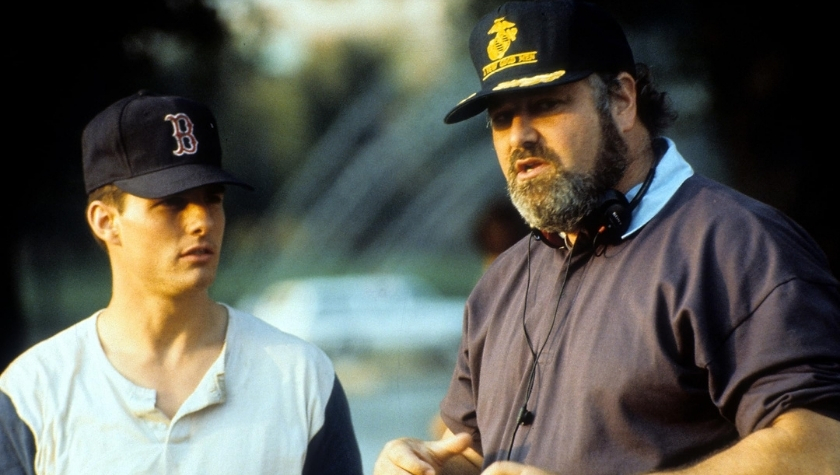
A young, hot-shot Navy lawyer defends two Marines accused of murder while uncovering a conspiracy at the highest levels of command.
A Few Good Men stars Tom Cruise, Jack Nicholson, Demi Moore, and a stellar ensemble supporting cast, including Kevin Bacon, Kevin Pollack, Kiefer Sutherland, J.T. Walsh, and many more.
Reiner, once again, tackled another genre with pure command. Written by the now-icon Aaron Sorkin (based on a stage play he pre-sold to producer Dan Brown), the film is perhaps the quintessential courtroom drama, offering multiple levels of drama, discovery, and intrigue. It’s a story built on confrontation - moral, ideological, and personal. While the story thrives on Aaron Sorkin’s dialogue, it’s Reiner’s direction that gives it weight amongst the brilliant performances.
Jack Nicholson’s Colonel Jessup dominates the limited screen time he has with controlled malice while Tom Cruise’s Lt. Kaffee showcases an amazing arc that spans from cocky deflector to a man with principled resolve. The final courtroom showdown between the two is iconic not just because of dialogue and performance, but because Reiner brilliantly built to that moment throughout the whole film.
It may be interesting to learn that Reiner encouraged restraint during rehearsals, wanting to keep those off-set performances measured so that the emotional spikes would land harder on camera.
The movie offered iconic moments because of that direction, and showcased Reiner as a director who could handle dialogue-driven drama with clarity and force. It was a huge box office success and remains to be one of Nicholson’s and Cruise’s finest performances.
Bonus Rob Reiner Film - 'Misery' (1990)
We couldn’t leave this 1990 classic out.
A novelist held captive by an obsessive fan must outwit his captor to survive.
Misery starred James Caan and Kathy Bates, the latter of which led to Kathy winning a Best Actress Academy Award. It was Reiner’s second time adapting Stephen King. But this time, he was handling some of Stephen’s horror elements. Nothing supernatural. Instead, something more primal - obsession.
Reiner never sensationalizes Kathy Bates’s character Annie. In fact, he forces us to kind of find her charming and innocent in some respects. Reiner’s direction embraces stillness. Silence becomes a weapon. The movie, a box office hit, respects the audience. Reiner trusts them to be able to sense the danger without having to have constant horrific escalation, as most thrillers would hinge on.
Rob Reiner’s Legacy Lives On
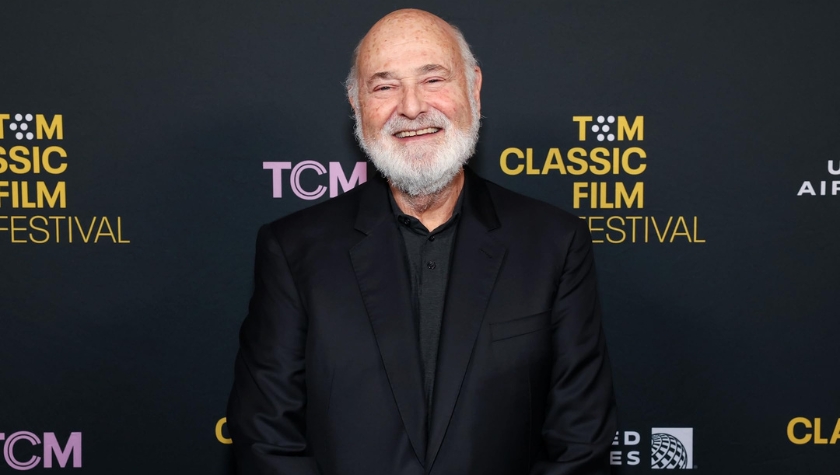
Reiner directed many more movies in the ensuing years after A Few Good Men. Each of them continued to showcase his versatility. He always did something different and new. He even managed to live on the screen for all to see in many great on-screen roles in movies like Sleepless in Seattle and The Wolf of Wall Street, as well as back on television in amazing performances like his role as Albert in The Bear.
His untimely loss is a difficult one. He will be missed. But his legacy lives on, especially in these six films that defined not only his career, but multiple generations of movie lovers.