
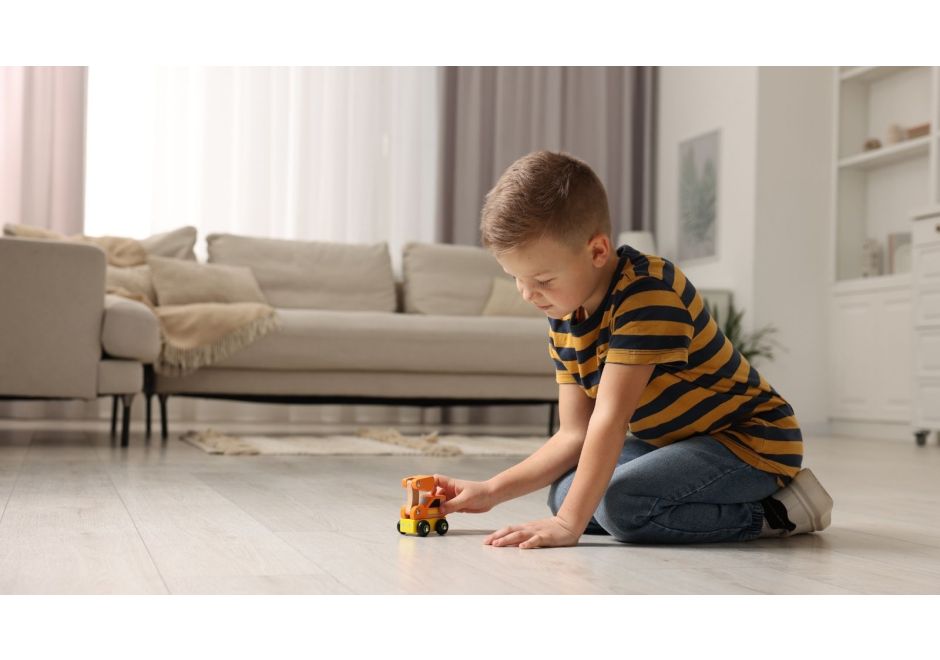
Before we ever opened Final Draft, before we learned what the three-act structure meant, and before we debated and theorized aspects of character arcs, stakes, and themes, we were already learning how to tell stories as children.
If you grew up in the 1980s and 1990s especially, long before technology began to overtake our lives and replace much of our needed imagination, you were an experienced storyteller in bedrooms, playrooms, basements, backyards, etc. You had toys, imaginative minds, and endless hours of unstructured play.
And in those spaces - between Saturday morning cartoons, VHS tape movie marathons, sleepovers, and neighborhood adventures - you unknowingly trained the most important muscles a screenwriter must have:
- Creativity
- Visualization
- Character Development
- Character and Story Arcing
- Story Instinct
Back in our youth, we weren’t just playing. We were world-building, writing, developing, improvising, ad-libbing, and directing tales that were cinematic in our imaginations.
While a grownup passerby may have seen us frantically running in circles with toy cars and action figures, or screaming at the top of our lungs and oddly reacting to seemingly unexisting threats, we were envisioning epic cinematic tales and action sequences.
With that in mind, here are five childhood activities - before the days of smart pads, smartphones, YouTube videos, endless social media reels, realistic gaming platforms, and AI - that quietly shaped us into better storytellers. We’ll also showcase how these practices can still teach screenwriters pivotal screenwriting lessons in today’s world. And finally, we’ll offer a bonus thing you can do as an adult today to help sharpen your creative muscles.
1. Playing with Action Figures and Dolls
Our floors were movie sets, with the couches cast as towering mountains. Our bedrooms were movie studios, full of plenty of items and landscapes to create new worlds with. Our eyes were the cameras.
- GI Joes
- He-Man and She-Ra Figures
- Transformers
- Barbies
- Teenage Mutant Ninja Turtles (TMNT)
- Star Wars Figures
Action figures and dolls taught us what no screenwriting book could - how people interact. We learned from the world around us. We learned from the school yards and classrooms. We learned from the movies and TV shows we watched in wonder. But then we worked out those creative muscles by giving voice and action to our favorite action figures and dolls.
We didn’t just smash them together. We gave them relationships, rivalries, romances, betrayals, and alliances.
- Luke Skywalker trained with Yoda.
- Princess Leia fell deeper in love with Han Solo.
- Darth Vader sought vengeance.
- Cobra Commander plotted revenge against GI Joe.
- Barbie and Ken went on adventures.
We heard the dialogue in our heads, and we often acted the dialogue out while holding our favorite figures and dolls.
It was through these actions and interactions that we learned about:
- Pacing
- Delivery
- Conflict
- Motivation
And we didn’t just act out what we had seen before in cartoons or movies. We were casting new casts and creating new stories. We decided who the hero was, who the villain was, and we often conjured creative twists and turns from the norm.
Screenwriting Lesson Learned
Playing with action figures and dolls helped us to visualize scenes, create dramatic beats, conjure effective dialogue exchanges, and act out full story and character arcs. All of these elements helped us later in life as we developed stories, wrote dialogue, and crafted scene descriptions in our scripts.
2. Playing with Toy Vehicles
Whether it was Star Wars/GI Joe/TMNT vehicles or Hot Wheels and Matchbox cars, playing with toy vehicles turned us into little cinematographers.
Where action figures and dolls allowed us to create character-driven moments, toy vehicles usually entailed speeding down pretend race tracks and creating epic land/sea/air chases and battles.
But we didn’t just roll them on the floor or hoist them in the air.
- We staged chases.
- We flew ships through imaginary canyons.
- We crashed vehicles in slow motion.
Most important, we did all of this picturing multiple angles and doing multiple takes to get the best shot. We used master shots, low angles, high angles, close-ups, etc.
Our eyes became the camera.
Some of us were more visual than others. We drove our friends crazy, replaying the same action over and over to get the right cinematic flavor.
Screenwriting Lesson Learned
What we learned in these moments would go on to shape how we wrote scenes in screenplays, quickly understanding that motion created excitement, and chases needed rhythm, escalation, and clarity.
- That GI Joe jeep wasn’t just driving. It was escaping.
- That Star Wars ship wasn’t just flying. It was evading the Empire.
Playing with toy vehicles taught us how to visualize in space, how scenes flowed visually, and how constant momentum drove not just the action, but the story.
That’s exactly what great screenwriters do - they see the movie in their head first.
3. Playing Pretend By Yourself
Beyond the action of making action figures, dolls, and toy vehicles come to life came the even more imaginative practice of pretending to be a character yourself.
There was a special kind of magic in solitary play.
- No rules.
- No compromises.
- No limitations.
Just pure imagination.
When you pretended alone, you were writing and directing in real time. You created entire worlds in your head. You alone controlled the tone, the pacing, and each emotional beat.
Screenwriting Lesson Learned
This kind of solo play strengthened something that is essential for screenwriters - creative confidence.
The ability to generate ideas without external input is essential for all screenwriters. It’s what allows you to sit in a room alone with a blank page, and still build something meaningful and worthwhile, because when you’re on contract, you can’t fall back on mentors, peers, and script coverage services. It’s all on you.
4. Playing Pretend Adventures with Friends
Now it was about taking our imagination and mixing it with that of our friends, creating a hybrid of all of our imaginations while building essential collaborative skills you’ll need in later life.
We were either in a darkened basement, moving throughout the whole house, or using the whole neighborhood as a set.
We agreed on a specific concept for the adventure, with each friend getting their say in the matter.
- Someone else wanted the hero to fail.
- Someone else had a better villain idea.
- Someone else added more conflict or changed the ending.
And you had to adapt.
This is where our imaginative storytelling began to take shape in a collaborative and adaptive way.
- We learned how to listen.
- We learned how to compromise.
- We learned how to build on ideas instead of shutting them down.
- We learned how to consider everything and talk through it all.
Screenwriting Lesson Learned
Collaboration is a must in screenwriting, whether you’re working in a writers room or collaborating with development executives, producers, and directors.
You need to learn that the best stories and story solutions often come from unexpected directions. Collaboration doesn’t weaken or hinder creativity - it enhances it. As a pro screenwriter, you need to be open-minded, flexible, and have a sense of mutual trust.
Pretending with our childhood friends and creating adventures helped us to be able to collaborate with an open mind - a skill all screenwriters need.
5. Acting Out Sequels and Spinoffs of Your Favorite Movies and Shows
When we were kids, our favorite movies didn’t end when the credits rolled. They lived on in our imaginations. This was a step past pretending by ourselves or with our friends while creating original stories of adventure. Now it was about taking an already-established story, and expanding on it in your own creative way.
Whether it was with the toy versions of our favorite characters or vehicles, or through acting out stories while playing the characters ourselves, this type of play enhanced our storytelling capabilities.
- We continued the Star Wars saga.
- We gave adventures to movie or TV show characters who never got the spotlight.
- We even created epic crossovers, pitting GI Joes/Transformers/Rebels from Star Wars against Cobra/Decepticons/The Evil Galactic Empire.
Screenwriting Lesson Learned
Screenwriters need to understand that writing assignments are the bread and butter for every pro screenwriter. While original screenplays are great, they are more often used as writing samples for assignments, some of which may deal with pre-existing intellectual property (IP).
Acting out sequels and spinoffs of our favorite IP as children taught us how to expand existing worlds, characters, and stories. We explored “What If” concepts, imagined alternative outcomes, and expanded character arcs of supporting characters - all of which are primary abilities for writing assignments.
Bonus: Dungeons & Dragons and Other RPGs
For many, tabletop Roleplaying Games (RPGs) were our first taste of long-form storytelling. Dungeons & Dragons wasn’t just a game. It was collaborative myth-making. It was an elevated and more mature way of playing pretend.
- Every session had structure.
- Every quest had stakes.
- Every twist had consequences.
We learned quickly that stories needed momentum. If you had twists and turns, you needed to make sure that they had entertaining resolutions possible. You needed to plant plot seeds for eventual story payoffs.
If you were a player, you needed to visualize and adapt quickly.
If you were a dungeon master (DM) or game master (GM) for other RPGs, you had the most important storytelling job because you had to have a general story laid out, but completely open for collaboration and change, based on the decisions players made. You also needed the ability to be a great storyteller by setting up the scene, showcasing the characters involved, and introducing evolving and escalating conflict.
The great thing about RPGs is that you can easily practise these creative muscles as an adult as well. We’re not saying you can’t play with toys and pretend with yourself and your friends as an adult, but RPGs offer a way for you to be able to flex these creative muscles in a more adult manner.
Screenwriting Lesson Learned
Playing RPGs, especially as a DM or GM, is a masterclass in creative storytelling. It helps you to be able to think on the fly, but after some major work is put into story development and worldbuilding.
Storytelling DNA Is Within Us All
Even if you didn’t grow up in a generation or environment centered around playing with toys, everyone has storytelling DNA within them. We flexed those muscles in many different ways during those early years.
Playing with figures, dolls, toy vehicles, and playing pretend may not be as prevalent in childhood upbringings these days, but the storytelling lessons learned from them will never fade.