
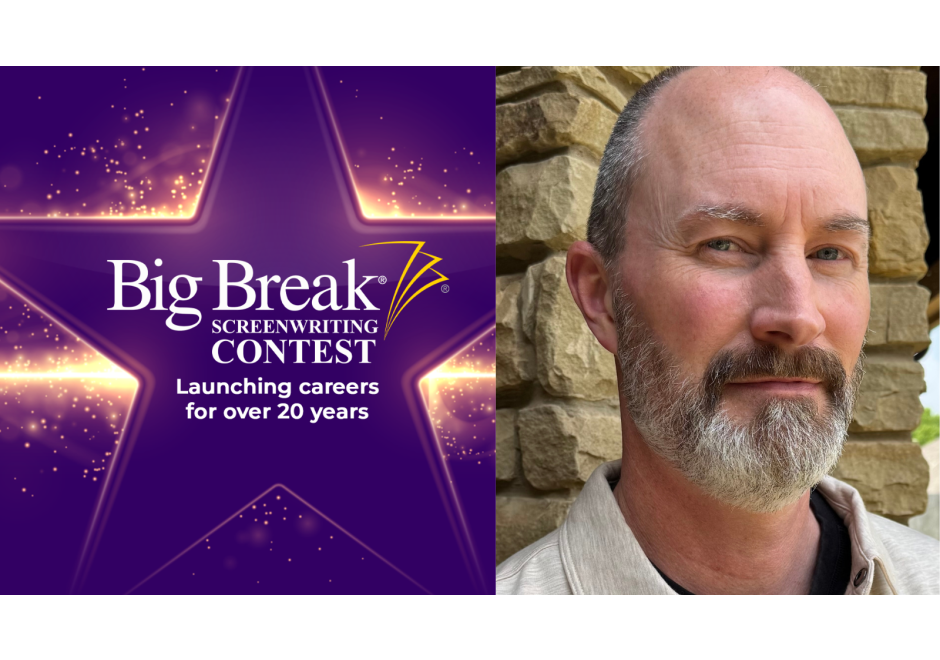
For most screenwriters, breaking into Hollywood means moving to Los Angeles, getting a day job, and waiting/hoping/praying for the right person to read your script. But for Tim Daly, a practicing cardiologist, breaking in looks a little different. In his early 50s and firmly planted in Oklahoma, he’s bringing Hollywood to him - as fast as he can.
“I’m older in my life. This is probably going to be my one big shot. I’ve got to move quicker. I can’t just kind of build it up over time.”
That urgency has already paid off. Daly won the Thriller/Horror category in the 2025 Final Draft Big Break Screenwriting Contest for his script Transgressions (now retitled The Mighty Fall), a twist-driven revenge thriller that is already moving into preproduction.
A High-Concept Thriller with a Long Game
At its core, Daly’s script is a contained thriller where even the so-called good guys have hidden motives.
“The main character’s named Bryce, and he’s a tech billionaire,” Daly says. “He’s on trial for murder, and just a few hours away from his execution. He has to convince a skeptical state’s attorney that he’s innocent, unleashing a bunch of tangled webs of lies, deceit, and backstabbing.”
The script’s tone pulls from twisty thrillers like The Usual Suspects and character-driven revenge stories in the vein of Promising Young Woman. It’s exactly the kind of high-concept, actor-driven material that can be produced for a manageable budget, something Daly is acutely aware of as he pushes the project forward.
“We’re trying to make this a contained movie that’s going to be able to be profitable and snowball into something else,” he says.
From Medicine to Movies
Daly’s path to screenwriting isn’t exactly traditional. By day, he’s an interventional cardiologist. “I do the balloons and stents and open up vessels when people have heart attacks,” he says.
But storytelling has always been there, quietly beating in the background.
“I would have loved to have been more involved, I mean, who doesn’t love movies?” Daly says, recalling seeing Star Wars in theaters as a kid.
Movies also became a rare point of connection in his childhood. “My mom and I didn’t have the greatest relationship, but we did have movies in common,” he says.
Still, practicality won out. “I had a more pragmatic approach. I was good in school, so I was going to either be a lawyer or a doctor.”
That pragmatism led to a successful medical career, but the creative impulse never disappeared. Years later, Daly found himself drawn back to storytelling, first through trying to write a novel, then through screenwriting.
“When COVID hit, I was like, I’m going to try this again, but I’m going to try to do it from the script side of things,” he says. What clicked was the form itself.
“I’m very conversational when I write, and I think that script writing is so much more succinct as opposed to writing big, long prose,” he says.
His instinct toward dialogue, compression, and momentum naturally fits with the thriller genre he’s now working in.
Building Momentum Without Hollywood
Like many emerging writers outside Los Angeles, Daly initially ran into the same question: How do you turn a script into an actual movie?
Early wins helped. His first script landed in the Top 14 on Coverfly, and he produced a short film as a proof of concept, literally building the set himself. “I actually bought the wood, we put up exploding walls,” he says.
But it was winning Big Break that shifted perception.
“These contests are great introduction tools,” Daly says. “Whenever you say it, it kind of makes people’s eyes get big, and they think, ‘Oh, okay, you’re not just a joke.’”
That validation has translated directly into momentum on The Mighty Fall. Daly connected with producer Cassidy Lunnen, formerly with Sony, through local networking, and the project is now in active development.
“We’re working on raising seed money, trying to attach actors and doing pre-sales,” he says.
They’ve already begun assembling a wish list for casting. They’re also strategizing how to package the film for market viability.
For Daly, it’s a crash course in producing, exposing the challenging reality for writers today: You often have to build your own path (and sometimes your own sets).
Oklahoma’s Growing Film Ecosystem
Daly is doing all this from Oklahoma, an emerging production hub that’s quietly building infrastructure and attracting industry talent.
“I’ve met a lot of people who were out in LA but have actually transplanted here,” he says.
Between Oklahoma City and Tulsa, the state is developing into a viable alternative market, supported by competitive tax incentives and growing production resources. Shows like The Lowdown and A Thousand Tomorrows have shot there.
“They’ve basically said, ‘Hey, LA, we can give you the infrastructure, we can build sets,’” Daly says.
For writers outside traditional industry centers, that shift is significant. It means proximity to Hollywood is no longer a strict requirement for building a career – as long as you’re willing to engage with locals.
Advice for Writers Outside the Industry Bubble
Daly is direct about what it takes to break in, especially if you’re not based in Los Angeles or New York. “You’ve just got to make it happen,” he says. That means moving beyond the page.
“Don’t be the 99% of people who are going to sit back and say, ‘I wrote something, that’s great.’ You’ve got to really go out there and promote yourself, meet people, figure out what’s going on in your community.”
He adds that the availability of low-cost, high-quality technology allows filmmakers many more viable options for filming and editing.
“It’s so much more accessible now than it was before.” But above all, it comes down to relationships. “It’s about the connections and the community,” he says. And persistence.
“These screenwriting competitions are cutthroat. If you win, that’s great, but you’ve got to keep getting yourself out there.”
The Second Act
For Daly, screenwriting isn’t a hobby; it’s a second career, one he’s pursuing with the same intensity that took him through medical school and into his own practice.
That mindset, being focused, pragmatic, and action-oriented, may be his greatest asset as a writer. While many screenwriters spend years waiting for the green light, Daly is building his own momentum, seizing opportunities, and pushing a project into existence.
Congrats Tim Daly, we’re rooting for you!