

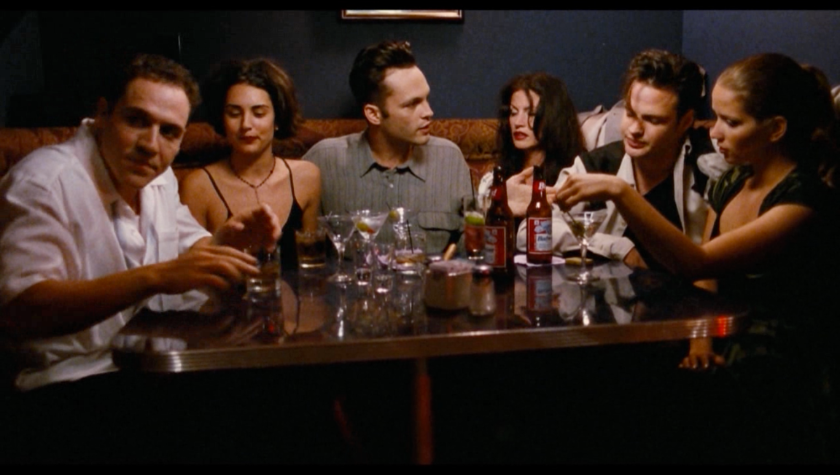
Long before actor, writer, and director Jon Favreau was a behemoth in the Disney, Marvel, and Star Wars universes, he was a struggling actor and writer hustling his way through Hollywood with a script he wrote on spec, the now-iconic indie hit Swingers (1996).
That script didn’t just launch his career - it established his voice. He followed it up by writing, directing, and starring in Made (2001). Many years later, after the success of becoming one of the Marvel Cinematic Universe’s key directors and producers, he wrote, directed, and starred in the acclaimed Chef (2014), which was a film and script that many point to as a masterclass in simple and personal character-driven storytelling.
Iconic director Robert Rodriguez recently launched his YouTube channel El Ray Network, which features episodes of his interview series The Director’s Chair, where he interviews some of the most iconic filmmakers of our time.
Here we share ten screenwriting lessons screenwriters can learn from some of Favreau’s best quotes from his interview.
1. Give Your Ideas Room to Breath and Gestate
“Usually I write fast because it’s been gestating.”
Being able to write fast (and write well in the process) is a hot commodity to have as a screenwriter. When you become a pro, you need to be able to write under tight deadlines. If you can train yourself to do that, you’ll be well ahead of others vying for the same attention and consideration from Hollywood.
One trick to drive yourself to write fast is to let the idea gestate as long as possible to the point where you can wait no longer.
- Visualize your story.
- Build on your characters and plot points during that visualization.
- Let those visuals grow and grow in your imagination.
- See as much of the movie as possible in your head before typing a single word.
Don’t start writing until you have so much work done in your head that when you do start writing, the words and pages flow.
2. Try to Get Through the First Draft Quickly
“I don’t want to get off the scent. So I want to get through that first draft.. I’ll usually push through in less than a month. 'Swingers' was like two weeks… 'Chef', by the time I actually wrote it, was two weeks… 'Made' was like a month. I’ll go back and rewrite, but I want to get through it.”
Once you’ve let everything gestate to the point where you can’t hold back the writing any longer, you'll be able to start writing at a pace where you can get through the first draft fairly quickly.
Having an open-ended deadline can do more harm than good when you’re first starting out. If you go into the writing process with a little more urgency, deadline-wise, you can not only get through your first draft quickly, but you can also train yourself to write under Hollywood contract-type deadlines which usually offer you just a month or two to finish the first draft while under assignment.
3. Keep the Momentum Going
“I feel like it could disappear at any minute. I don’t want to let it go. I’ve taken a break from screenplays and I have a lot of forty-page screenplays. And I hate that feeling. It feels so powerless.”
It’s so easy to lose momentum. Letting the idea gestate ahead of time helps to build a sense of inner urgency and passion to get what’s in your head onto the page. But you need to keep that momentum going. If you approach it with Favreau’s perspective of never wanting to lose the scent of your concept, story, and characters, you’ll find yourself riding that momentum through a full first draft.
- Avoid taking long breaks between writing sessions.
- Try to never step away from a script during the writing process.
- Weather through any writer’s block and just keep writing.
If you can get through that first draft as quickly as possible, you’ll be able to retain that momentum, which will also fuel the necessary continued passion for your project.
4. The Power of Screenwriting Software
“I had been reading so many scripts on auditions. My dad got me the Final Draft software… it was amazing that I could type it in and the next thing I know, wow, I’ve got five pages.”
There’s really a sense of accomplishment when you first start using professional screenwriting software, especially when you’re using the industry standard that is Final Draft. The software immediately takes the formatting weight off of your shoulders, allowing you to focus solely on story, characterization, structure, etc.
The best early investment towards your screenwriting career is Final Draft screenwriting software. Eliminate any worries, confusion, or anxieties about formatting and instead focus on just telling your story.
5. Successful Screenwriters Are Just Like You
“I’m still the same guy. Nothing feels different.”
There’s a comfort in knowing that most successful screenwriters are just like any up-and-comers. Favreau discusses that success just brings more pressure and has you on a much tighter and higher rope. But you’re still the same person you were when you were struggling to get your scripts written and read.
It’s easy to put successful screenwriters and filmmakers on a pedestal. It’s also easy to believe that with success comes less burden, less worry, and less self-consciousness. Nothing could be further from the truth.
Take comfort in knowing that you’re just a great script or lucky break away from being at the same level as the successful screenwriters you look up to right now.

6. Give Your Characters More and More Obstacles to Overcome
“Another good storytelling technique… obstacles… the magic eightball note that you always get from an executive is ‘more obstacles’. And there’s some truth to it.”
Obstacles cause conflict. And conflict is the driving force of outstanding storytelling. When you’re feeling your script is flat, losing momentum, or needs a jolt in pacing, throw some more obstacles at your characters. Challenge them. Create continual evolving and growing conflict as the script goes on. Hollywood and audiences want to see your characters prevail over or succumb to as many obstacles and forms of conflict as possible. Why? Because it raises the stakes and makes the cinematic experience more engaging and impactful.
And here’s one trick of the trade: use obstacles to better your character’s arc. The more obstacles they overcome, the better their character arcs will be by the end.
7. Embrace the Chase
“I would prefer the odds against me. What’s harder is when you’ve been anointed and now you’ve gotta somehow impress people. How do you do the road work when you’ve got the belt? I know when you want the belt, that you’re going to get up in the morning and drink those raw eggs and run. But when you’ve got the belt, that’s a whole other thing. It’s a different set of challenges.”
Take comfort in knowing that those who succeed still face plenty of challenges and obstacles of their own. It’s also good to know to expect those additional and varied challenges and obstacles that come with success. In the meantime, embrace the chase. Use it to your advantage. Let it drive you to work harder, think smarter, and be more creative.
8. Be Prepared for Success
“Success can be just as overwhelming as failure.”
Failure and rejection is a necessary part of the screenwriting journey. You can’t learn and grow as a screenwriter without failure. Embrace it. Use every instance and piece of failure and rejection as a tool to become a better screenwriter.
But you also have to prepare yourself for everything that comes with success. It can be overwhelming. When you have a script that finally turns some Hollywood heads, now you’re about to be asked to:
- Attend networking meetings.
- Apply notes for rewrites.
- Compete with other writers for assignments.
- Come up with the next great idea or script.
You can prepare yourself for success by:
- Knowing your stories to the point where you can pitch them with ease.
- Being creative and collaborative with notes.
- Having confidence in your abilities.
- Always thinking ahead by having great concepts waiting in the wings.
Don’t fall into the trap of thinking success makes everything easier in your screenwriting journey. As Favreau said, success just presents a whole new set of challenges to face.

9. Be Ready to Deliver on Hollywood’s Wants and Needs
“You actually get less freedom with more success.”
This is a great insider perspective to help prepare yourself for the “big league.” When you’re writing on spec (under speculation that you’ll sell your script to someone), you have more freedom to explore new ways to tell effective cinematic stories. But when you’re writing on assignment after breaking through with a spec script, you need to be ready, willing, and able to deliver on Hollywood’s wants and needs.
Notes are no longer feedback at this level. They are wants and needs (and sometimes demands) that you need to apply to your writing. Those wants, needs, and demands will be based on things like budget constraints, scheduling issues, location scouting, and overall intended vision of the producers and directors.
Being a pro screenwriter is all about being able to utilize and showcase your talents, while also adhering to the wants and needs of those who employ you. If you can be creative and offer solutions to any problems their notes are addressing - as opposed to pointing out more problems those notes may cause in your writing process - you’ll show them that you’re a collaborative screenwriter who can get the job done.
10. Always Remember That You’re Writing for the Audience
“[It’s] for the audience…”
In the end, you’re writing for the audience. Sure, you can write for yourself during your writing process, as opposed to trying to guess what the audience would prefer to see. But when all is said and done, screenwriters are writing cinematic blueprints for movies intended for an audience.
When in doubt, put yourself in the shoes of the audience. Put yourself in that theater seat, holding your popcorn, treats, and drink as you stare up at that big screen. Put yourself on their couches as they scroll in search of something compelling to watch.
Screenwriters are in the business of entertainment. That’s what is expected. You’re there to create something that entertains. Audiences watch movies because they want to laugh, scream, cry, or cheer. They want to be moved and entertained.
Always ask yourself, “What would really surprise or shock the audience? What would make them laugh the most? What would make them jump out of their seats in shock and terror? What would move them to tears? What would keep them on the edge of their seats?”
Some wise words and perspective from one of our cinematic greats: Jon Favreau.