
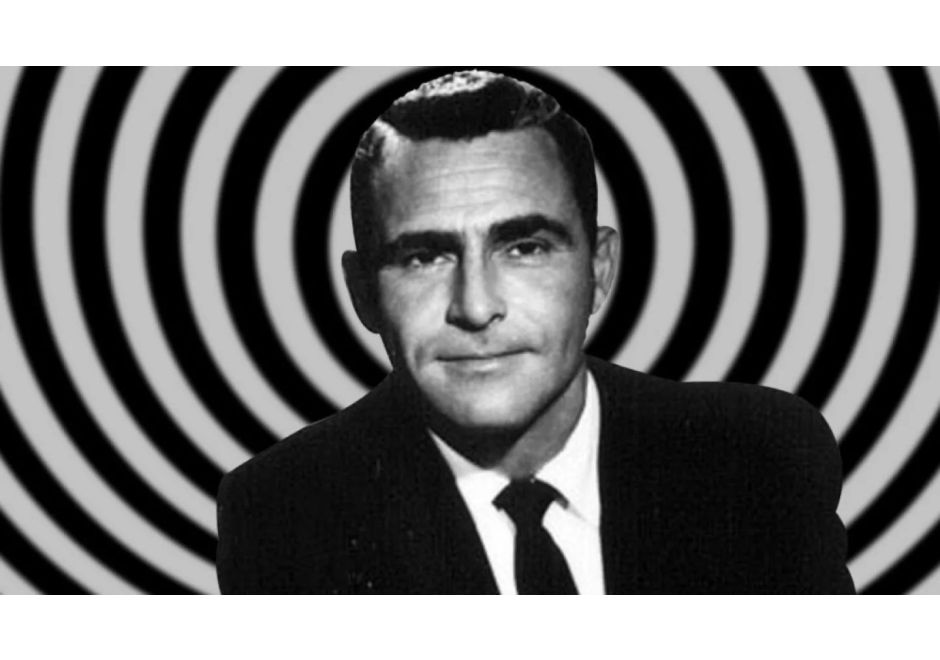
With one Oscar nomination for screenwriting (Planet of the Apes) and multiple Emmy nominations and wins (most for The Twilight Zone), Rod Serling is known as one of the greatest cinematic storytellers in movies and television.
As creator and Executive Producer of the original iconic The Twilight Zone series, he wrote 92 of the show’s 156 episodes, using his own personal experiences and fears (including his own service in World War II) to ground his otherwise high-concept ideas.
Serling passed away unexpectedly in 1975 at the young age of 50 after open-heart surgery, but his wise words and reflections still resonate today. Here, we take 10 of his best quotes and elaborate on his wise words as we apply them to screenwriting and the lessons you can learn.
1. “What you feared would come like an explosion is like a whisper.”
Try not to look upon inspiration as some big explosion of an idea. It doesn’t always happen that way. And you don’t want to waste months or years waiting for that expectation to present itself.
Don’t wait for inspiration. Listen to the voices in your head, and the little whispers floating in the universe around you. The best ideas come like whispers in the night - nagging you about a quote you read, something you saw on the way to work, a dream/nightmare/vision that keeps playing over and over in your head.
The best ideas aren’t necessarily the biggest and loudest ones that seem like sure things in the eyes of Hollywood. Sometimes you’ll find that the smaller and quieter concepts are the ones you should pursue. Why? Because everybody sees those big and loud ideas coming. Everyone is jumping on those bandwagons. It’s the tiny whispers that take Hollywood by surprise, giving them what they didn’t know they needed. Those are the types of things that can make you stand out amongst the crowd, instead of being just another screenwriter screaming for attention.
2. “If you’re a good writer and deserve that honored position, then by God, you’ll write, and you’ll be read, and you’ll be produced somehow. It just works that way. If you’re just a simple ordinary day-to-day craftsman, no different than most, then the likelihood is that you probably won’t make it in writing.”
Passion and talent are what drive screenwriters through the seemingly endless and inevitable failure and rejection that they must face. In Hollywood, there’s a common saying in the development departments, agencies, and management companies - “The cream will rise.” Don’t be discouraged by the hardships you face. The industry needs to do its due diligence, which is why rejection is so prevalent, even for talented writers. If you’re a good writer and put in the work, you’ll eventually be read and produced. You just need to stick with it.
If you just paint by the numbers, chase trends, and avoid challenging yourself, you’re not going to make it. And, who knows, maybe you work hard and find that screenwriting isn’t for you - but at least you tried.
3. “When that paper is rejected, in a sense, a sizable fragment of the writer is rejected as well.”
Rejection is part of the journey. It is necessary because it teaches you to learn from mistakes and informs you about what the industry is and isn’t looking for. Use rejection as a tool. Don’t take it personally. Your scripts are your babies. Everybody gets that. You’ve nourished them. You’ve helped them grow. You want to see them succeed. And when they don’t, it’s easy to take it personally. Don’t put yourself through that.
Instead, learn from it. Take the feedback, if it is given, and look at it with objective eyes. You still have the power to reject the feedback. But always consider it. If rejection or outright silence is the only thing you’ve been given, keep trying. Understand that some scripts just aren’t for everyone. You can’t control that. You don’t know the context of why your script was rejected. If there’s anything to be learned from it, great. Consider everything. Otherwise, move on to the next prospect and remember, almost every iconic hit movie was rejected by dozens.
4. “I choose to think of the audience as nameless, formless, faceless people who are all like me. And anything that I write, if I like it, they’ll like it.”
You can’t please everyone, and you certainly can’t predict who likes your script and why. This may leave you feeling powerless. However, remember that you love a good story too. You have your own likes. Cater to them. Chances are, there are millions of people who love the same types of stories, characters, genres, and ideas.
Write for yourself. Entertain yourself. Make yourself laugh, cry, cheer, and scream. You still need to adhere to general industry and audience guidelines and expectations, but if you are being true to yourself and writing something that enthralls, engages, and entertains you, chances are there’s going to be a producer, development executive, agent, or manager with the same interests, wants, and needs.
5. “There are a lot I’m proud of, and a lot I wish the hell I’d never written.”
You will write some terrible scripts. It usually takes a few to learn the necessary lessons by making the inevitable mistakes all newcomers make. Even when you accomplish some success in the industry as a screenwriter, a few bad scripts are likely to pop up now and then in your career.
It’s all part of the journey. Embrace any failure and look upon it as nothing more than another screenwriting lesson learned.
6. “I’m an affluent screenwriter and all that. I’m a known screenwriter, but I’m not in the fraternity of the very major people. I would say a guy like Ernie Lehman, William Goldman, and a few others are quite a cut above.”
Always remain humble. Hollywood doesn’t need your scripts. The ego doesn’t showcase confidence. There’s always going to be people who are better than you. If you want to stand out beyond the rest, be confident, but humble. Showcase the want and need to collaborate with others. Know your own weaknesses and don’t be too proud to point them out in your work. Hollywood will always opt for the more humble and collaborative screenwriter.
7. “Ideas come from the Earth. They come from every human experience that you’ve either witnessed or have heard about, translated into your brain in your own sense of dialogue, in your own language form. Ideas are born from what is smelled, heard, seen, experienced, felt, emotionalized. Ideas are probably in the air, like little tiny items of ozone.”
All writers have been asked that question, “Where do you get your ideas from?” If someone asks you this question, recite this Serling quote to them. Because we don’t really know or understand where our ideas come from. All that we know is that they come from the human experience. They come from what we’ve read, watched, witnessed, dreamt, felt, and experienced. That is what is magical about writing. The ideas come from everywhere.
So, when you think you’re in a rut, look around you. Listen for those whispers. Search for those signs. Go for a walk or ride. Go watch some movies or shows. Read some books. Ideas come from all around you.
8. “Being like everybody is like being nobody.”
The most important element of screenwriting is voice. What makes your script stand out from the rest? If you try to emulate Tarantino, Sorkin, Gerwig, or any of the other standout greats, you’re joining the crowd of others doing the same. If you’re chasing the trends and painting by the numbers through emulation of what has been successful before, you’re one of thousands.
Don’t try to be like every successful Hollywood screenwriter. Find your voice. Be you. By design, since you’ve been influenced by others who came before you, you’ll likely have a touch of many. That’s great. But always strive to be yourself. That’s what Hollywood wants. Not the next insert famous screenwriter name here. They want the first you.
9. “Coming up with ideas is the easiest thing on earth. Putting them down is the hardest.”
Everyone thinks they have an amazing idea. But that’s not enough. You need to do the work. While concept can be everything in Hollywood, it’s the implementation of your exciting idea that really matters. Try not to sit on a concept for too long. Instead, enjoy the thrill of making that concept come to life! If you start to think of screenwriting as difficult work, that’s what it’s going to be for you. But if you make the notion of growing that seed into something exciting, it’s not going to be hard work at all.
Try not to be an idea person. Be a screenwriter who turns that idea into something special.
10. “You unlock this door with the key of imagination. Beyond it is another dimension: a dimension of sound, a dimension of sight, a dimension of mind. You’re moving into a land of both shadow and substance, of things and ideas. You’ve just crossed over into… the Twilight Zone.”
Being a screenwriter is like being a traveler into the unknown. You truly do enter ‘The Twilight Zone’. You don’t exactly know where you get your ideas. The best dialogue seems to flow from nowhere. The scenes and sequences you conjure somehow fall into place. You create sounds and visuals. You, the screenwriter, affect the minds and imaginations of the script reader and audience. You take them into the shadows to thrill or frighten them. You make them laugh when they need to laugh, cry when they need to cry, cheer when they need to cheer. You are their key to imagination. Have fun with the process. Enjoy every second of it. Learn from your mistakes, knowing that those mistakes will make you a better writer. And when you become a better writer, you can write things that change people’s lives and perspectives - if not for a couple of hours.