
Television in 2025 has transformed the landscape of entertainment with stories that reflect the complexities and absurdity of humanity at this point in time. From prestigious streaming hits to indie web series, these narratives immersed viewers across time, space, and alternative universes, often striking up similar conversations that thread a familiar theme across the best TV of 2025.
When putting this list together, I try to not only highlight the shows that captured the culture's attention (and mine as well), but also highlight the diversity of shows with exceptional screenwriting that make watching each episode worthy of that precious hour we have each night to enjoy something more valuable than entertainment.
Listed below are the top 10 best TV shows of 2025, and what screenwriters can learn from each show.
1. 'I Love LA'
I Love LA captures the young, hungry energy of zillennials and the challenges of navigating shifting cultural currency in a landscape where it all matters. Created by Rachel Sennott, an alum of New York University’s Tisch School of the Arts, the show follows a New York–to–Los Angeles transplant who channels the absurdities of her own life into a heightened portrait of what it feels like to be young and striving for success in a city where nothing comes easily.
I Love LA is the generational text of the 2020s that was born out of a desire to be seen and understood, much in the same way Girls did for the 2010s. For Sennott, that means confronting the realities of going viral, the business of staying relevant, and the late-20s realization that you can’t control every aspect of your life. You have to “be open to life and see what happens,” as she tells Variety.
It’s difficult to live in an in-between place, yet that feeling lingers. Who you were, who you are, and who you could become are all fertile ground for characters who feel grounded, relatable, and capable of carrying the everyday drama that makes life such a wild trip. Take big swings, build a writing routine, and, most importantly, don’t forget to go outside and actually live. That’s where your best inspiration comes from.
2. 'The Pitt'
Medical dramas have long been a staple of prestige TV. And while some of the genre’s biggest hits have arguably overstayed their welcome (Grey’s Anatomy, E.R.), this corner of television is uniquely positioned to deliver stories where the stakes are literally life or death.
The Pitt is a streaming series that fully capitalizes on that potential. Told in real time, the medical drama unfolds hour by hour, capturing the high-stress environment of an emergency room in a way that delivers constant tension and emotional payoff. It’s a character-driven narrative that isn’t weighed down by medical jargon; instead, it focuses on complicated people carrying stress and trauma as they work to solve urgent problems.
The true success of The Pitt lies in its willingness to embrace the conventions of its genre while still taking bold risks. Experiencing a shift moment by moment allows the audience to learn who these characters are, how they interact with each other, how they handle their work, and what motivates them as the world pushes back. The lesson? Embrace genre and seek out unexplored territory within it that brings your characters to life as fully realized, three-dimensional human beings.
3. 'Adolescence'
Some of the best TV shows capture cultural moments that bleed from the darkest corners of the internet into everyday life. Creators Jack Thorne and Stephen Graham do just that with incel culture in the Netflix limited series Adolescence. Balancing the pitfalls of social media and hyper-connectivity, the four-episode series is shot entirely in oners as it follows the arrest and investigation of 13-year-old Jamie (Owen Cooper).
While the entire series is captivating, Episode 3 stands out for the way it reveals a facet of a young teen’s psyche that popular media rarely explores. It digs into the male loneliness epidemic, especially among young men in America, and the rise of redpill culture, fueled by poor media literacy, diminished empathy, and superficial digital connections.
Adolescence doesn’t treat incel culture as a shock-value device. Instead, it uses it as a timely lens into something more fundamental: how digital toxicity seeps into and shapes the emotional and psychological reality of its characters.
4. 'Pluribus'
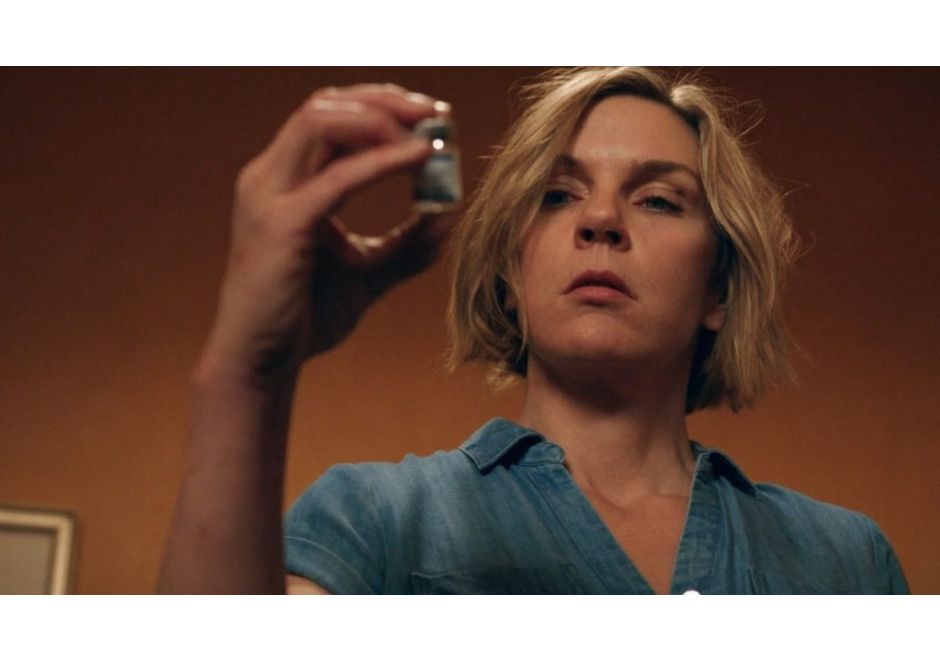
Pluribus is a departure from Vince Gilligan’s previous work (Breaking Bad and Better Call Saul), but it may mark a return to his X-Files roots, alien viruses, unsettling sci-fi realities, and a world where everyone is happy and content under a unified mind. It’s the dream of the internet, truly, everyone connected, everyone aligned. That is, everyone except Carol (Rhea Seehorn).
Gilligan’s familiar interest in how far people will go to survive is still present in Pluribus, but here it’s explored through a strikingly different lens. When one person stands outside the hive mind, the collective consciousness acting as a single whole, do you move forward with or without them? It’s a high-concept premise with a Truman Show-esque quality that’s smart, inventive, and laced with existential dread, making it a standout in the realm of prestigious TV released this year.
High-concept premises work best when they serve as metaphors that heighten emotional stakes rather than overshadow them. A hive mind becomes more than a sci-fi device when it’s used to explore loyalty, abandonment, and what we owe each other when conformity promises an easier life. When the concept forces characters into intimate, morally fraught decisions, the story gains depth that pure spectacle can’t match.
5. 'Everybody’s Live with John Mulaney'
Everybody’s Live with John Mulaney is one of 2025’s strangest experiments: late-night comedy, an art form nearly wiped out by streaming, revived by the very medium that helped kill it. I wasn’t initially interested in the series, but the weekly clips of John Mulaney, a comedic powerhouse, training to fight three teenage boys eventually hooked me.
The series didn’t earn the kind of instant mass appeal that guarantees a quick renewal (we’re still waiting on Netflix to confirm more episodes), but its fever-dream approach to the talk-show format has the makings of a cult classic. It mixes the surreal chaos of The Eric Andre Show with traditional late-night bits reminiscent of The Tonight Show Starring Jimmy Fallon.
For screenwriters, landing a job in a writers’ room like Everybody’s Live can be overwhelming if you don’t think about producing as you write. This means crafting material that can actually be made on time, within budget, and without creating avoidable logistical chaos. In an environment where scripts may be finalized only hours before airtime, those production-aware instincts can make or break a writer.
6. 'Dying for Sex'
Dying for Sex has a mission that is racing against a ticking clock — that is, having sex as much as Molly (Michelle Williams) can before dying from terminal cancer. Adopted from a memoiristic podcast of the same name, Molly’s diagnosis prompts her to leave her unhappy relationship and experiment with kink.
While sex drives Molly’s actions, it’s her connections that give this tragic comedy the depth that enriches the watching experience. Creators Liz Meriwether and Kim Rosenstock focus much of the emotional weight of the show on the friendship between Molly and Nikki (Jenny Slate), who shoulders the burden of caregiving, capturing what love looks like in the pursuit of fleeting pleasures. It’s a bittersweet series that forces us to grapple with what it means to live.
Dying for Sex not only showcases that our love for podcasts (in which 584 million of us listened to in 2025) has value in adapting, but captures the profoundly human things that make life worthy living. It contains the universal wants and experiences while crafting something focused and purposeful. Listen to our podcast with show creator Kim Rosenstock here.
7. 'Long Story Short'
Who doesn’t love an animated show about grief? While grief is a big emotion that often bogs down modern storytelling, finding creative ways to explore this well-mined feeling can spark curiosity in viewers. Long Story Short achieves this through its nonlinear structure.
Following Naomi Schwartz (Lisa Edelstein) as she grieves her own mother in one timeline and her husband and children grieve her in another, Raphael Bob-Waksberg, creator of BoJack Horseman, weaves his signature silliness with heightened emotional intelligence. The result is a sweet melancholy that illustrates how the past lingers in all of our minds, no matter where we are in time.
Storytelling structure is a screenwriter’s greatest tool for emphasizing themes. While linear stories are the simplest way to tell a narrative, nonlinear structures allow writers to experiment with time, parallels, and character perspectives, creating a profound and unique way to drive a theme home.
8. 'Andor'
The final chapter of Tony Gilroy’s prequel to Rogue One: A Star Wars Story was masterful in its execution. While we already know how Rebel pilot Cassian Andor’s (Diego Luna) story ends, the series’s extended study of revolutionaries, authoritarianism, and political violence, the forces that fuel the rebellion in the original Star Wars trilogy, grounds the IP in something profoundly revolutionary.
Andor is about the ordinary people who make political movements work, often overlooked footnotes in larger histories. While Cassian leads the narrative, it’s the supporting characters who drive the action and build a framework that feels historically vital to a blockbuster franchise.
In the Star Wars universe, and in any IP that spans both film and television, prequels and spin-offs often risk feeling inconsequential. But with Andor, the storytelling is compelling because it illuminates the people, systems, and sacrifices that history tends to overlook. Even when the outcomes are known, the series remains emotionally devastating by showing the human cost and ideological roots leading up to them. Read our interview with Tony Gilroy here.
9. 'The Studio'
There is nothing Hollywood loves more than something self-referential and are hyperaware that love and hate can coexist in the same breath. The Studio embodies this perfectly.
Following a high-powered studio executive (Seth Rogen), The Studio pulls at the thread holding the entertainment business together. It’s a messy world driven by people with conflicting wants and needs, and as you watch, you start to wonder how anything in Hollywood gets made at all.
Beyond its satirical edge, the show’s screenwriting is smartly crafted to highlight the cinephile mindset of its main character. From episodes staged as continuous long takes while a film set collapses under the pressure of shooting its own oner, to a neo-noir mystery about a missing reel from Olivia Wilde’s latest project, each episode’s tone is steeped in genre storytelling.
The Studio works because its episodes aren’t just jokes about Hollywood. They’re shaped by the way its protagonist thinks. The show pulls from a range of genres to reflect his cinephile worldview, allowing the story to be driven forward by the filmmaking choices themselves.
10. 'The Rehearsal'
The second season of The Rehearsal stands out as one of 2025’s most inventive TV shows because of how it deepens Nathan Fielder’s signature blend of documentary, performance, and psychological experimentation that blurs the line between reality and fiction. Yes, the subject matter is serious — focusing on the communication breakdowns between airplane pilots and their co-pilots — but the season pushes the limits of how far a person is willing to go to address a problem. Fielder’s commitment to building increasingly audacious simulations turns the show into both an investigation and an endurance test.
Rather than relying on exposition to propel the story, the momentum comes from the actions and choices of the non-actors who participate in Fielder’s elaborate scenarios. Even within simulations that already border on the absurd, human nature has a way of revealing something raw, sometimes a dark truth, sometimes a chaotic impulse that complicates everything further. That tension between authenticity and artificiality becomes the show’s engine, making The Rehearsal feel like a reality series with one foot in simulation and the other firmly planted in the real world.
For screenwriters, the season is a master class in two essential lessons. First: design situations that force your characters to act, because authentic behavior emerges only under meaningful pressure. Second: embrace boldness in structure and premise. When you create a world where characters must respond, adapt, and expose themselves through action, the result isn’t just compelling television. It becomes a blueprint for fearless, flexible, and deeply character-driven writing.